
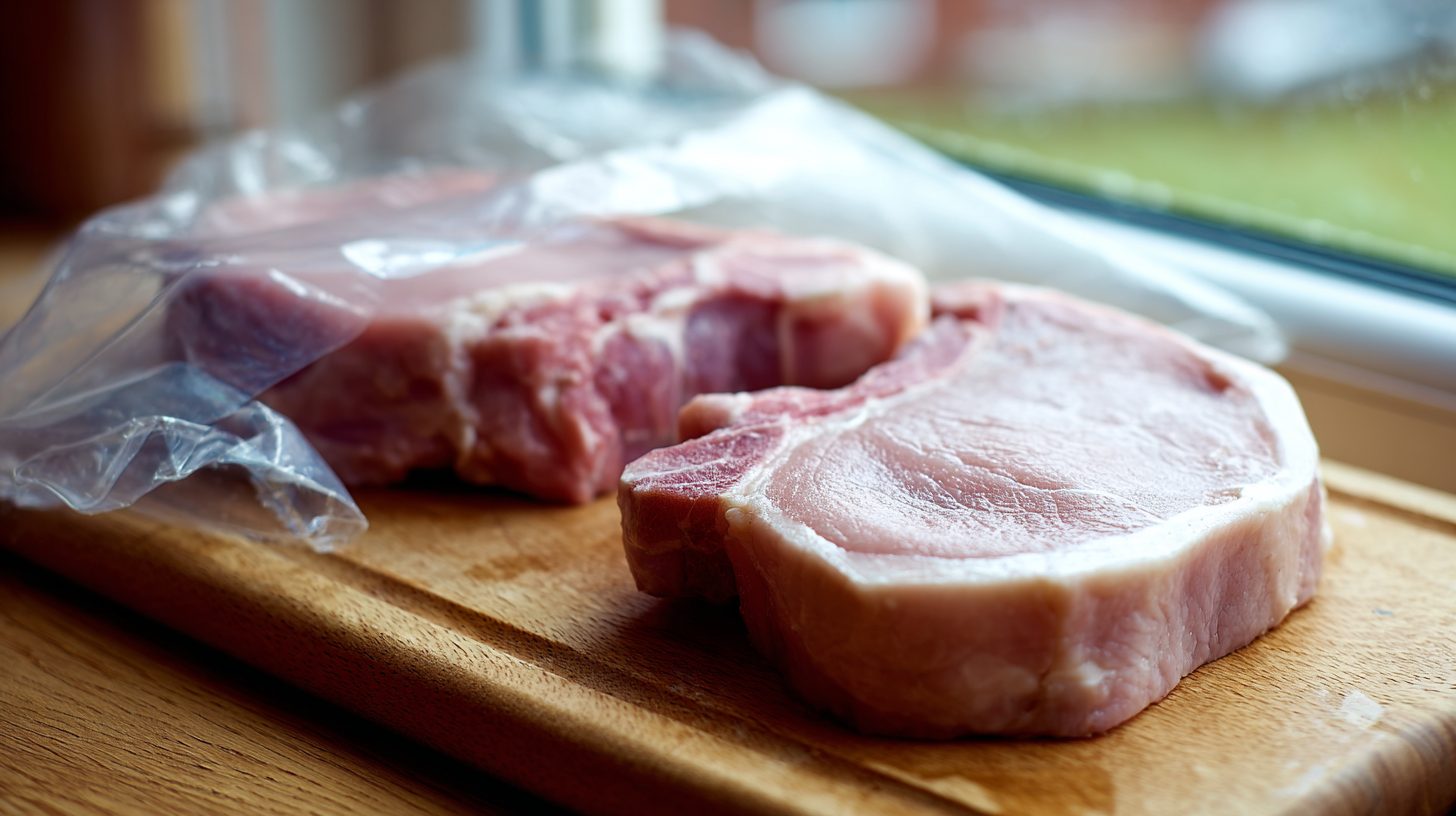
Fresh pork changes colour naturally as it ages in the package — a shift toward grey or brown on its own means nothing. Sour smell, a slimy film, and a bulging vacuum seal are the real signs. Here’s how to check in under a minute, and the storage times that actually matter.
The 60-Second Answer
Pork has gone bad if it smells sour, sharp, or ammonia-like (not the faint, mild smell fresh pork normally has), feels slimy or tacky rather than just moist, or came from a package that’s bulging, leaking, or past the fridge storage window below. If it passes all three and the sell-by date hasn’t passed, it’s fine to cook.
Raw Pork: The Three Checks
Smell. Fresh pork has little to no smell, or a very faint, clean one. Sour, sharp, or ammonia-like odor is the clearest sign something’s wrong — trust your nose here more than your eyes.
Texture. Fresh pork feels moist but not slippery. A slimy or tacky film — the kind that leaves residue on your fingers — means bacteria have started multiplying on the surface.
Packaging. A vacuum-sealed package that’s ballooned outward, or one that’s leaking, has gas buildup from bacterial activity inside. Don’t cook it, regardless of the sell-by date.
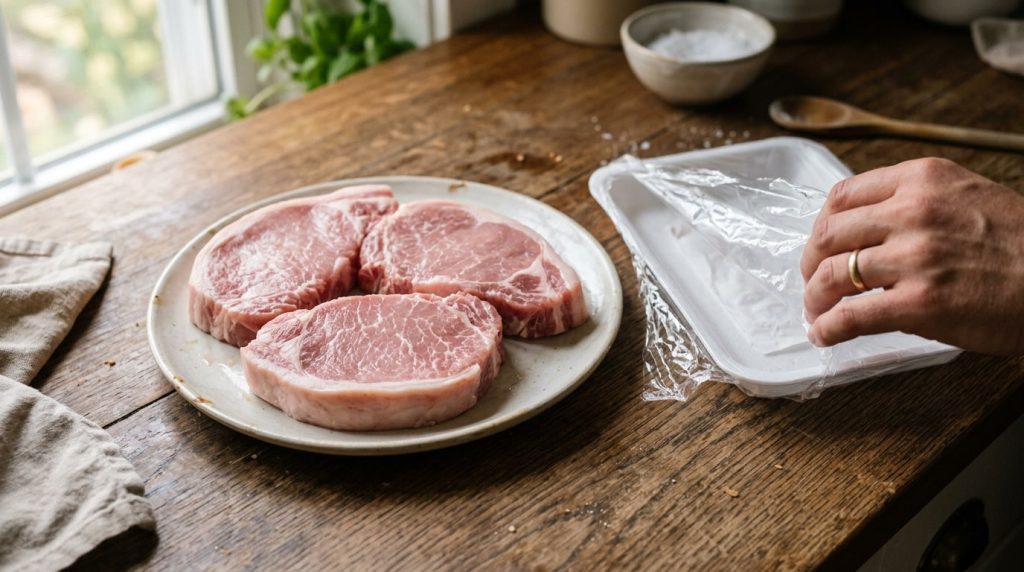
The False Alarm: Colour
Pork colour ranges naturally from pale pink to a deeper rosy red, and it darkens toward grey or brown simply from oxygen exposure as it sits — this is the same chemistry that turns beef brown at the edges. Colour change alone, with no bad smell and no slimy texture, is not a spoilage sign. USDA guidance is explicit that colour is not a reliable indicator of spoilage on its own.
Vacuum-sealed pork also often smells noticeably off the moment you open the package — a “confinement odor” from being sealed away from oxygen. If that smell fades within a few minutes of airing out on the counter, the meat is fine. If it lingers or gets stronger, that’s a real spoilage sign, not confinement odor.
Cooked Pork Is a Different Problem
Cooked pork spoils the same way any cooked meat does: sour smell, slimy surface, or visible mold (fuzzy spots, often white, blue-green, or black) are all discard signs. Cooked pork doesn’t get the “colour change is normal” pass the way raw pork does — a grey, dull look on cooked leftovers combined with a sour smell is a real red flag, not just natural darkening.
Storage Times
| Form | Refrigerator (40°F) | Freezer (0°F) |
|---|---|---|
| Raw chops, roasts, ribs | 3–5 days | 4–12 months, best quality |
| Raw ground pork | 1–2 days | 3–4 months, best quality |
| Cooked pork, any cut | 3–4 days | 2–6 months, best quality |
Freezer times are for best quality, not a safety cutoff — pork kept frozen at a constant 0°F stays safe indefinitely, it just loses texture and flavour the longer it sits. Source: USDA Food Safety and Inspection Service.
Left Out Overnight, or on the Counter
Raw or cooked pork left at room temperature for more than 2 hours should be discarded — or more than 1 hour if the room is above 90°F. Bacteria that cause foodborne illness grow fastest between 40°F and 140°F, a range USDA calls the “danger zone,” and pork sitting in it overnight has had far more than 2 hours regardless of how it looks or smells the next morning.
Cook It to 145°F (Whole Cuts) or 160°F (Ground)
Whole cuts — chops, roasts, tenderloin — are safe at 145°F internal with a 3-minute rest afterward. Where to probe each cut is covered in what temp is pork done. That’s genuinely different from ground pork, which needs 160°F, because grinding mixes any surface bacteria all the way through the meat rather than leaving it on the outside where heat reaches it first. This is a safety minimum, not a doneness target for low-and-slow cuts — a pulled pork shoulder is still cooked to 195–204°F for texture, well past the safety floor, because that’s what makes it pull apart cleanly, not because 145°F is unsafe.
The Bottom Line
Trust smell and texture over colour. A sour or ammonia-like smell, a slimy film, or a bulging package mean discard it — a grey or brown tint on its own doesn’t. When raw pork is in date and passes the smell-and-texture check, it’s safe to cook; cook whole cuts to 145°F with a rest, ground pork to 160°F.
Frequently Asked Questions
Is it safe to eat pork that’s slightly grey?
Yes, if it smells and feels normal. Grey or brown tint from oxygen exposure is a colour change, not spoilage, as long as there’s no sour smell or sliminess.
Why does my vacuum-sealed pork smell bad right when I open it?
That’s confinement odor from being sealed without oxygen, not spoilage. Let it air out on the counter for a few minutes — if the smell fades, it’s fine; if it doesn’t, discard it.
Can I refreeze pork that’s been thawed?
Yes, if it was thawed in the refrigerator (not on the counter) and has stayed there no more than the storage window above. Quality drops slightly with each freeze-thaw cycle, but it remains safe.
Does washing raw pork before cooking make it safer?
No — USDA specifically advises against washing raw meat, since it spreads any bacteria present around your sink and counters through splashing, without reducing the amount that survives cooking anyway.