
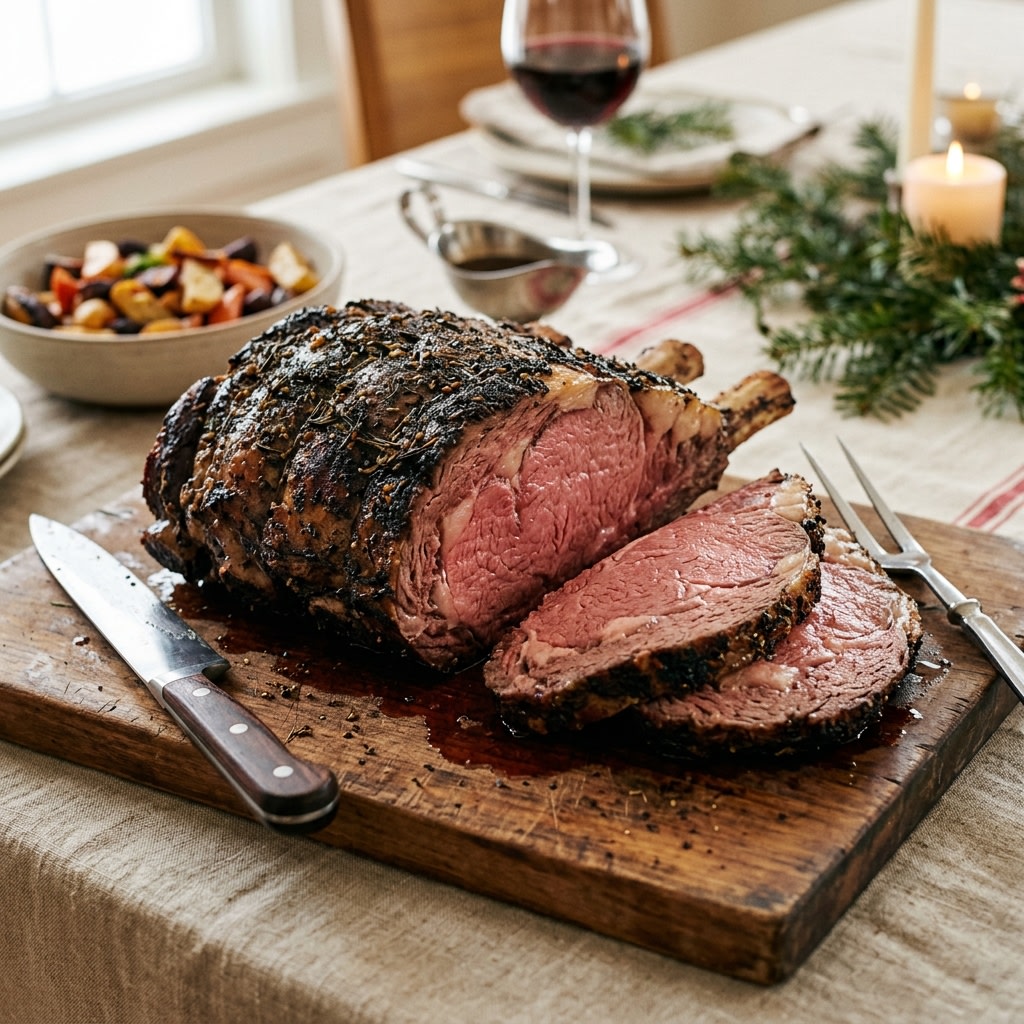
The rib roast cost more than anything else on the table, guests arrive at seven, and the only question left is when to take it out of the oven. Prime rib keeps cooking after it leaves the heat, so the number on the thermometer when you pull it is lower than the number on the plate. Below are pull and serving temperatures for each doneness, USDA’s safety minimum, and where to put the probe so the reading means something.
The 60-Second Answer
- USDA safe minimum: 145°F, measured before the roast leaves the heat, then a rest of at least 3 minutes.
- Beef Checkoff oven method at 350°F: remove the roast at 135°F for medium rare and 145°F for medium.
- Carryover: the temperature keeps rising 10 to 15 degrees after the roast comes out.
- Rest: tent loosely with foil for 10 to 15 minutes, or 15 to 20 minutes for a large roast.
The doneness numbers are about texture and colour. The 145°F figure is the safety number. They are different things, and the sections below keep them apart.
Pull temperature vs serving temperature
America’s Test Kitchen publishes a doneness chart for beef and lamb with two columns: the temperature to take the meat off the heat, and the temperature it reaches by the time you serve it. These are texture targets.
| Doneness | Pull at | Serve at |
|---|---|---|
| Rare | 110–115°F | 120°F |
| Medium-rare | 115–120°F | 125–130°F |
| Medium | 125–130°F | 135–140°F |
| Medium-well | 135–140°F | 145–150°F |
| Well-done | 145–150°F | 155–160°F |
The same chart says temperature climbs 5 to 15 degrees while meat rests, and that roasts climb more than steaks. A standing rib roast is about as big as home roasts get, so plan for the top of that range.
The Beef Checkoff, which tested its own ribeye roast method in a 350°F oven, gives higher pull numbers: 135°F for medium rare and 145°F for medium, with a rise of 10 to 15 degrees afterwards. Add that rise to 135°F and the estimate after resting is 145°F to 150°F, which ATK’s chart would call medium-well. The two sources simply name doneness differently. Pick the chart that matches how you like your beef, use its pull number, and stay with it for the whole cook. The same logic applies to other big beef cuts, such as beef ribs.
Where USDA’s 145°F fits
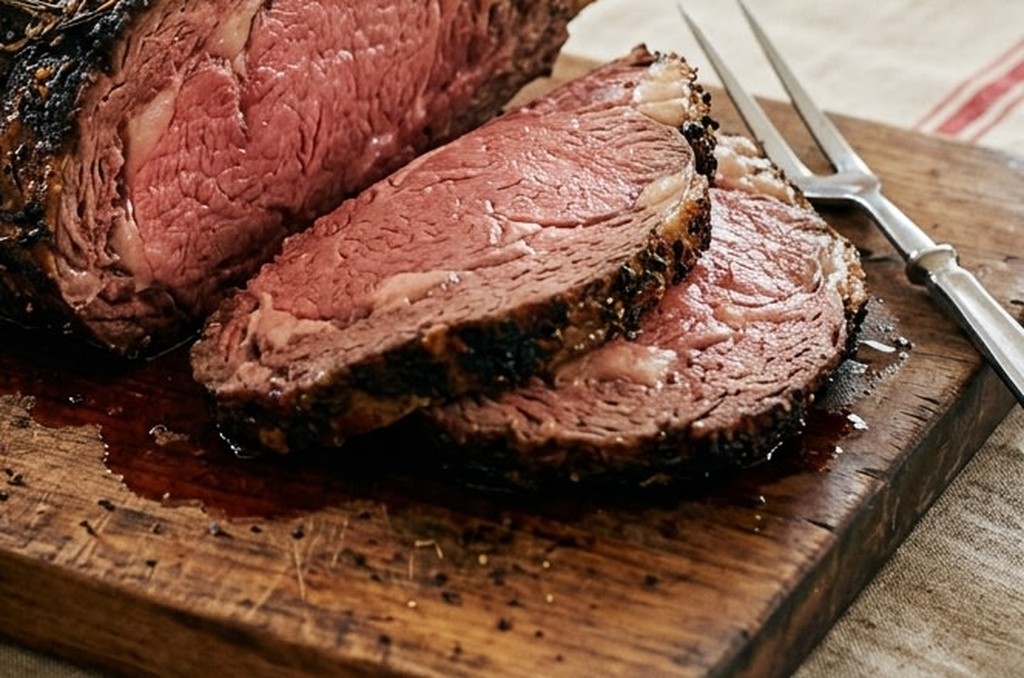
USDA’s safe minimum for beef roasts is 145°F, measured before you remove the meat from the heat, followed by a rest of at least 3 minutes. USDA adds that you may cook meat hotter for personal preference.
The rare and medium-rare serving temperatures in the chart, 120°F to 130°F, sit below that number. Serving a whole beef roast redder than 145°F is a common choice, and it falls below USDA guidance. That decision belongs to you and your guests, and this guide won’t call it safe.
The Beef Checkoff’s 135°F pull reaches 145°F only through carryover, after the roast is off the heat. USDA measures before removal. To meet USDA’s number as written, leave the roast in until the thickest part reads 145°F, then rest it. With 10 to 15 degrees of carryover, the estimate after resting is 155°F to 160°F, which ATK’s chart places at well-done.
Where to put the thermometer
Roast the meat fat side up, bone side down, on a rack. Push the probe in so the tip sits in the centre of the thickest part of the roast. Keep it out of the fat and off the bone; a tip resting in either gives a misleading reading.
Check a second spot before you pull it. Rib roasts taper toward the ends, and the thinner parts finish first. FSIS says colour is not a reliable sign of doneness, so cutting into the roast to look tells you less than the probe does.
Then rest it, tented loosely with foil. The rise happens during the rest, so take your final reading at the end of it. On a smoker the pull point and the finish both change; see how long to smoke prime rib for that method.
Planning oven time for a bone-in roast
The Beef Checkoff’s timetable for a preheated 350°F oven gives you a starting point. These are approximate total cooking times, and the thermometer decides.
| Bone-in weight | Ribs | Medium rare (out at 135°F) | Medium (out at 145°F) |
|---|---|---|---|
| 4–6 lb | 2 | 1¾–2¼ h | 2¼–2¾ h |
| 6–8 lb | 2–4 | 2¼–2½ h | 2½–3 h |
| 8–10 lb | 4–5 | 2½–3 h | 3–3½ h |
When buying, the Beef Checkoff suggests one rib for every two people. Eight guests means four ribs, which can land in either the 6 to 8 lb row or the 8 to 10 lb row, so go by the weight on the label. At 8 to 10 lb, medium rare takes about 2½ to 3 hours. Add a 15 to 20 minute rest and plan on roughly 2¾ to 3⅓ hours from oven to carving board. That is an estimate. If you are using ATK’s lower pull numbers, start checking well before the low end of the time range.
False alarms and common mistakes
- “It read 135°F and now it reads 147°F.” That is carryover doing what the Beef Checkoff says it does. Your thermometer is fine.
- Pulling at the serving number. If you wait for 130°F to take out a roast you want at 125–130°F, the rest pushes it past your target. Use the pull column.
- Taking one reading. A single spot near the end of the roast can read well above the centre.
- Leaving the platter out. Refrigerate leftovers within 2 hours, or 1 hour above 90°F. Our guide to reheating prime rib covers the next day, and how long leftovers keep covers the days after.
The Bottom Line
Pick a chart and use its pull number: 115°F to 120°F for medium-rare by ATK’s chart, or 135°F by the Beef Checkoff’s. Expect a rise of 10 to 15 degrees while the roast rests under loose foil. USDA’s safety number is 145°F before removal plus a 3-minute rest, and anything redder is a choice below that guidance. Probe the centre of the thickest part, away from fat and bone.
Frequently Asked Questions
What temperature do I pull prime rib for medium rare?
ATK’s chart says 115°F to 120°F for a serving temperature of 125°F to 130°F. The Beef Checkoff’s oven method says 135°F.
Is 145°F prime rib overcooked?
It depends on when you measure. Pulled at 145°F, the roast will climb further while it rests, and ATK’s chart lists a 145°F pull as well-done.
How long should prime rib rest?
The Beef Checkoff says 10 to 15 minutes tented loosely with foil, and 15 to 20 minutes for larger roasts.
Can I tell doneness by the colour inside?
FSIS says colour is not a reliable indicator. Use a thermometer in the thickest part.
Related Guides
- How Long to Smoke Prime Rib
- How to Reheat Prime Rib
- What Temp Are Beef Ribs Done?
- How Long Does Steak Last in the Fridge?
Never Throw Out Good Meat Again
Get the one-page BBQ cheat sheet: fridge and freezer times for every cut, safe temperatures, and the spoilage signs that are false alarms. Free, no spam.
No spam, and you can unsubscribe any time.