
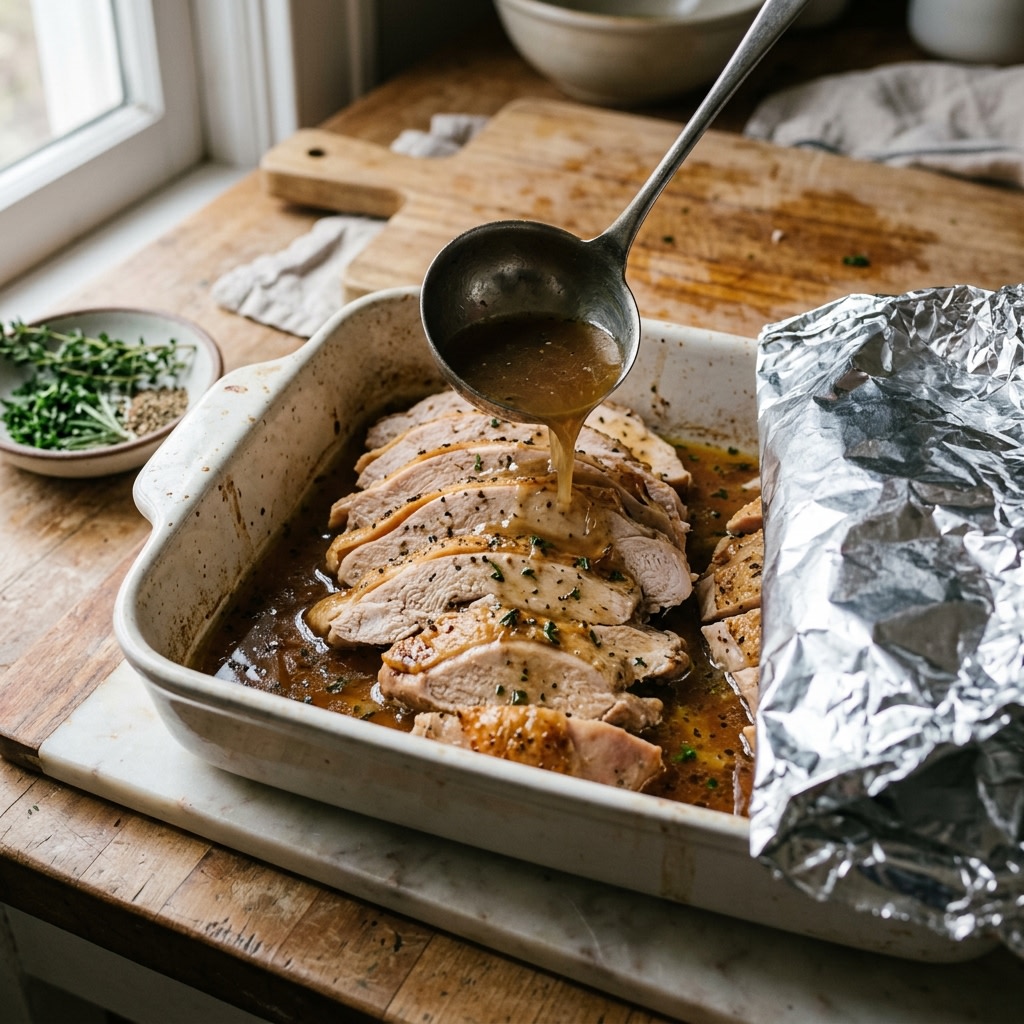
Leftover turkey dries out fast. Breast meat carries very little fat, and a second round of heat pulls out what moisture is left, so slices that were juicy on the day come back stringy. Two things fix most of it: the way you stored the meat, and keeping it covered with some liquid while it heats. Food safety adds one firm number on top, and it applies to every method below.
The 60-Second Answer
FSIS says to reheat leftovers to 165°F, measured with a food thermometer. Cover the turkey while it heats and add a splash of broth or gravy so it steams in its own moisture. Bring gravy to a rolling boil before serving. Eat refrigerated leftovers within 3 to 4 days. Frozen turkey can go straight into the oven, pan or microwave without thawing; it just takes longer.
Store It So It Reheats Well
FSIS asks you to get leftovers into the fridge within 2 hours of cooking, or within 1 hour if the room is above 90°F. To cool the turkey quickly, cut it into smaller pieces: slice the breast meat, and leave the legs and wings whole. Spread the meat in shallow containers. Hot food can go straight into the fridge.
Those choices pay off later. Breast slices warm through evenly, and whole legs and wings keep their skin and bone around the meat, which protects it the second time around. Wrap everything airtight or use covered containers. That keeps bacteria out and moisture in, and it stops the turkey picking up fridge odours. Our turkey thawing and storage guide covers the rest of the storage side.
For longer keeping, the freezer holds cooked meat at best quality for 2 to 6 months. That window is about taste and texture only. Food kept continuously at 0°F stays safe indefinitely.
Reheating Methods Compared
Every method below has the same finish line: 165°F in the thickest piece. FSIS does not give oven settings or minutes for reheating turkey, so check with a thermometer and stop when it reads 165°F.
| Method | Best for | How to do it |
|---|---|---|
| Oven, covered dish | Larger amounts, whole legs, sliced breast for a crowd | Lay pieces in one layer, add broth or gravy to the dish, cover tightly with a lid or foil, heat to 165°F |
| Stovetop pan | Sliced or shredded meat, turkey in gravy | Simmer a little broth or gravy, add the turkey, cover, stir now and then until it reads 165°F |
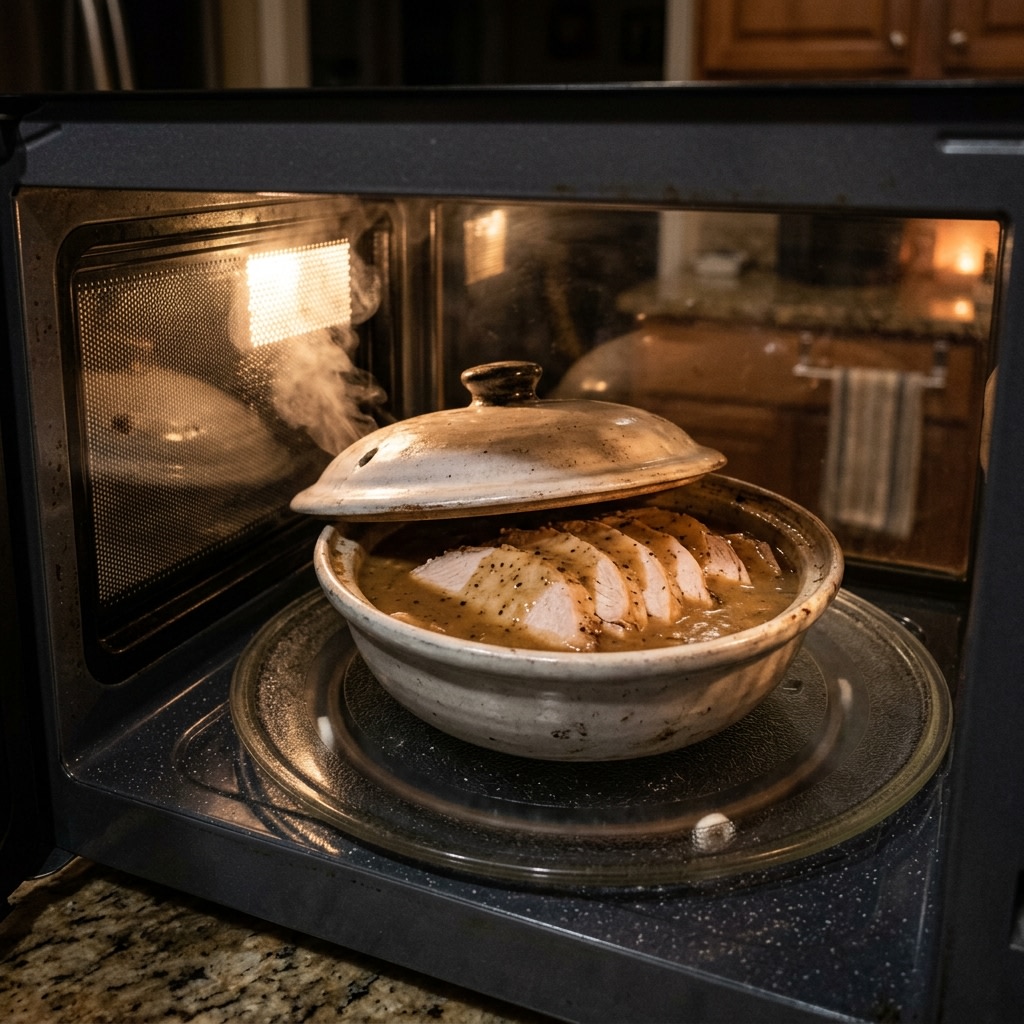
| Microwave | One or two portions | Covered glass or ceramic dish, a little liquid, vented lid, rotate, check several spots for 165°F |
| Saucepan for gravy | Gravy, soups, sauces | Bring to a rolling boil |
| From frozen | Leftovers you froze flat | Oven, saucepan or microwave as above; allow extra time |
For a big batch, use the oven and keep the dish covered the whole time. FSIS notes that covering retains moisture and helps the food heat all the way through. The stovetop is quicker for sliced meat. Keep the heat gentle and the lid on, so the meat warms in the steam from the broth and does not fry against the pan.
Microwave Rules That Matter
The microwave is fine for turkey if you follow the FSIS steps. Arrange the pieces evenly in a covered microwave-safe glass or ceramic dish. Add some liquid if the meat looks dry. Vent the lid or wrap so steam can escape, and rotate the dish partway through.
Microwaves leave cold spots. After heating, let the dish rest for a short while, then check the temperature in several places. A single reading in one hot corner can hide a cool centre. If any spot reads under 165°F, cover it again and keep heating.
Reheating From Frozen, and Refreezing
FSIS says frozen leftovers can be reheated without thawing in a saucepan, the oven or the microwave. Expect it to take longer.
If you prefer to thaw first, use the fridge, cold water in a leak-proof bag, or the microwave. Each method changes what you can do next:
- Fridge-thawed turkey: use within 3 to 4 days, or refreeze it.
- Cold-water-thawed turkey: heat it before refreezing.
- Microwave-thawed turkey: keep heating straight through to 165°F.
Leftovers from previously frozen turkey that you reheated to 165°F can go back in the freezer. Our guide on whether you can refreeze meat covers other cuts.
Common Reheating Mistakes
Heating turkey uncovered is the usual cause of dry meat, and leaving out the broth or gravy makes it worse. Warming gravy until it is just hot is another; FSIS asks for a rolling boil. Checking one spot after microwaving can miss a cold patch, so check several.
Pink meat in smoked turkey worries people, but FSIS says colour on its own is not a reliable sign of doneness, and the same goes for reheated meat. The thermometer settles it. For how smoke affects colour and where to probe, see what temp smoked turkey is done. The last mistake is timing: leftovers past 3 to 4 days in the fridge belong in the bin, however well they reheat.
The Bottom Line
Store turkey within 2 hours, slicing the breast and leaving legs and wings whole, in shallow airtight containers. When you reheat, cover it, add broth or gravy, and heat until a thermometer reads 165°F. Boil gravy hard. Use refrigerated leftovers within 3 to 4 days, and freeze the rest for best quality within 2 to 6 months. If the bird is still on the board, read how long to rest a turkey before you carve it.
Frequently Asked Questions
What temperature should reheated turkey reach?
FSIS says 165°F, measured with a food thermometer in the thickest piece. That applies whether you use the oven, the stovetop or the microwave.
How do I keep reheated turkey from drying out?
Cover it and add broth or gravy to the dish. The liquid steams the meat as it warms, and the cover holds that moisture in.
Can I reheat turkey straight from the freezer?
Yes. FSIS says frozen leftovers can be reheated without thawing in a saucepan, oven or microwave. It takes longer, and it still needs to reach 165°F.
How long is leftover turkey good in the fridge?
Use it within 3 to 4 days. If you are unsure about a container that has been in there a while, see how to tell if turkey is bad.
Related Guides
- How Long to Rest a Turkey Before Carving
- Turkey Food Safety: Thawing and Storage
- What Temp Is Smoked Turkey Done?
- How Long Are BBQ Leftovers Good For?
Never Throw Out Good Meat Again
Get the one-page BBQ cheat sheet: fridge and freezer times for every cut, safe temperatures, and the spoilage signs that are false alarms. Free, no spam.
No spam, and you can unsubscribe any time.