

You pulled the leftover holiday ham out of the fridge for sandwiches and something seems off. The surface feels tacky, the smell is sharper than you remember, or the slices just look different. Before anyone takes a bite, run through a few quick checks. Before that, count the days since the ham was served or the package was opened, because the calendar catches problems your nose can miss.
The 60-Second Answer
Throw ham out if it smells sour, feels slimy or tacky, shows grey-green or dull patches, has mould, or came in a vacuum pack that is bulging or leaking. Throw it out too if it is past the USDA fridge time, which is 3 to 5 days for leftovers, spiral-cut ham and opened vacuum-sealed ham, or if it sat out more than 2 hours (1 hour above 90°F).
Pink by itself is fine. Cured ham is normally pink because of the cure, and FSIS says colour alone is not a reliable sign of spoilage.
Check the calendar before you check the ham
Smell and texture checks only catch some problems. Some bacteria produce toxins that cooking does not destroy, and a ham can pass the sniff test while sitting past its safe window. So start with the date. Opened ham and leftovers get 3 to 5 days in a fridge at 40°F or below. An undated vacuum-sealed fully cooked ham keeps 2 weeks unopened. Our full table of how long ham lasts covers fresh, country, canned and lunch meat ham.
If the ham is inside its window, move on to the checks below. If it is past it, discard it whatever it looks like.
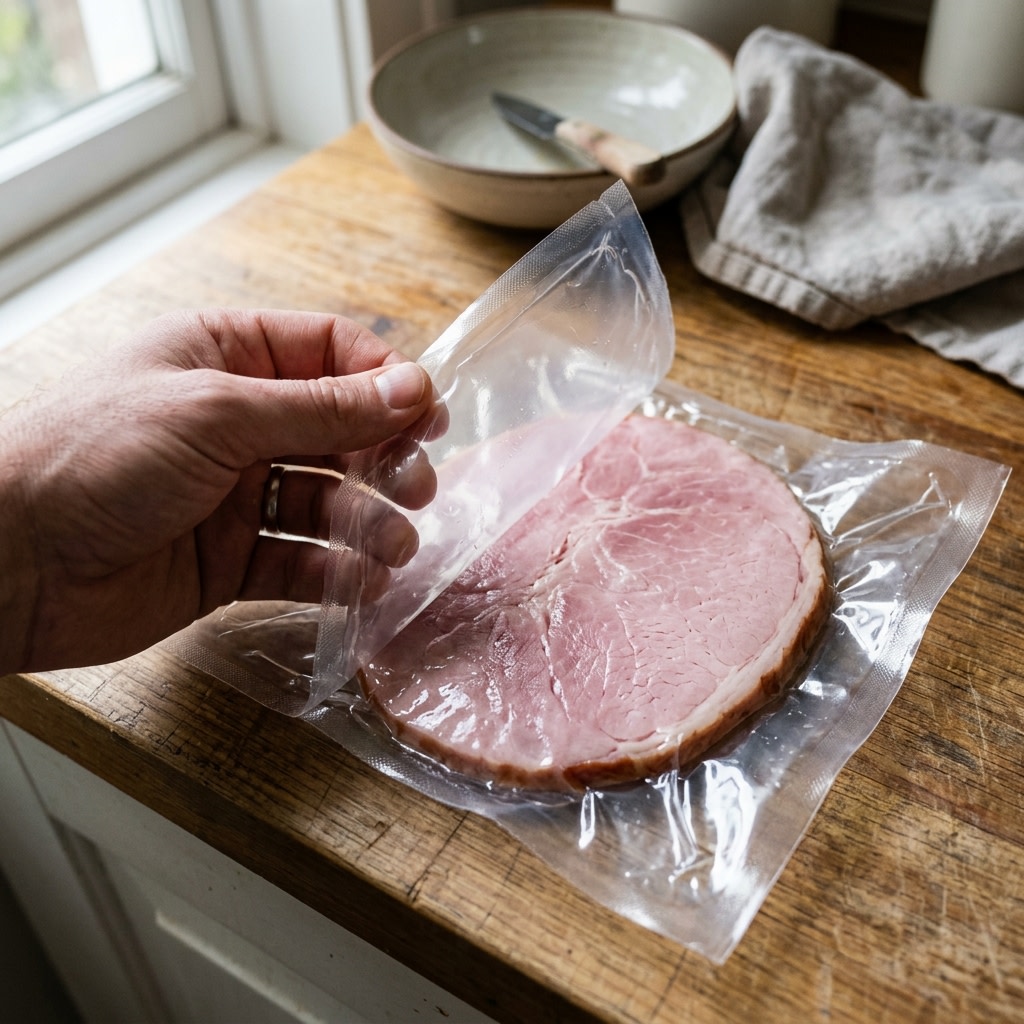
Five signs your ham has gone bad
| Sign | What you notice | What to do |
|---|---|---|
| Sour smell | A sharp, sour or off odour once the wrap comes off, stronger than the usual smoky, salty smell | Discard |
| Slimy or tacky surface | A film that feels slick or sticky between your fingers | Discard |
| Grey-green or dull discolouration on cured ham | Patches that have lost the usual pink, especially with smell or texture changes | Discard |
| Mould | Fuzzy spots of any colour on cooked, spiral-cut, canned or sliced ham | Discard the whole piece |
| Bulging or leaking vacuum pack | A puffed package, or liquid seeping from the seal | Discard without opening to taste |
Do the smell test right after you open the container or unwrap the foil. Then run a clean finger over a cut face. Fresh cooked ham feels moist and firm. A slick or sticky film means bacteria have been growing on the surface.
The colour check needs care. Grey-green or dull patches on a cured ham are a warning, and they usually show up with a sour smell or a slimy feel. If you see one sign, look hard for the others, and when in doubt, throw it out.
A whole dry-cured country ham is a different case. Mould on the outside of those hams is handled differently, so follow the producer’s instructions. For every other kind of ham in your fridge, mould means the piece goes in the bin.
False alarms: pink colour and rainbow sheen
Two things worry people that are not spoilage signs on their own.
- Pink colour. Cured ham is normally pink because of the cure, even after it is fully cooked and reheated. Fresh, uncured ham behaves differently: FSIS describes it as pinkish red when raw and greyish white after cooking. Grey on a cooked fresh ham is normal.
- A rainbow sheen. Sliced cured ham sometimes shows a green or rainbow shimmer when light hits the cut surface. By itself, with no sour smell and no slime, it does not mean the ham is spoiled.
The FSIS rule covers both: colour is not a reliable indicator of spoilage on its own. Judge by the date, the smell and the feel together. The same logic applies to other cured and smoked meats; see how to tell if pork is bad.
Ham storage times at a glance
| Ham | Fridge (40°F or below) | Freezer (0°F, quality only) |
|---|---|---|
| Leftovers and spiral-cut ham | 3–5 days | 1–2 months |
| Fully cooked, vacuum-sealed, undated, unopened | 2 weeks | 1–2 months |
| Fully cooked, vacuum-sealed, opened | 3–5 days | 1–2 months |
| Fresh (uncured) ham, uncooked | 3–5 days | 6 months |
| Ham lunch meat, opened or sliced in store | 3–5 days | 1–2 months |
Freezer times are for quality. FSIS says ham kept frozen at 0°F is safe indefinitely, though it may dry out over time.
When the ham sat out
A ham that spent the afternoon on the holiday table is a timing question. FSIS puts the danger zone at 40°F to 140°F, where bacteria can double in as little as 20 minutes. Past 2 hours out of the fridge, or 1 hour above 90°F, it should be thrown away even if it looks and smells fine. Reheating will not fix it, because of the heat-stable toxins mentioned above. If it sat out all night, read meat left out overnight. If it is still within its window and you want it hot, reheat leftovers to 165°F; our guide to what temp ham is done explains the different targets.
The Bottom Line
Count the days first, then check for a sour smell, a slimy or tacky surface, grey-green patches, mould or a bulging pack. Any one of those means the ham goes. Pink on cured ham and a rainbow sheen on its own are normal, and colour alone never settles the question.
Frequently Asked Questions
What does bad ham smell like?
Sour or sharply off, easy to tell apart from the normal salty, smoky smell. If the smell makes you hesitate, discard the ham.
Is slimy ham safe if I rinse it?
No. A slimy or tacky surface is a spoilage sign, and rinsing does not remove the problem.
Why is my cooked ham still pink?
Cured ham is normally pink because of the cure, even when fully cooked. Fresh, uncured ham turns greyish white when cooked.
Can I cut mould off ham?
Not on cooked, spiral-cut, canned or sliced ham; throw the piece out. Whole dry-cured country ham is a separate case, so follow the producer’s guidance.
Related Guides
- How Long Does Ham Last?
- What Temp Is Ham Done?
- How to Tell If Bacon Is Bad
- How to Tell If Sausage Is Bad
Never Throw Out Good Meat Again
Get the one-page BBQ cheat sheet: fridge and freezer times for every cut, safe temperatures, and the spoilage signs that are false alarms. Free, no spam.
No spam, and you can unsubscribe any time.