
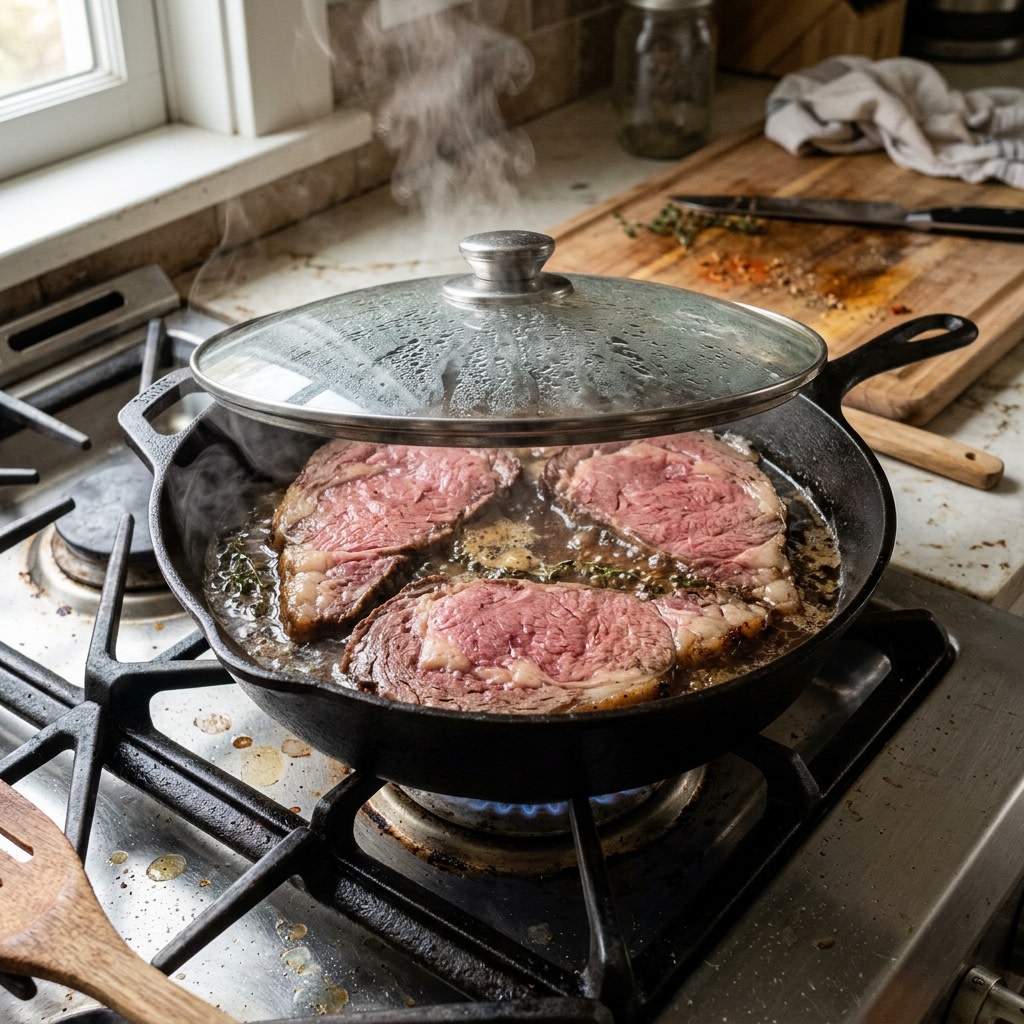
There is half a rib roast in the fridge, cooked pink the night before, and you want to eat it again without it turning the dull grey of an overdone steak. USDA’s reheating rule and medium-rare beef pull in opposite directions, so you have a choice to make before you pick a pan. This guide lays out that choice honestly, then covers the oven, skillet and microwave methods, storage, and what to do with slices from the freezer.
The 60-Second Answer
- USDA: reheat leftovers to 165°F, checked with a food thermometer. At that temperature medium-rare prime rib turns grey.
- Your options: eat it cold, warm it gently and accept it stays below USDA’s reheating number, or take it to 165°F in a dish where texture matters less.
- Gentle methods: a covered oven dish or a covered skillet, each with a splash of broth.
- Storage: refrigerate within 2 hours, eat within 3 to 4 days, or freeze (best quality within 2 to 6 months).
The 165°F problem, stated plainly
FSIS says to reheat leftovers to 165°F, measured with a food thermometer. Prime rib served medium rare was cooked well below that, and taking it to 165°F cooks the pink out. No method avoids this, because the temperature itself does the cooking.
That leaves three honest options:
- Eat it cold. Slice it thin straight from the fridge and serve it the way roast beef is served at a deli counter, in sandwiches or on a plate with horseradish. Nothing gets reheated, so there is no reheating target to miss.
- Warm it gently. Heat slices just until they are warm to eat. They stay pink, and they stay below USDA’s reheating number. That trade-off is yours to make.
- Go to 165°F where colour doesn’t matter. Cut the meat into a hash, a stew or a soup and heat it fully. Soups and stews with liquid should come to a rolling boil, as FSIS says for sauces, soups and gravies.
The same tension shows up on the first night. Our guide to what temp prime rib is done explains where USDA’s 145°F cooking minimum sits against the usual doneness charts.
Reheating methods compared
| Method | How | Reaches 165°F? | Result |
|---|---|---|---|
| Cold | Slice thin from the fridge | Not reheated | Stays pink |
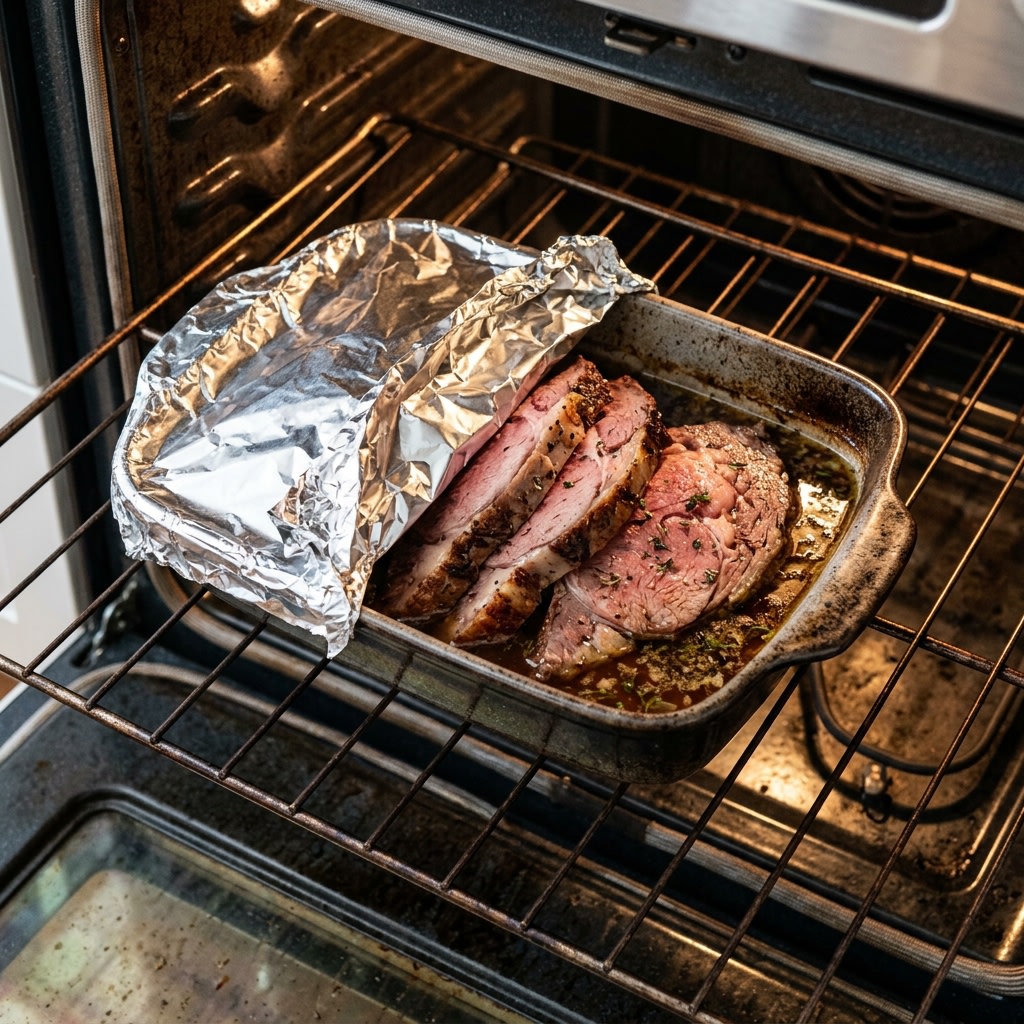
| Covered oven dish | Slices in a dish, splash of broth, lid or foil on | Only if you keep going | Pink if stopped when warm; grey at 165°F |
| Covered skillet | Low heat, splash of broth, lid on | Only if you keep going | Fastest for a few slices |
| Microwave | Covered glass or ceramic dish, liquid, vented lid | Yes, if checked in several spots | Easiest to overshoot |
| Hash, stew or soup | Chopped and cooked into the dish | Yes | Texture matters less here |
Oven dish. Lay slices in a single layer in a baking dish, add a splash of broth, and cover tightly. FSIS says covering leftovers while reheating keeps moisture in and helps them heat all the way through. Heat in a low oven and check with a thermometer.
Skillet. Add a little broth to the pan, lay in the slices, cover, and keep the heat low. Turn them once. This suits two or three slices for lunch.
Microwave. Follow FSIS’s rules: arrange the slices evenly in a covered microwave-safe glass or ceramic dish, add some liquid, and vent the lid. Rotate the dish partway through. Microwaves leave cold spots, so let the dish rest before checking, then check in several places. FSIS also notes that dense foods such as a beef roast keep cooking after the microwave stops, which is one more reason to slice first.
Storing it so it reheats well
Get the roast into the fridge within 2 hours of cooking, or within 1 hour if the room is above 90°F. FSIS says to slice or cut whole roasts into smaller parts so they cool fast, and to use shallow containers. Hot food can go straight into the fridge. Slicing before chilling also means you can pull out exactly the slices you need later.
Wrap the slices airtight or use covered containers, which keeps bacteria out and moisture in. Eat refrigerated leftovers within 3 to 4 days. For longer storage, freeze them: the federal storage chart lists 2 to 6 months for cooked meat, and that range is about quality only. Food kept continuously at 0°F stays safe indefinitely. Our guide to how long BBQ leftovers are good for covers other cuts. If you smoked the roast, the same storage rules apply; see how long to smoke prime rib for that method.
Reheating from frozen
FSIS says frozen leftovers can be reheated without thawing in a saucepan, the oven or the microwave. It just takes longer. Thin slices in a covered skillet with broth work for this.
If you thaw first, each method has its own rule:
- In the fridge: use within 3 to 4 days, or refreeze.
- In cold water (in a leak-proof bag): cook it before refreezing.
- In the microwave: keep heating it to 165°F.
Microwave thawing commits you to the grey option, so use the fridge if you want pink slices. More detail is in how to thaw meat fast. Anything left after you reheat previously frozen leftovers to 165°F can be refrozen; can you refreeze meat covers the other cases.
Common mistakes
- Chilling the roast whole. FSIS says to cut whole roasts into smaller parts to cool them quickly.
- Reheating uncovered. The slices dry out. Cover them and add a little liquid.
- Checking one spot in the microwave. Cold spots are common. Check several.
- Warming the jus without boiling it. FSIS says gravies and sauces should reach a rolling boil.
- Judging by colour. FSIS says colour is not a reliable indicator; use a thermometer.
The Bottom Line
USDA’s reheating number is 165°F, and it will turn medium-rare prime rib grey. Eat it cold, warm it gently in a covered dish or skillet with broth and accept it is below that number, or take it to 165°F in a hash or stew. Slice before chilling, eat within 3 to 4 days, and freeze the rest.
Frequently Asked Questions
Can you eat leftover prime rib cold?
Yes. Slice it thin straight from the fridge and serve it like deli roast beef, within 3 to 4 days of cooking.
What temperature should reheated prime rib reach?
USDA says 165°F for all leftovers. Warming it less keeps it pink but falls below that guidance.
How long does leftover prime rib last?
3 to 4 days in the fridge. Frozen, it keeps best quality for 2 to 6 months.
Can I reheat prime rib from frozen?
Yes. FSIS says frozen leftovers can be reheated without thawing; it takes longer.
Related Guides
- What Temp Is Prime Rib Done?
- How Long to Smoke Prime Rib
- How to Reheat Brisket
- How Long Can You Freeze Meat?
Never Throw Out Good Meat Again
Get the one-page BBQ cheat sheet: fridge and freezer times for every cut, safe temperatures, and the spoilage signs that are false alarms. Free, no spam.
No spam, and you can unsubscribe any time.