
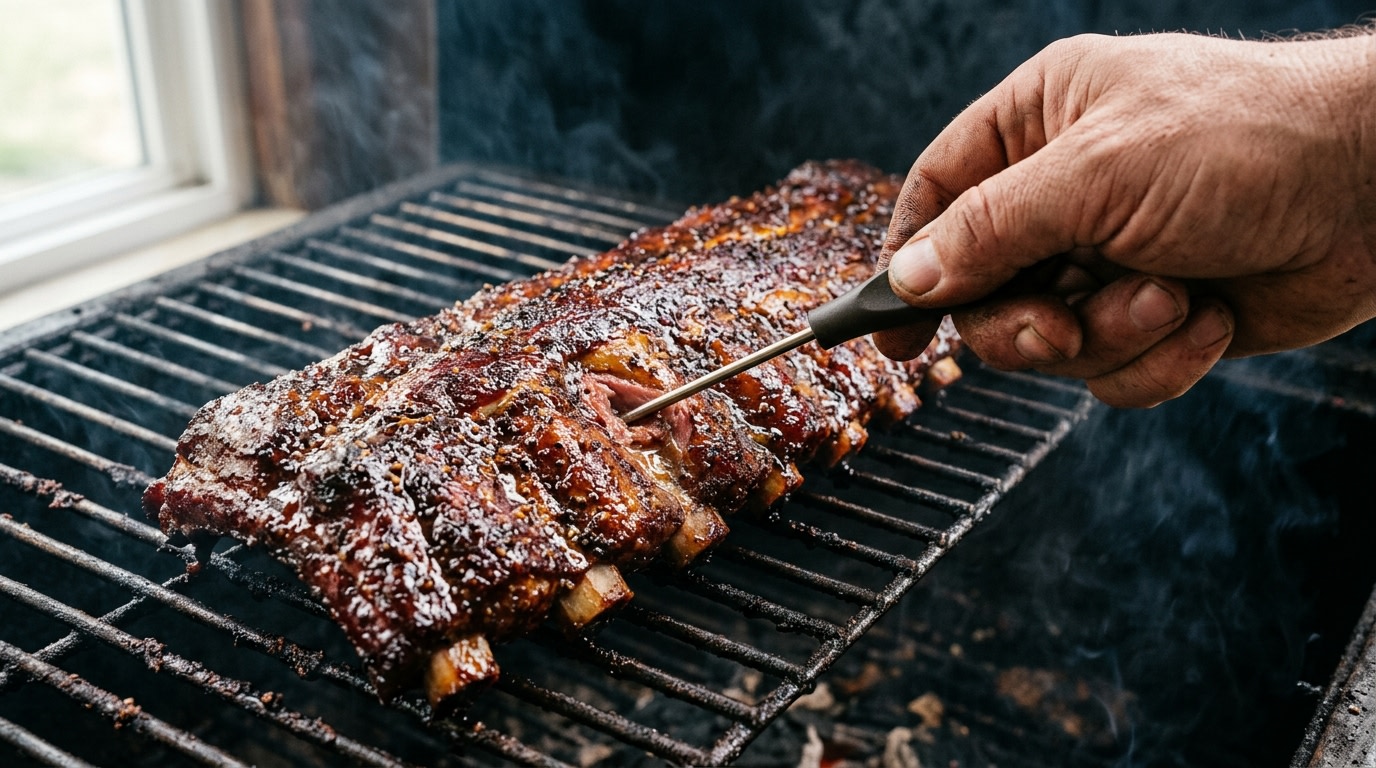
The chop comes off the grill, you cut into the middle, and there is a blush of pink. Someone at the table says pork has to be white all the way through. If the thermometer read 145°F in the thickest part and the chop rested before you cut it, it is done and safe. The pink is not the problem. Guessing by colour is.
The 60-Second Answer
Whole cuts of pork, meaning chops, tenderloin and roasts, are safe at 145°F in the thickest part, followed by a rest of at least 3 minutes. Ground pork and raw pork sausage need 160°F in the centre. Sausage made from chicken or turkey follows the poultry number, 165°F. Shoulder and ribs are safe at 145°F as well, but they are cooked well past it so the connective tissue softens. These are USDA FSIS minimums.
Safe Temperatures by Cut
The safety minimum is the same for every whole cut. What you cook toward depends on the cut.
| Pork | Safe minimum | Rest | What you are cooking for |
|---|---|---|---|
| Chops | 145°F | At least 3 minutes | Juicy centre; pink can remain |
| Tenderloin | 145°F | At least 3 minutes | Lean, dries out quickly past the safe number |
| Loin and other roasts | 145°F | At least 3 minutes | Sliceable, moist centre |
| Ground pork, burgers, meatballs | 160°F | Not part of the rule | Cooked through; colour is unreliable |
| Raw pork sausage | 160°F | Not part of the rule | Cooked through to the centre |
| Chicken or turkey sausage | 165°F | Not part of the rule | Poultry rule applies |
| Shoulder for pulled pork | 145°F | At least 3 minutes | Cooked well past 145°F until it shreds |
| Spare ribs and baby backs | 145°F | At least 3 minutes | Cooked well past 145°F until tender |
| Leftover cooked pork | Reheat to 165°F | n/a | Hot all the way through |
The rest is part of the safety standard for whole cuts. During those minutes off the heat the temperature inside holds steady or keeps climbing, and that time at temperature finishes the job. Cutting in at the moment the chop leaves the grill skips it.
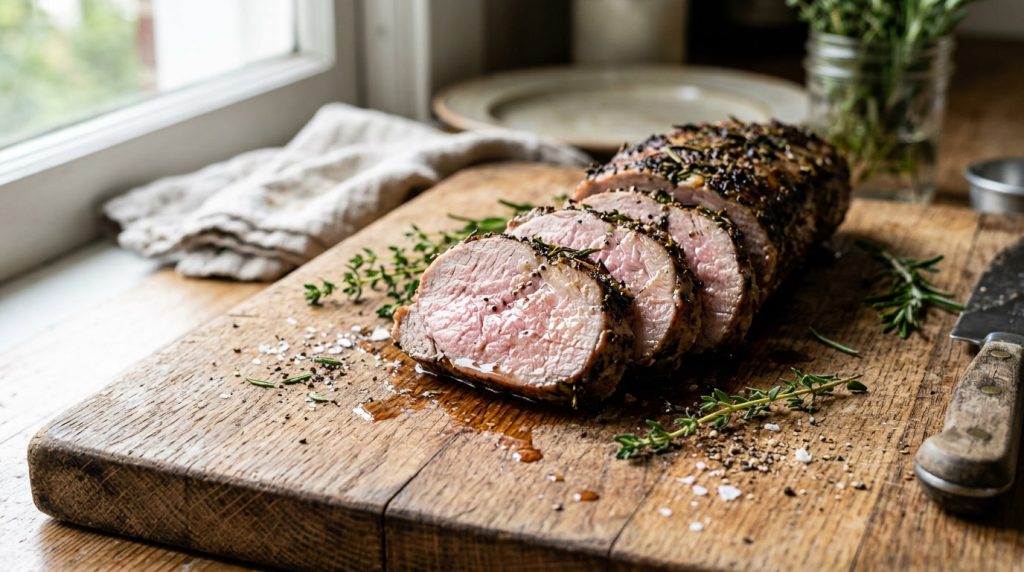
Pink Pork at 145°F Is Normal
If you grew up on pork cooked until it was grey through, a chop or tenderloin at 145°F will look underdone. It has a rosy centre and the juices may be faintly pink. That is what properly cooked whole-cut pork looks like at the safe minimum.
USDA is plain about this: colour is not a reliable sign of doneness. It fails in both directions. Pork can turn pale before it reaches a safe temperature, and it can stay pink after it has passed one. Ground pork in particular can hold a pink tint at 160°F. Clear juices are a colour test too, with the same weakness. Only the reading on a thermometer settles it.
Colour is also a separate question from freshness. Raw pork that looks or smells wrong before it goes on the grill needs the spoilage checks in how to tell if pork is bad, and no cooking temperature fixes that.
Why Ground Pork Needs 160°F
On a whole chop or roast, bacteria sit on the outside surface, and the outside gets far hotter than the centre ever does. That is why a whole cut can be safe with a pink middle. Grinding changes it. Surface meat is mixed all the way through the batch, so whatever was on the outside is now in the centre of every burger, meatball and sausage. The centre has to reach 160°F to be safe.
The same logic covers raw sausage from the butcher. Fully cooked smoked sausage is a different product: it has been cooked already, and you are reheating it.
Where to Put the Thermometer
A correct number in the wrong spot is still a guess.
- On chops, go in from the side, horizontally, so the tip sits in the middle of the thickest part.
- On a tenderloin, probe the thick end. The tapered tail finishes first.
- On a roast, aim for the centre of the thickest section, and check a second spot before you pull it.
- On bone-in cuts, keep the tip off the bone, and away from pockets of fat or gristle, which read differently from the meat.
- For burgers and sausage, insert from the side or the end into the very centre.
Take the reading at the thickest part and trust the lowest number you find.
Safety Number vs Texture Target
For chops, tenderloin and loin roasts, the safe minimum and the texture target sit close together. Cook them much beyond 145°F and they dry out, because there is little fat or connective tissue to protect them.
Low-and-slow cuts work the other way round. A pork shoulder or a rack of ribs is safe once it passes 145°F, but it is still chewy there, because the collagen that holds those cuts together needs a long time at higher temperatures to break down. The finish temperatures and tenderness tests are in what temp pulled pork is done and what temp ribs are done. Reaching those numbers is about texture. Safety was settled hours earlier.
Leftovers follow their own rule. Reheat cooked pork to 165°F, and how to reheat pulled pork covers doing that without drying it out.
The Bottom Line
Cook whole pork cuts to 145°F in the thickest part and rest them at least 3 minutes. Take ground pork and raw sausage to 160°F, and poultry sausage to 165°F. Trust the thermometer over the colour, and treat the higher numbers for shoulder and ribs as tenderness targets.
Frequently Asked Questions
Is pork safe if it is still pink inside?
Yes, for whole cuts that reached 145°F and rested at least 3 minutes. Colour does not show whether pork is safe in either direction, so check the temperature.
Do I have to rest pork before cutting it?
For chops, tenderloin and roasts, yes. The rest of at least 3 minutes is part of the USDA safety standard for whole cuts.
What temperature should pork burgers reach?
160°F in the centre, measured from the side of the patty. Ground pork can stay pink at that temperature, so the thermometer is the test.
Can I take a pork shoulder off at 145°F?
It is safe to eat at that point, but it will be tough and will not pull apart. Shoulder is cooked well past 145°F so the connective tissue breaks down.
Related Guides
- What Temp Is Pulled Pork Done?
- What Temp Are Ribs Done?
- How to Tell if Pork Is Bad
- How to Reheat Pulled Pork
Never Throw Out Good Meat Again
Get the one-page BBQ cheat sheet: fridge and freezer times for every cut, safe temperatures, and the spoilage signs that are false alarms. Free, no spam.
No spam, and you can unsubscribe any time.