
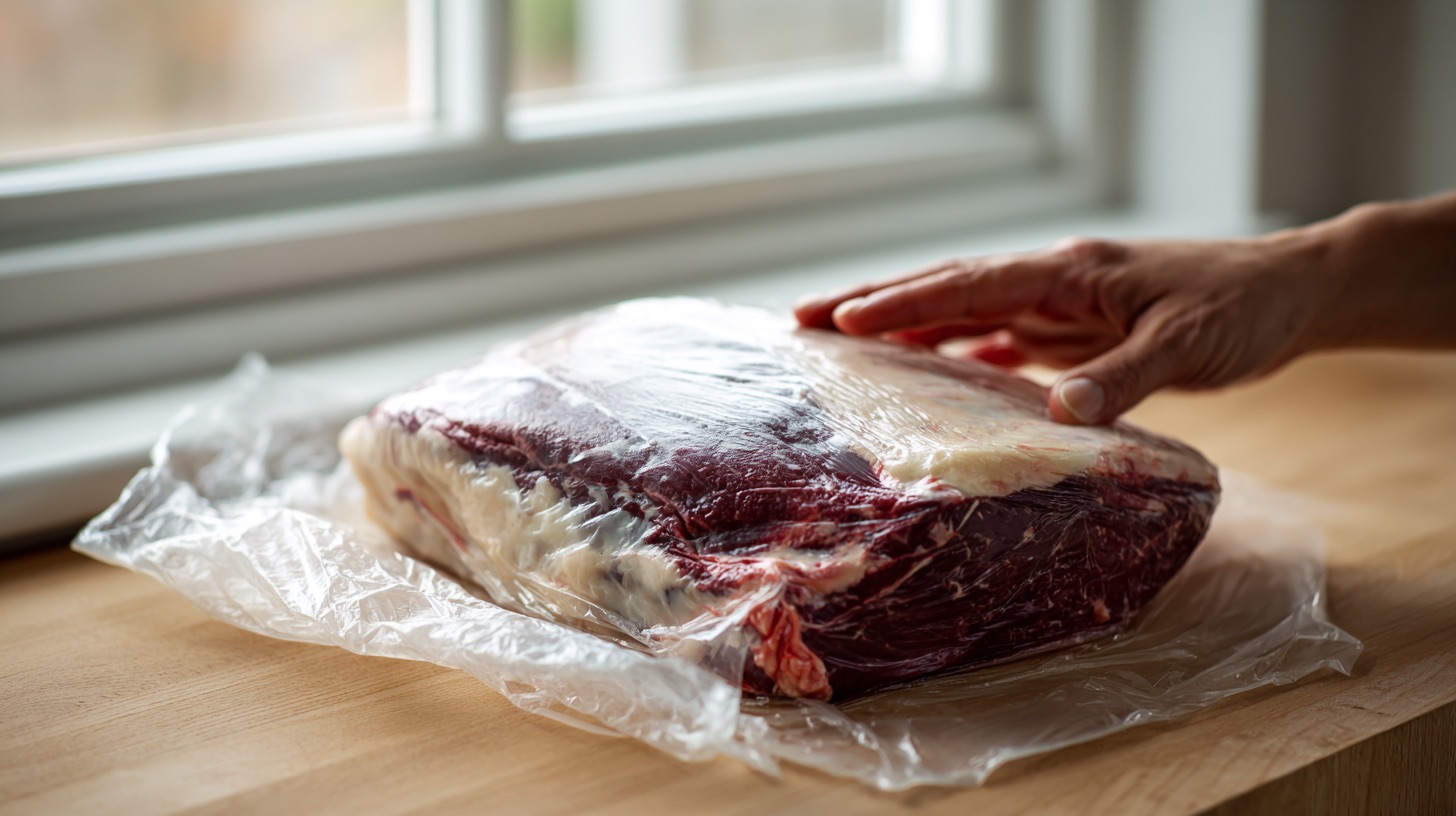
A whole packer brisket is the most expensive cut most home cooks ever buy, and it’s the one that sits in the fridge longest while you wait for a free weekend. So when you finally pull it out and something seems off, the stakes feel high. Here’s how to judge it properly.
The Quick Answer
A brisket has gone bad if it is slimy after rinsing, smells foul after airing out for 15 minutes, or shows fuzzy mold. Any one of those means throw it out.
A brisket has probably not gone bad just because it has gray or brown patches, looks dark purple straight from the vacuum bag, smells sour the instant you cut the Cryovac open, or sits a day past its sell-by date. All four of those are normal, and all four get good briskets thrown away every week.
Why Brisket Is Harder to Judge Than Other Cuts
Brisket has three quirks that make people misread it.
It’s almost always wet-aged. Briskets sit in vacuum bags for weeks between the packing plant and your cart — that’s deliberate, and it’s what makes the meat more tender. But weeks without oxygen means the bag builds up a sharp, sour, sometimes sulfurous smell. Cutting one open and recoiling is the single most common brisket false alarm.
It’s thick and unevenly shaped. The flat is lean and thin, the point is thick and fatty, and they age at different rates. Gray edges on the flat while the point still looks red is normal.
It sits in the fridge longer than anything else. People buy a brisket when it’s on sale and cook it when the calendar allows. That gap is where the real risk lives — not in the smell, but in the days.
The Four Checks, in Order
1. Touch: Slime Ends the Conversation
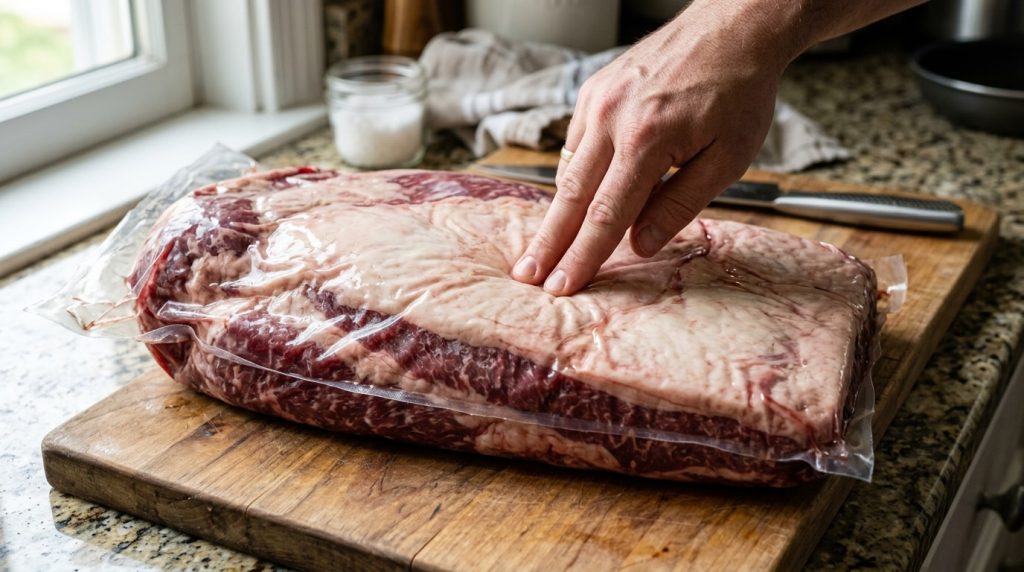
Rinse the brisket under cold water and pat it dry. Now run your fingers over the meat side.
Fresh brisket is firm and slightly moist, and it springs back when you press it. Spoiled brisket is slippery and tacky, with a film that clings to your fingers and won’t rinse away. That film is a bacterial biofilm — visible proof the bacterial load is high. There’s no cooking around it.
Note that a fresh brisket can feel a little slick from its own moisture and rendered surface fat, especially a fatty point. The distinction is whether it rinses clean. Slime doesn’t.
2. Smell: Give It 15 Minutes First
Never judge a wet-aged brisket by the smell in the first 60 seconds. Do this instead:
- Take it fully out of the bag and rinse it under cold water.
- Pat dry with paper towels, then sanitize the sink and wash your hands.
- Leave it uncovered on a tray in the fridge for 15 minutes.
- Smell it again, close up.
Faded to a faint, clean, slightly metallic beef smell? Cook it. Still sour, ammonia-sharp, or genuinely rotten? Throw it out. Real spoilage doesn’t air out — it gets worse as the meat warms, and it triggers a gag reflex rather than curiosity.
3. Look: Color Tells You Less Than You Think
The USDA is explicit that a change in color alone does not mean meat is spoiled, and that color changes are normal for fresh product. Beef pigment starts purple-red without oxygen, blooms bright cherry-red in air, and oxidizes to brownish-red over time in the fridge. All three are the same safe piece of meat at different stages.
- Deep purple-red out of the vacuum bag: normal. It’ll bloom red within 20 to 30 minutes.
- Gray or brown edges, especially on the flat: normal oxidation. Trim if you want; it isn’t a safety issue.
- Darkened all over after several days in the fridge: normal aging. Check smell and feel.
- White dried patches on a frozen brisket: freezer burn. Safe, just dry — trim it.
- Green, blue, or black fuzz: mold. Discard the whole brisket.
- An iridescent green shimmer on a sliced surface: harmless light refraction, not bacteria.
4. Count the Days
This is the check people skip, and it’s the one that actually protects you. Smell and touch catch spoilage that has already advanced. The calendar catches it before it starts.
| Brisket | Fridge at 40°F (4°C) or below | Freezer at 0°F (-18°C) |
|---|---|---|
| Raw brisket, opened or repackaged | 3 to 5 days | 4 to 12 months for best quality |
| Raw brisket, unopened in its original vacuum bag | Until the use-by date, if it stayed cold — then judge it | 4 to 12 months for best quality |
| Cooked or smoked brisket | 3 to 4 days | 2 to 6 months for best quality |
| Brisket thawed in the fridge | 3 to 5 days from the day it thawed | Can be refrozen without cooking |
Freezer times are quality guidelines, not safety limits. Meat kept continuously at 0°F stays safe indefinitely — it just tastes progressively worse.
The Unopened-Cryovac Question
An unopened, intact vacuum bag protects the brisket far longer than an opened one, which is why briskets carry use-by dates weeks out. Two things matter:
- The seal must be intact. A bag that’s puffed up, leaking, or loose has lost its vacuum. Air got in, and the clock has been running at a much faster rate than the printed date assumes. Judge that brisket on its merits, not the label.
- The temperature must have held. A brisket that sat in a warm car for three hours, or rode out a fridge failure, is not covered by any date on the package.
Purge — the reddish liquid pooled in the bag — is normal. It’s myoglobin and water, not blood. Cloudy, thick, or ropy purge with a strong smell is not.
Brisket That Went Bad Mid-Cook
A specific scenario worth naming: you started an overnight cook, the fire died at 2 a.m., and you woke to a brisket that spent hours somewhere between warm and cool.
Bacteria multiply fastest between 40°F and 140°F — the Danger Zone — and food should never sit in that range for more than 2 hours. A stalled overnight cook usually blows well past that, and no amount of finishing it in the oven fixes it, because some bacteria produce toxins that survive cooking. It’s an expensive loss, and it’s still the right call.
Same logic applies to a brisket left resting in a cooler far too long. Holding is safe above 140°F. Below that, you’re on the clock.
How to Tell if Cooked Brisket Has Gone Bad
Leftover brisket hides its warning signs under bark, smoke, and rendered fat. Check for a sour or yeasty smell beneath the smoke, slime on the meat itself rather than congealed fat, any fuzzy spots, and the calendar — more than four days and it goes, however it looks.
One useful signal: cooked brisket that has turned often tastes wrong before it smells wrong. A sour or metallic first bite means stop.
The Bottom Line
Feel it, air it out and smell it, look at it, then count the days. Slime or persistent stink means throw it out. Gray patches and bag funk mean nothing at all. And if a brisket spent a night in the Danger Zone, none of the other checks matter — that one’s decided already.
In the United States, the USDA Meat and Poultry Hotline will answer questions about a specific piece of meat for free at 1-888-674-6854.
Frequently Asked Questions
Why does my brisket smell sour right out of the package?
Because it was wet-aged in a vacuum bag for weeks. Bacteria that grow without oxygen produce sour and sulfurous compounds that concentrate in the sealed bag. Rinse the brisket, pat it dry, and let it sit uncovered in the fridge for 15 minutes. If the smell fades, it’s fine.
My brisket has gray edges. Is it spoiled?
Almost certainly not. Gray and brown edges are oxidation, and the USDA states plainly that color change alone doesn’t indicate spoilage. Check whether the meat is slimy or smells foul after airing out — those are the signals that matter.
How long can a brisket stay in the fridge before cooking?
Three to five days once opened or repackaged. An unopened vacuum-sealed brisket that has stayed properly cold can generally be kept until its use-by date, provided the seal is intact.
Is it safe to eat brisket that was left out overnight while smoking?
No. Anything held between 40°F and 140°F for more than two hours should be discarded, and a stalled overnight cook exceeds that. Some bacteria leave behind heat-stable toxins, so finishing the cook won’t make it safe.
Can I still cook a brisket that’s slightly past its sell-by date?
Usually yes. Sell-by dates are stock-rotation guidance for retailers, not safety deadlines. Judge the brisket by smell and texture instead — and pay closer attention to how long it has been in your fridge.
What is the red liquid in the brisket package?
It’s purge — water and myoglobin released by the muscle, not blood. It’s completely normal. Cloudy, thick, or ropy liquid paired with a strong smell is a different matter.
Never Throw Out Good Meat Again
Get the one-page BBQ cheat sheet: fridge and freezer times for every cut, safe temperatures, and the spoilage signs that are false alarms. Free, no spam.
No spam, and you can unsubscribe any time.
Related Guides
- How long does brisket last in the fridge? — raw, vacuum-sealed and cooked.
- What temp is brisket done? — the safe number and the probe-tender window.
- How to tell if ribs are bad — the same four checks applied to pork and beef ribs.
- Can you eat ribs left out overnight? — what to do after a stalled cook or a forgotten platter.
- How long do ribs last in the fridge and freezer? — full USDA storage times.
- What temp are ribs done? — and where to put the probe.
- Why does my meat smell like sulphur? — wet-aged beef does this too.