
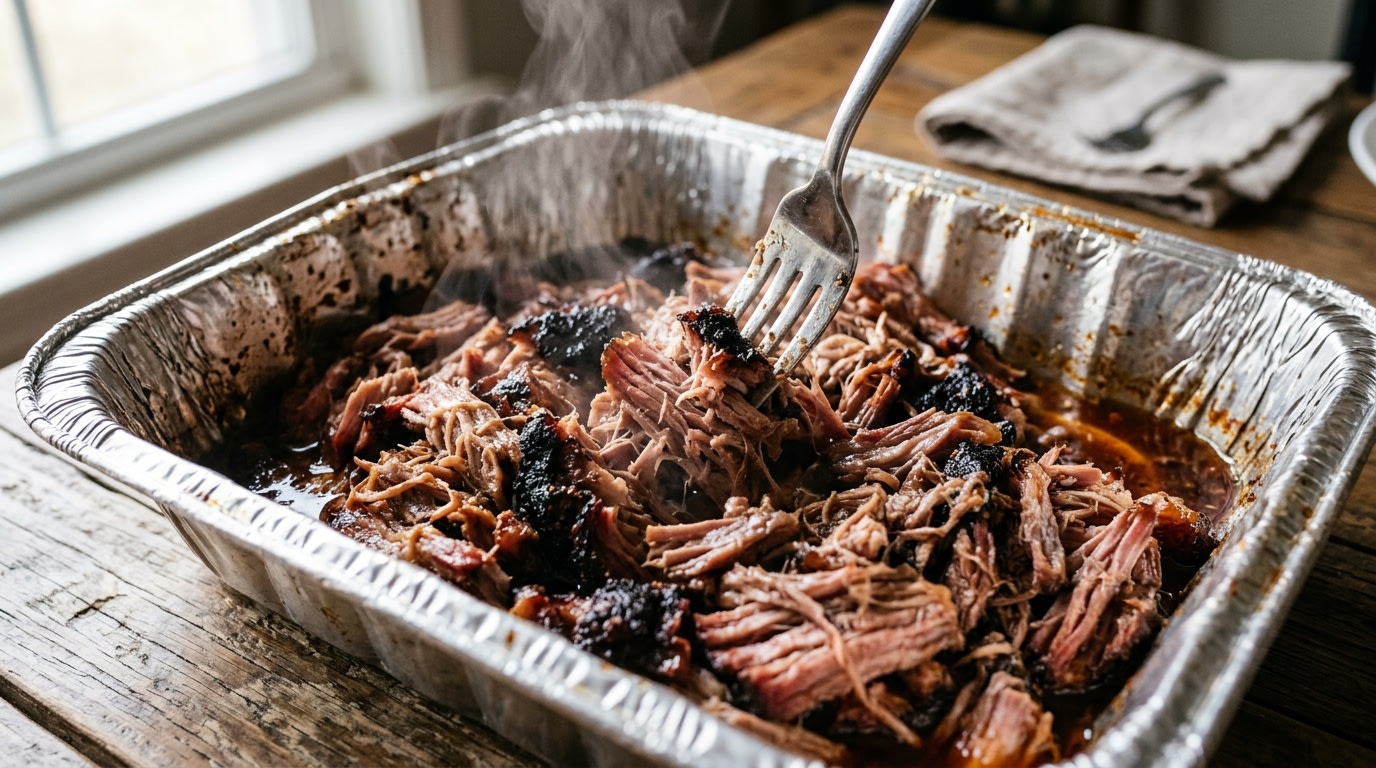
Yesterday’s pulled pork comes out of the fridge as a cold brick with a layer of white fat on top. Microwave it flat out and you get dry shreds in a puddle. The fix is not a secret method, it is liquid plus a lid plus low heat, and stopping at the right temperature.
The 60-Second Answer
Add a splash of liquid, cover it tightly, and reheat gently until the pork reaches 165°F, which is the USDA reheating temperature for leftovers. Oven at 250°F in a covered pan is the best all-round method; a sealed bag in 165°F water is the best if you vacuum-sealed it; the microwave is fine for one plate if you cover it and go in short bursts.
Why Reheated Pulled Pork Dries Out
Shredded meat is mostly surface area. Every strand is exposed, so moisture leaves fast the moment it gets hot air on it. The gelatin that made the pork feel juicy when it was fresh has also set into the drippings in the bottom of the container, which is why people throw away the best part of their leftovers when they pour that off.
Two habits fix most of it. Save the defatted drippings and put them back in on reheating. And stop at 165°F rather than blasting it until it is steaming violently, because past that the shreds are just losing water.
Method by Method
| Method | Setup | Time | Best for |
|---|---|---|---|
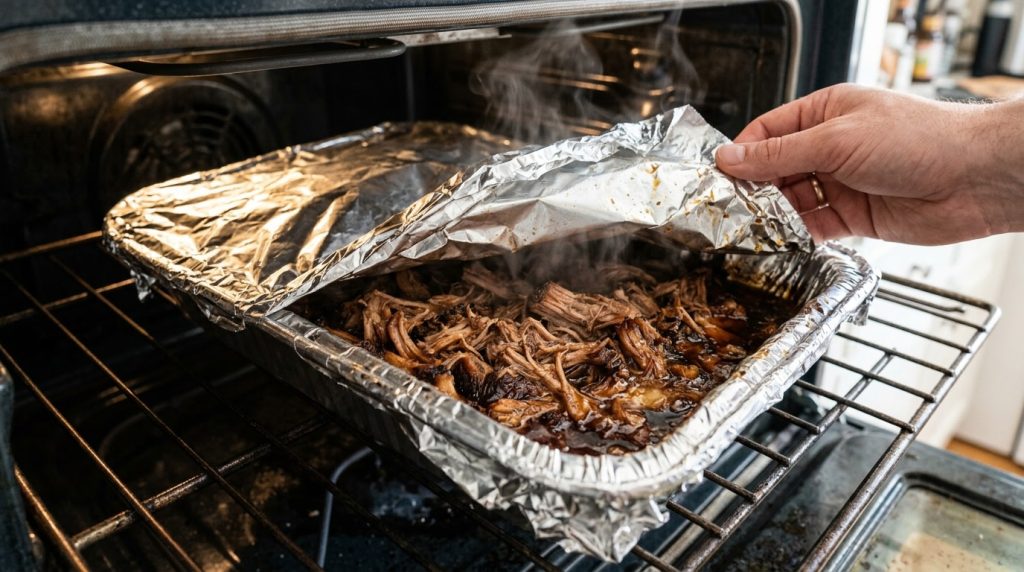
| Oven | 250°F, pork in a pan with 2–4 tbsp liquid per pound, foil sealed tight | 20–40 min | Any amount; the default choice |
| Hot water bath | Vacuum-sealed bag in water held around 165°F | 30–45 min | Frozen or vac-sealed portions; nothing evaporates |
| Stovetop | Skillet on low, splash of liquid, lid on, stir once or twice | 5–10 min | One or two servings, fastest hot food |
| Slow cooker | Low, liquid in the bottom, lid on | 1–2 hours | A crowd, when it also has to hold |
| Microwave | Covered dish, damp paper towel, 50% power, 45-second bursts | 2–4 min | A single plate |
Whatever the method, check the temperature in the middle of the pile rather than trusting the steam coming off the top.
The Liquid Question
In order of preference: the defatted drippings from the original cook, then unsweetened apple juice or stock, then a thin vinegar sauce. Avoid reheating in a thick sweet barbecue sauce, because the sugar scorches where it touches the pan and the sauce goes gluey. Add sauce once the pork is hot.
Two to four tablespoons per pound is enough. You are trying to create steam under the foil, not stew the meat.
Straight From Frozen
Thaw in the refrigerator overnight when you can. If you cannot, a sealed bag in hot water reheats from frozen without a thaw step; allow roughly an hour and check for 165°F in the thickest part of the bag. What you should not do is leave frozen pork on the counter to thaw, because the outside sits in the danger zone for hours while the middle is still frozen.
The Safety Numbers, Briefly
Cooked pulled pork keeps 3 to 4 days in the refrigerator and 2 to 6 months in the freezer for best quality. The full storage breakdown, including cooling a big batch fast, is in how long pulled pork lasts. Reheat to 165°F. Do not leave it out of refrigeration longer than two hours, or one hour if the room is above 90°F, because 40°F to 140°F is where bacteria multiply fastest.
Every reheat costs moisture, so warm up only the portion you are about to eat. If you are not certain the pork was stored properly in the first place, the checks are in how to tell if pulled pork is bad.
Bringing the Bark Back
Reheated pork is soft all the way through, which is pleasant but a little one-note. Two minutes under a hot broiler in a thin layer, or a quick pass in a dry skillet, crisps some of the edges again and gets you back a bit of the texture contrast. Do this after the pork is at 165°F, not instead of reaching it.
The Bottom Line
Liquid, a tight cover, low heat, 165°F, and sauce afterwards. The oven at 250°F handles almost every situation, a hot water bath is better for vacuum-sealed portions, and the microwave is acceptable for one plate if you keep the power down and the lid on.
Frequently Asked Questions
What temperature should reheated pulled pork reach?
165°F, the USDA figure for reheating leftovers. That is a different number from the 195°F to 205°F you cooked the shoulder to originally, which was about texture rather than safety, as explained in what temp pulled pork is done.
Can I reheat pulled pork twice?
You can, provided it went back in the refrigerator promptly each time and reaches 165°F again. The quality drops noticeably each time, so reheat single portions.
Why is my reheated pork greasy instead of juicy?
The fat separated and got stirred back in while the gelatin stayed behind in the container. Chill the drippings, lift the solid fat off the top, and add the jelly underneath it to the pork instead.
Is a slow cooker safe for reheating?
For reheating from cold it is slow enough that food can linger in the danger zone, so bring the pork up to 165°F in the oven or on the stove first, then move it to the slow cooker to hold above 140°F.
Related Guides
- What Temp Is Pulled Pork Done?
- How to Tell if Pulled Pork Is Bad
- How to Reheat Ribs Without Drying Them Out
- Low and Slow BBQ Pork Shoulder
Never Throw Out Good Meat Again
Get the one-page BBQ cheat sheet: fridge and freezer times for every cut, safe temperatures, and the spoilage signs that are false alarms. Free, no spam.
No spam, and you can unsubscribe any time.