
Cold brisket is a different food from the one that came off the smoker. The fat has set, the slices have tightened, and the usual reflex, a hot pan or three minutes in the microwave, finishes the job the fridge started. Reheated brisket can be genuinely good, but only if it gets moisture, a cover and a low temperature.
The 60-Second Answer
Reheat brisket to 165°F, the USDA figure for leftovers, wrapped tightly with a few spoonfuls of liquid at 250°F in the oven. Reheat it whole or in a thick chunk whenever you can and slice afterwards, because slices dry out several times faster than a block of meat.
Why Reheated Brisket Goes Dry
Two things happen in the refrigerator. Rendered fat and gelatin set into the container instead of staying in the meat, and the slices lose moisture from every cut surface. Reheating in open air finishes that process: hot dry air pulls the last of the moisture out of the exposed faces while the middle is still cold.
So the fix is the opposite of a quick blast. A sealed environment, a little liquid to make steam, and enough time for the heat to reach the middle without cooking the outside again.
Method by Method
| Method | Setup | Time | Best for |
|---|---|---|---|
| Oven | 250°F, wrapped in foil with 2–3 tbsp beef stock or saved drippings | 30–60 min depending on thickness | Any amount; the default |
| Hot water bath | Vacuum-sealed bag in water around 165°F | 45–60 min | Vac-sealed portions; nothing evaporates at all |
| Steam on the stove | Covered pan, splash of liquid, lowest heat | 10–15 min | A plate of slices |
| Skillet | Hot pan, slices in fat, 60–90 seconds a side | 2–3 min | Chopped brisket, burnt ends, sandwiches |
| Microwave | Covered dish, damp towel, 50% power, 45-second bursts | 2–3 min | One portion, when speed wins |
Check the temperature in the centre of the thickest piece rather than judging by steam.
The Liquid Matters More Than the Method
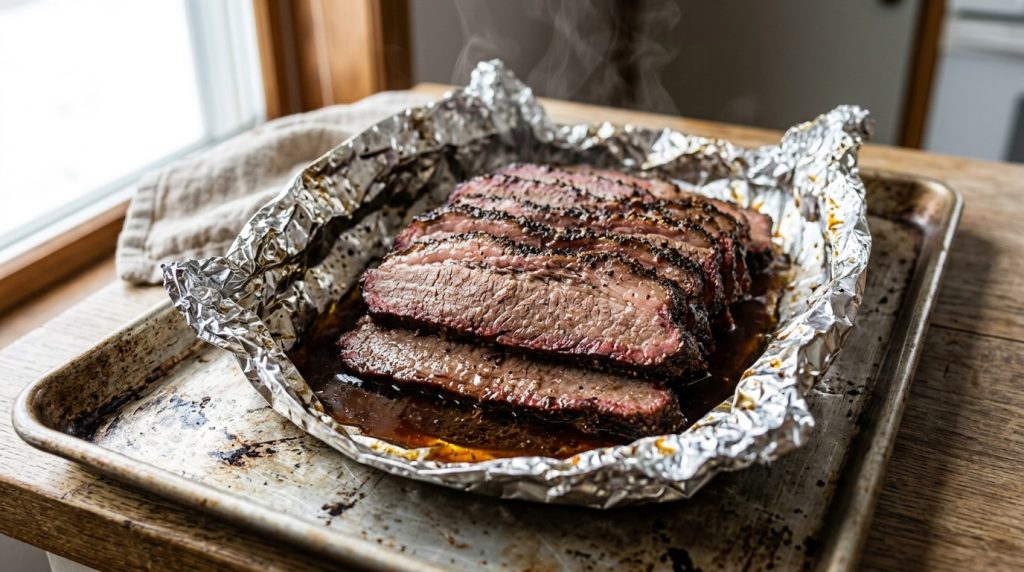
Best option: the drippings from the original cook, chilled so the hard fat lifts off and the jellied stock underneath goes back in. After that, unsalted beef stock, or a mix of stock and rendered beef tallow. Water works and tastes like it.
Two or three tablespoons per pound is plenty; you are creating steam inside the foil, not braising. Save the sauce for the plate, because a sweet barbecue sauce scorches against hot foil and turns sticky.
Slice Cold, Reheat Warm
If the brisket is still whole, reheat it whole. If it is already sliced, keep the slices stacked tightly together in the foil so they behave like a block, and add a little more liquid. Cutting thin slices and spreading them across a tray is what produces jerky.
Very cold brisket also slices more cleanly than warm brisket, which is useful if you want neat slices for sandwiches: slice it straight from the fridge, then warm the stack.
From Frozen
Thaw in the refrigerator overnight, then reheat as above. A vacuum-sealed piece can go into a hot water bath from frozen; give it an extra 30 minutes and confirm 165°F in the middle. Never thaw brisket on the counter, because the outside sits in the 40°F to 140°F danger zone for hours while the middle is still frozen.
The Safety Numbers
Cooked brisket keeps 3 to 4 days in the refrigerator and 2 to 6 months in the freezer for best quality. Raw packers and vacuum-sealed brisket are covered in how long brisket lasts in the fridge. Reheat to 165°F. Do not leave it out of refrigeration for more than two hours, or one hour if the room is above 90°F. If it has been in the fridge a while, run the checks in how to tell if brisket is bad before reheating anything.
Getting the Bark Back
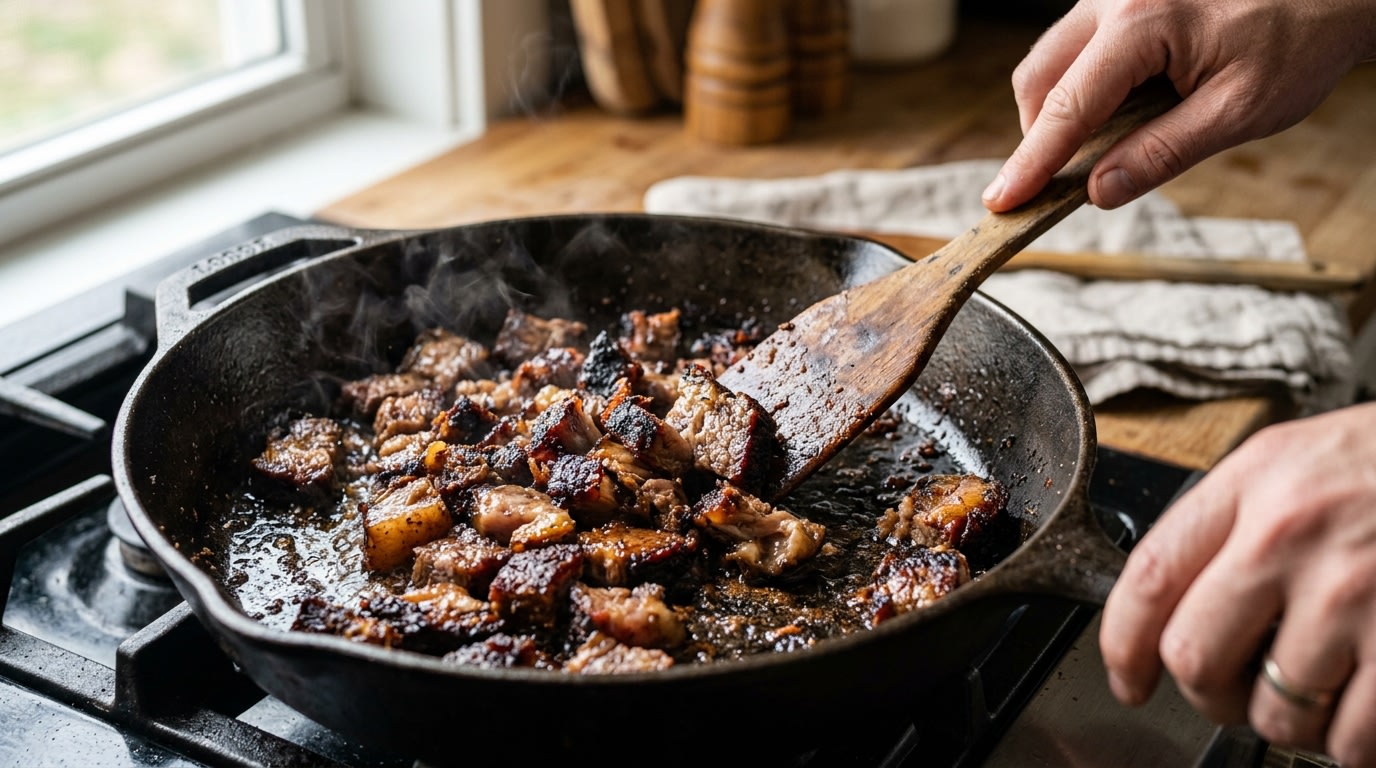
Steam softens bark, so give the brisket two or three minutes uncovered at the end, either in the oven or under a broiler, and the surface firms up again. On chopped brisket, a quick pass in a dry hot skillet does the same thing and crisps the edges.
The Bottom Line
250°F oven, tight foil, a few spoonfuls of liquid, up to 165°F, then uncovered for two minutes to recover the bark. Reheat in the largest piece you can and slice afterwards.
Frequently Asked Questions
What temperature do you reheat brisket to?
165°F, the USDA reheating figure for leftovers. That is far below the 195°F to 205°F you cooked it to, which was about texture, as covered in what temp brisket is done.
Can I reheat brisket in an air fryer?
For small pieces, wrapped in foil with a little liquid at around 250°F, yes. Unwrapped it is a dehydrator with a fan, and brisket is the wrong food for that.
How do I reheat brisket for a crowd?
Wrapped pans at 250°F until the centre reaches 165°F, then hold above 140°F in a cooler or a low oven until serving. The holding method is in how to keep pulled pork warm, and it works the same for brisket.
Is it safe to reheat brisket twice?
It is, as long as it went back into the refrigerator promptly and reaches 165°F again. Quality drops each time, so reheat only what you are about to eat.
Related Guides
- How to Reheat Prime Rib Without Turning It Grey
- What Temp Is Brisket Done? Safe vs Probe-Tender
- How Long to Rest Brisket
- How to Tell if Brisket Is Bad
- How to Reheat Pulled Pork
Never Throw Out Good Meat Again
Get the one-page BBQ cheat sheet: fridge and freezer times for every cut, safe temperatures, and the spoilage signs that are false alarms. Free, no spam.
No spam, and you can unsubscribe any time.