
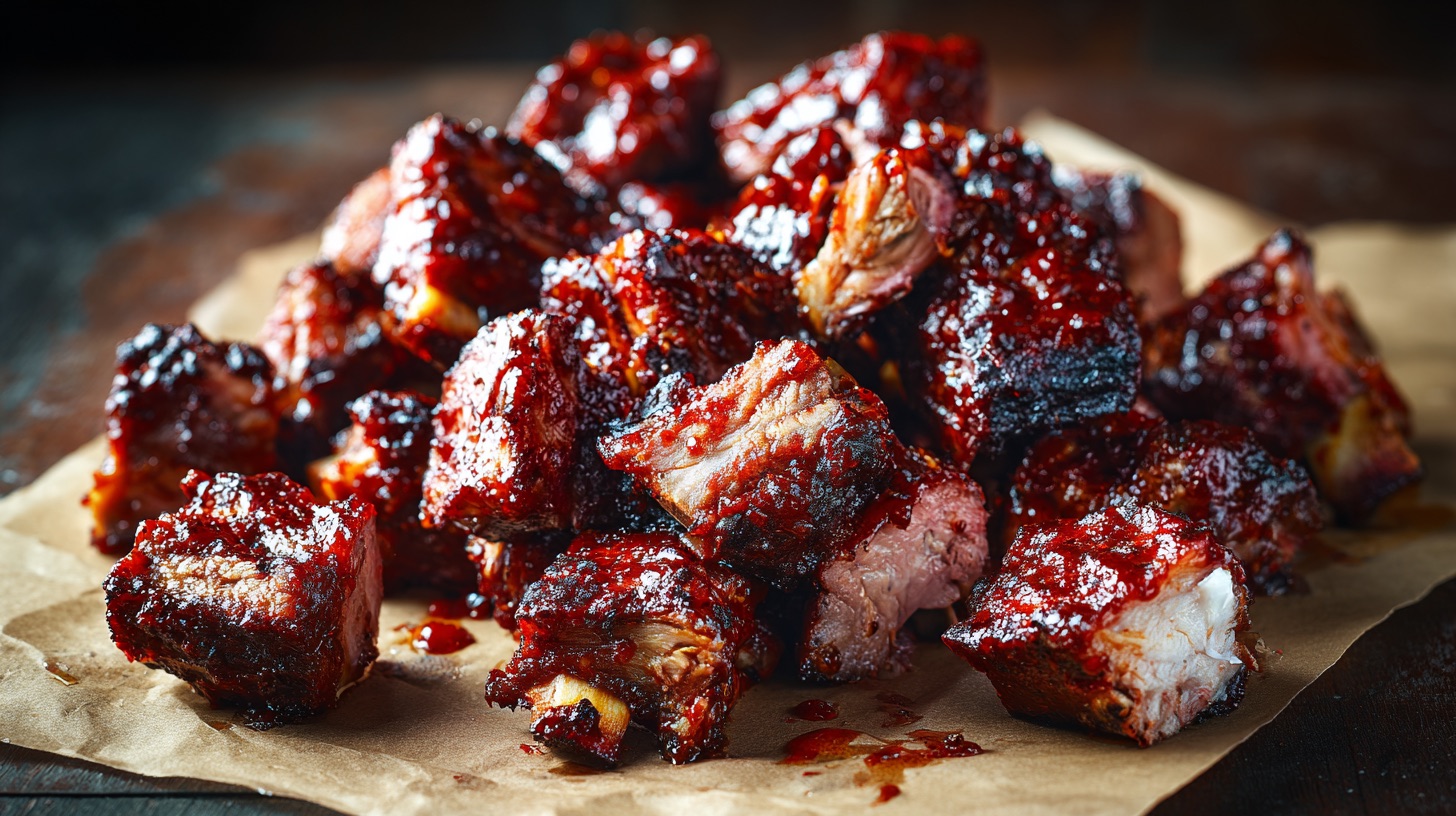
Rib tips are the best value on the butcher’s counter and almost nobody knows what to do with them. They’re the strip that gets trimmed off a rack of spare ribs to square it into the St. Louis cut — meaty, cartilage-heavy, and sold for a fraction of what the pretty racks cost.
Cooked right, they’re better than ribs: more bark per bite, more collagen, and no bones to work around. Cooked wrong, they’re rubbery, and that cartilage is the reason.
What Rib Tips Actually Are
A full rack of pork spare ribs has a tapering strip along the bottom edge where the ribs meet the sternum. That strip has no rib bones in it — instead it’s threaded with soft cartilage discs and little flat bone slivers, wrapped in some of the fattiest, most flavourful meat on the hog.
Trim that strip off and you’re left with the neat rectangle everyone recognises as St. Louis-style ribs. The strip you removed is rib tips.
In Chicago they’re a whole cuisine of their own, sold by the slab from barbecue windows with fries and white bread. Everywhere else they tend to sit in the discount bin, which is good news for you.
Rib Tips vs Burnt Ends
These get confused constantly, and they’re not the same thing.
| Rib tips | Burnt ends | |
|---|---|---|
| What it is | Trim from a rack of pork spare ribs | Cubes from the fatty point of a beef brisket |
| Meat | Pork | Beef (or pork belly, for the modern version) |
| Contains | Cartilage and small bone pieces | No bone at all |
| Texture | Chewy-tender with a cartilage crunch | Soft, rich, candied on the outside |
| Cook time | 3–4 hours | Cubed after a full brisket cook, then 1–2 hours more |
Some barbecue joints do sell “pork rib tip burnt ends” — rib tips cubed and glazed like burnt ends. That’s a hybrid, and it’s excellent, but the two starting cuts are still different animals in the literal sense.
The One Thing That Makes or Breaks Them
Cartilage. It’s what people are chewing on when they say rib tips are tough.
Cartilage doesn’t soften at the temperature that cooks the meat. It needs to go further and stay there longer — you’re aiming for 200–205°F, at the top end of where you’d take ribs, and holding there long enough for it to turn gelatinous. Pull rib tips at 195°F and the meat will be done while the cartilage is still rubber.
So: cook them longer than you think, and test by feel rather than by clock.
Before You Cook: Trim and Season
- Trim the hard fat. Soft fat renders and is where the flavour lives. Thick hard fat won’t render in this time and turns greasy. Take off anything more than about a quarter inch.
- Leave the cartilage. It becomes the best part once it’s cooked through.
- Cut into strips roughly 2 inches wide if they came as one long slab. More surface area means more bark.
- Skip the membrane hunt. Rib tips usually don’t have the tough silverskin that racks do.
- Season generously. There’s a lot of surface here. A simple 50/50 salt-and-pepper base plus paprika, garlic powder and brown sugar covers it.
- Rest the rub 30–60 minutes at room temperature before cooking, well inside the two-hour safety limit.
Method 1: Smoker (Best Results)
- Run the smoker at 250°F. Hickory or oak suits pork; apple or cherry if you want it milder.
- Lay the tips out in a single layer, fat side up. Smoke 2 hours uncovered to build bark.
- Move them to a foil pan, add 1/4 cup apple juice, cover tightly, and cook 1 to 1.5 hours more.
- Check with a probe: it should slide through the cartilage with no resistance. If it grabs, re-cover and give it another 30 minutes.
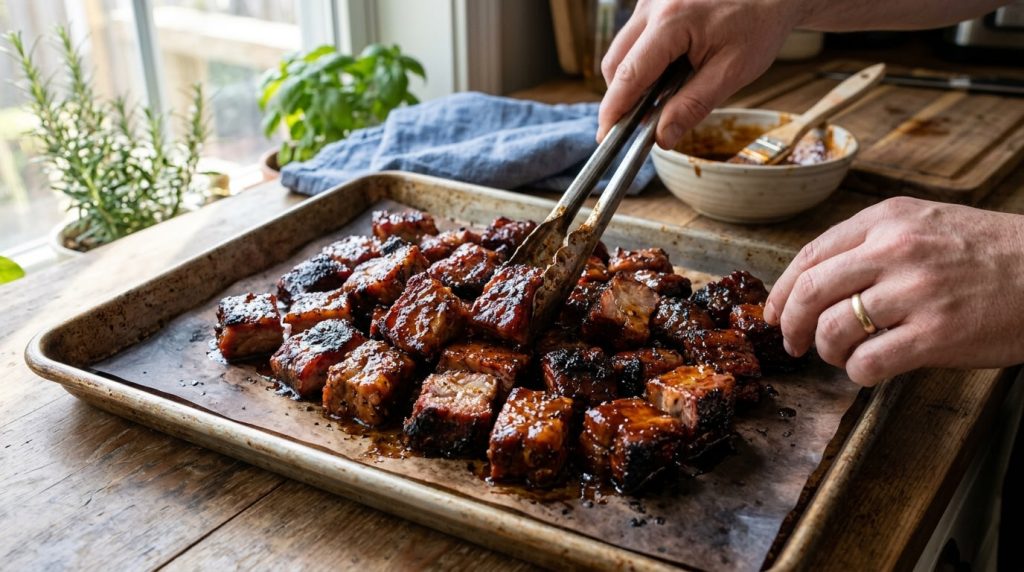
- Uncover, brush with sauce, and give them 15 minutes to set the glaze.
Total: about 3.5 to 4 hours.
Method 2: Grill (Two-Zone)
A charcoal or gas grill does this perfectly well as long as the tips never sit over direct flame for the long stretch.
- Bank the coals to one side, or light only half the burners. Aim for 250–275°F with the lid down.
- Put the tips on the cool side, lid closed. Add a foil packet of wood chips over the hot side if you want smoke.
- Cook 2 hours, turning once, keeping the lid shut as much as you can.
- Move to a foil pan with apple juice, cover, and cook 1 to 1.5 hours more until probe-tender.
- Uncover, sauce, and finish 2–3 minutes over direct heat — watching closely, because sauce burns fast.
Method 3: Oven (No Grill Needed)
You lose the smoke, and the results are still very good. A teaspoon of smoked paprika in the rub, or a few drops of liquid smoke in the braising juice, closes most of the gap.
- Heat the oven to 275°F.
- Arrange the tips on a rack over a foil-lined sheet pan so air gets underneath. Cook 2 hours uncovered.
- Transfer to a pan with 1/4 cup apple juice, cover tightly with foil, and cook 1 to 1.5 hours until a probe meets no resistance.
- Uncover, brush with sauce, and finish under the broiler for 3–5 minutes — stay at the oven door, this goes from glazed to burnt quickly.
How to Tell When They’re Done
Temperature gets you close; feel confirms it.
- 200–205°F in the meat, away from any bone fragments.
- A probe slides through the cartilage with no resistance at all. This is the real test — the cartilage finishes last.
- They jiggle when you shake the pan rather than sitting stiff.
- The bark is set and doesn’t smear when you touch it.
Underdone rib tips are the most common complaint about this cut, and they’re always the same fix: more time, covered, with a little liquid.
Serving, Storing, Reheating
Cut across the strips into bite-sized pieces before serving — that’s how Chicago does it, and it makes the cartilage easy to eat around or through.
Cooked rib tips keep 3 to 4 days in the fridge and freeze well for two to six months. Reheat them wrapped in foil with a splash of liquid at 250°F until they reach 165°F.
Raw rib tips are worth using sooner than a rack. They carry the most exposed surface area of any rib cut, which means more places for bacteria to work, so cook them within about three days rather than pushing to five.
Frequently Asked Questions
What are pork rib tips?
They’re the meaty strip trimmed off a rack of spare ribs to create the St. Louis cut. Instead of rib bones they contain soft cartilage and small bone fragments, wrapped in fatty, flavourful pork.
How long do rib tips take to cook?
About 3.5 to 4 hours at 250–275°F: roughly two hours uncovered to build bark, then another one to one and a half hours covered with a little liquid until the cartilage is probe-tender.
What temperature are rib tips done at?
200–205°F, which is slightly higher than a rack of ribs. The extra heat is what softens the cartilage. Confirm with a probe rather than the number alone — it should pass through with no resistance.
Are rib tips the same as burnt ends?
No. Rib tips are pork trimmed from spare ribs and contain cartilage. Burnt ends are cubes cut from the fatty point of a beef brisket and contain no bone. Some places sell rib tips cubed and glazed as “rib tip burnt ends”, which blurs the naming but not the cuts.
Why are my rib tips chewy?
Almost always undercooked cartilage. The meat can be perfectly done at 195°F while the cartilage is still rubbery. Cover them with a little liquid and keep going until a probe slides through cleanly, usually another 30 to 60 minutes.
Can you cook rib tips in the oven?
Yes. Two hours at 275°F on a rack, then one to one and a half hours covered in a pan with apple juice, finished under the broiler with sauce. Add smoked paprika to the rub to make up for the missing smoke.
Do rib tips have bones?
Not rib bones, but they do contain small flat pieces of sternum bone alongside the cartilage. Warn anyone eating them for the first time — they’re easy to eat around once you know they’re there.
Related Guides
- What temp are ribs done? — the 200-205°F cartilage rule in context.
- How to keep ribs warm after cooking — holding rib tips for a party without drying them.
- How to reheat ribs — leftover rib tips, brought back properly.
- How long do ribs last? — rib tips spoil faster than racks – here is why.