

You want ribs on the table at a set time and the smoker is holding 225°F, so you need to know when the meat goes on. Rib times get quoted all over the place, and most of that spread comes down to which rack you bought and how thick it is. The National Pork Board publishes a chart for this exact temperature band, so start there and let the meat tell you when it has finished.
The 60-Second Answer
At a smoker temperature of 225–250°F, the National Pork Board lists baby back ribs at 3 to 5 hours and St. Louis ribs and spareribs at 5 to 7 hours, adding that cook times vary with thickness. At 225°F, the bottom of that band, plan on the longer end. Ribs are safe at 145°F with a 3-minute rest (USDA), but this site’s texture target for tender ribs is 195–203°F between the bones, confirmed by the bend test.
Why the Chart Gives Such a Wide Window
Baby backs come from the loin and are smaller. Spareribs come from the belly and carry more meat, so they need more time for the heat to reach the middle and for the connective tissue to soften. St. Louis ribs are spareribs trimmed square, which is why the chart gives them the same hours.
Within one type, thickness moves the clock most, as the Pork Board notes. A full smoker and a lid you keep lifting slow things down too.
FSIS advises keeping a smoker’s air between 225 and 300°F for the whole cook and notes that less tender meats benefit from smoking. Ribs fit that description. The extra hours give collagen time to break down.
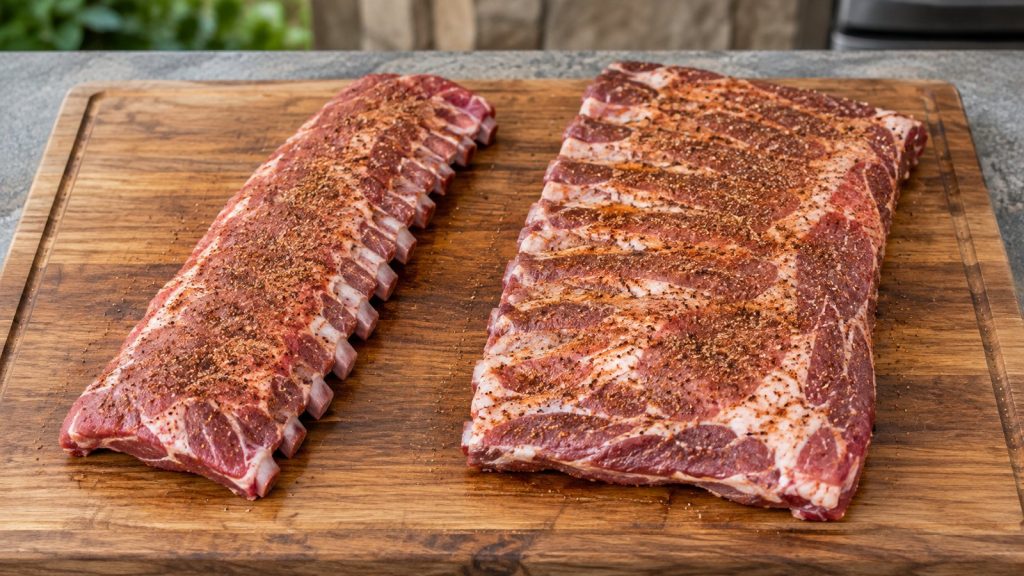
Smoking Times by Rib Type
| Rib type | Where it comes from | Smoker at 225–250°F (National Pork Board) | Texture target (this site) |
|---|---|---|---|
| Baby back (loin back) | The loin; smaller than spareribs | 3–5 hours | 195–200°F |
| St. Louis | Spareribs squared off | 5–7 hours | 200–203°F |
| Spareribs | The belly; larger and meatier | 5–7 hours | 200–203°F |
| Rib tips | Trimmings left after cutting St. Louis ribs | Not listed | 200–205°F |
| Country-style | Where the loin meets the shoulder | Not listed | Not listed |
The hours are the Pork Board’s; the texture targets are this site’s cook’s numbers, separate from the USDA safety minimum. Baby backs are leaner and turn mushy if you push them past their range. The full breakdown by cut is in what temp ribs are done.
225°F or 250°F: Which Way the Clock Moves
Hotter air cooks faster, so a rack at 250°F finishes sooner than the same rack at 225°F. No chart splits the hours between the two settings, so any precise figure you see for one or the other is a guess. At 225°F, expect to land toward the top of the range for your rib type.
Running behind is tempting to fix by cranking the heat. Blasting ribs fast gives dry, tough meat, because the fibres squeeze out their moisture before the collagen has turned.
Wrapping the rack in foil partway through speeds things up. The wrapped meat steams in its own juice, which also softens the bark. That trade sits at the centre of the 3-2-1 rib method, and the guide explains how to shorten each phase for baby backs.
Planning Backward From Dinner
Count back from the time you want to eat, using the long end of the chart. Say dinner is at 6 p.m.:
- Spareribs or St. Louis: 7 hours of smoking plus up to an hour of resting puts the ribs on at about 10 a.m.
- Baby backs: 5 hours plus up to an hour of resting puts them on at about noon.
These are estimates built from the Pork Board’s hours. Add the time your smoker needs to come up to temperature, and if the racks are still frozen, sort that first with how long to thaw ribs.
If the ribs finish early, the Pork Board suggests wrapping them in heavy foil off the heat, setting them in brown paper bags and resting them up to one hour. For a longer wait, FSIS says to keep cooked meat at 140°F or warmer; an oven at about 200°F does the job. More ways to hold them are in how to keep ribs warm after cooking.
Common Mistake: Pulling Ribs When the Hours Run Out
The chart tells you when to start checking. Push a thermometer between the bones into the thickest meat and keep the tip off the bone, which reads 10–15°F high and can call the ribs done early. Colour is no guide; FSIS says a food thermometer is the only reliable check.
Then lift the rack with tongs about a third of the way along. Done ribs bow deeply and the surface cracks. A stiff rack needs more time. If it breaks apart, it has gone past the texture target. Ribs that reach 145°F are safe to eat, yet still chewy, because the collagen has barely started to soften. Why are my ribs tough covers the other causes.
The Bottom Line
At 225–250°F, the National Pork Board puts baby backs at 3 to 5 hours and St. Louis ribs or spareribs at 5 to 7, with thickness deciding where you land. At 225°F, plan on the long end, count back from dinner with an hour spare for resting, and finish by the 195–203°F texture target and the bend test.
Frequently Asked Questions
How long do baby back ribs take to smoke at 225°F?
The National Pork Board lists 3 to 5 hours at 225–250°F. At 225°F, expect the longer end, and stop once they reach this site’s 195–200°F texture target and pass the bend test.
How long do spare ribs take at 225°F?
Spareribs and St. Louis ribs are listed at 5 to 7 hours at 225–250°F. Thicker racks take longer.
Is 225°F or 250°F better for ribs?
Both are inside the Pork Board band and the FSIS smoker range of 225 to 300°F. The ribs finish sooner at 250°F; the lower setting gives you more time before the meat dries out.
Do I have to wrap ribs at 225°F?
No. Wrapping in foil shortens the cook and softens the bark, while an unwrapped rack takes longer and keeps a firmer crust.
Related Guides
- What Temp Are Ribs Done? Safe vs Tender Explained
- 3-2-1 Ribs: What Each Number Means (and When to Change It)
- How Long to Cook Ribs in the Oven at 350°F (and Lower)
- Why Are My Ribs Tough? 5 Causes and the Fix
Never Throw Out Good Meat Again
Get the one-page BBQ cheat sheet: fridge and freezer times for every cut, safe temperatures, and the spoilage signs that are false alarms. Free, no spam.
No spam, and you can unsubscribe any time.