
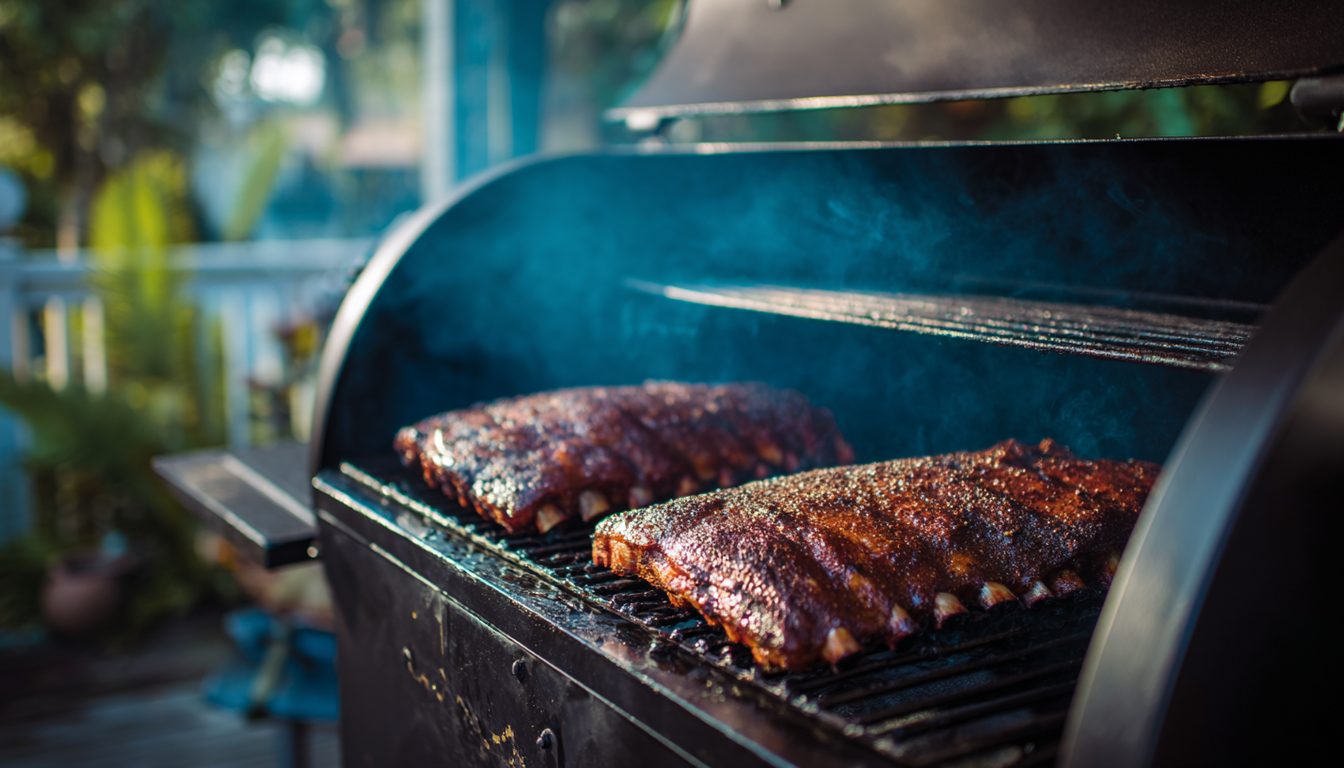
The thermometer said the ribs were safe, yet the meat clings to the bone and fights back when you bite. Nearly every case comes down to one of five things: the temperature you pulled them at, the heat you used, where the probe sat, the target you chose for the cut, or what was left on the rack. Most of them can still be fixed tonight.
The 60-Second Answer
USDA says pork ribs are safe at 145°F with a 3-minute rest, but at that point the collagen has not broken down, so they are safe and tough. This site’s texture target for tender ribs is 195–203°F between the bones, confirmed with the bend test. If your ribs are tough now, wrap them in foil with a little liquid and keep cooking them low until they bow and crack when lifted.
Cause 1: You Pulled Them at the Safe Temperature
This is the usual one. The USDA safe minimum for pork, 145°F measured before the meat comes off the heat, is a safety number. It says nothing about texture, and ribs are full of connective tissue that stays rubbery at 145°F.
That collagen softens only with more heat over more time. By the 195–203°F range it has broken down, and the meat goes from springy to tender. These are this site’s cook’s targets for texture, not USDA figures. The full breakdown by rib type is in what temp ribs are done.

Cause 2: The Heat Was Too High
Blast ribs over high heat and the muscle fibres tighten and squeeze out their moisture before the collagen has time to turn. You get meat that is dry outside and still chewy near the bone, often under a hard, dark crust.
FSIS notes that smoking keeps the air between 225 and 300°F and that less tender meats benefit from that slower method. The National Pork Board’s smoker chart at 225–250°F lists baby backs at 3 to 5 hours and spareribs or St. Louis ribs at 5 to 7 hours. Indoors, how long to cook ribs in the oven covers the FSIS times at 350°F and what changes when you go lower.
Causes 3 and 4: A Bad Reading, or the Wrong Target
The probe touched bone. A probe resting against bone reads 10–15°F high. A rack showing 200°F at the bone may be at about 185–190°F in the meat. That is an estimate, but it explains why “done” ribs can still be tight. Slide the probe between the bones into the thickest meat.
The target did not match the cut. Different ribs finish at different points:
- Baby backs come from the loin and are smaller and leaner. Texture target: 195–200°F. Push far past it and they go mushy.
- Spareribs come from the belly and are larger and meatier; St. Louis ribs are squared-off spareribs. Target: 200–203°F.
- Rib tips, the pieces left after cutting St. Louis ribs, run 200–205°F.
- Beef short ribs need 203–207°F and beef back ribs 200–203°F. See what temp beef ribs are done.
Cause 5: Membrane and Leftover Trim
Pork ribs carry a thin, shiny membrane on the bone side. Left on, it cooks into a leathery sheet that people blame on the meat. Peel it before you season: work a butter knife under one corner, grip the edge with a paper towel, and pull. Trim loose flaps of meat and hard fat too, since thin bits dry out long before the thick meat is ready.
Boiling ribs first to speed things up has costs of its own; should you boil ribs before grilling goes through them.
What You Notice and How to Fix It
| What you notice | Likely cause | Fix |
|---|---|---|
| Springy, rubbery meat that grips the bone | Pulled near the 145°F safe temperature | Keep cooking to the 195–203°F texture target |
| Dry outside, chewy near the bone, hard crust | Cooked too hot and too fast | Wrap with a little liquid and finish low; cook lower next time |
| Probe said done, rack stays stiff in the bend test | Probe was touching bone | Re-probe between the bones in the thickest meat |
| Beef short ribs chewy at a “pork” reading | Wrong target for the cut | Cook beef short ribs to 203–207°F |
| Leathery layer on the underside | Membrane left on | Peel it before seasoning next time |
| Soft and mushy (the opposite problem) | Baby backs overshot, or marinated too long | Stop baby backs at 195–200°F; marinate in the fridge for under two days |
The last row is a false alarm: FSIS says a marinade left on past two days can break down the meat fibres and turn them mushy.
How to Rescue Ribs That Are Still Tough
Undercooked ribs are the easy case, because the fix is more cooking. Wrap the rack in heavy foil with a splash of broth, juice or water, seal it, and put it back in a low oven or on the cool side of the grill. That is braising in FSIS terms: covered, with liquid, so steam keeps the surface moist while the collagen softens.
There is no honest clock for this. Check the temperature between the bones, then lift the rack with tongs about a third of the way along. Done ribs bow deeply and the surface cracks. A stiff rack needs more time; one that breaks apart has gone too far. Sauce them once they pass.
If the ribs already went into the fridge, treat them as leftovers: FSIS says to reheat to 165°F, and you can keep going toward the texture target. See how to reheat ribs.
The Bottom Line
Tough ribs are usually undercooked ribs. 145°F makes them safe; 195–203°F makes them tender. Cook low, probe between the bones, match the target to the cut, and peel the membrane. A tough rack goes back in foil with a little liquid until it passes the bend test.
Frequently Asked Questions
Can you fix tough ribs after cooking?
Yes, if they are undercooked. Wrap them in foil with some liquid and cook them low until they pass the bend test. Ribs dried out over high heat will not get their moisture back, so slice them thin and sauce them.
Are ribs at 145°F safe to eat?
Yes. USDA’s safe minimum for pork is 145°F with a 3-minute rest. They will be safe, but chewy.
Why are the ends tender but the middle tough?
The thin ends heat faster than the thick middle. Take the reading in the thickest meat between the bones.
Does wrapping ribs in foil make them tender?
Wrapping holds moisture around the meat while the collagen softens. The ribs still need enough heat and time to reach the texture target.
Related Guides
- What Temp Are Ribs Done? Safe vs Tender Explained
- How Long to Cook Ribs in the Oven at 350°F (and Lower)
- Should You Boil Ribs Before Grilling?
- Easy Smoked BBQ Ribs: A Step-by-Step Guide
Never Throw Out Good Meat Again
Get the one-page BBQ cheat sheet: fridge and freezer times for every cut, safe temperatures, and the spoilage signs that are false alarms. Free, no spam.
No spam, and you can unsubscribe any time.