

Plenty of cooks follow the 3-2-1 rib schedule to the minute. Then a rack of baby backs comes off the smoker soft as pudding, or a thick slab of spares still fights back, and the numbers stop making sense. Here is what each phase does, where the schedule came from, and how to bend it for the rack you actually have.
The 60-Second Answer
3-2-1 means about 3 hours unwrapped in smoke, about 2 hours wrapped in foil with a little liquid, and about 1 hour unwrapped to firm the bark or set the sauce, for roughly 6 hours at about 225°F. It is a cook’s convention built around spare ribs. The National Pork Board lists spare and St. Louis ribs at 5 to 7 hours at 225–250°F, so 6 hours fits. Baby backs are listed at 3 to 5 hours, so cooks shorten the schedule for them. Finish on this site’s 195–203°F texture target and the bend test.
Where the Numbers Come From
No USDA or Pork Board chart mentions 3-2-1. It is shorthand that cooks pass along, and the hours are a starting split. The official reference points are the Pork Board’s smoking chart and the USDA safety minimum of 145°F with a 3-minute rest, and ribs at 145°F are safe but still tough.
The 6-hour total lands inside the Pork Board’s 5 to 7 hours for spareribs and St. Louis ribs, which is why the method holds up for those cuts. Baby backs come from the loin, are smaller, and are listed at 3 to 5 hours. A full 3-2-1 runs past the top of that range, which is how baby backs end up mushy. For hours by rib type, see how long to smoke ribs at 225°F.
The Three Phases at a Glance
| Phase | Time (spare ribs, about 225°F) | What happens | What to watch |
|---|---|---|---|
| 1. Unwrapped in smoke | About 3 hours | The rub sets, the surface dries and takes on smoke, and bark starts to form | Steady smoker temperature; keep the lid shut |
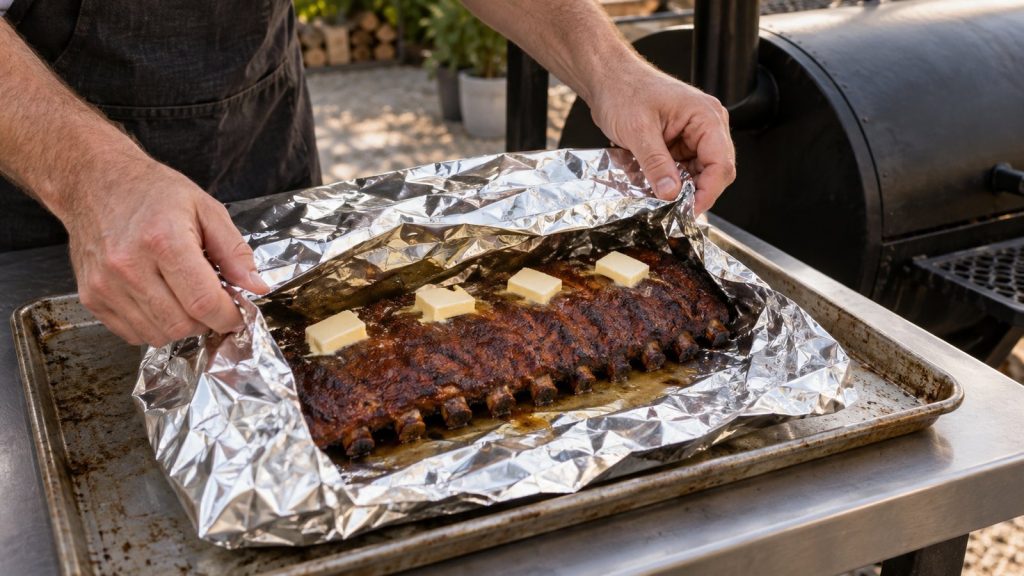
| 2. Wrapped in foil with a little liquid | About 2 hours | The rack braises in steam, collagen softens and the cook speeds up | A tight wrap; this is the phase where ribs overshoot |
| 3. Unwrapped again | About 1 hour | The softened surface firms up and any sauce sets | Sugary sauce can scorch; probe and bend-test from the start of this phase |
Phase one builds flavour and colour. Phase two does most of the tenderising, and it also softens the bark you built in phase one, which is why phase three exists. Brush sauce on during the last hour so the sugar has time to set without burning.
How to Change the Numbers
For baby backs, the common adjustment is 2-2-1, which trims the first phase and brings the total to 5 hours, the top of the Pork Board’s range for that cut. Some cooks also shorten the foil phase, since that is where tenderness moves fastest.
For a thick slab of spareribs, the full schedule may come up short. The Pork Board says cook times vary with thickness, and its range runs to 7 hours. Leave the rack unwrapped longer at the end and keep checking.
Running the smoker hotter shortens every phase. Pushing the heat to save time has a cost, though: blasting ribs gives dry, tough meat because the fibres squeeze out moisture before the collagen turns. If you have no smoker at all, the same foil-then-uncover idea works indoors, as how long to cook ribs in the oven shows.
Signs the Ribs Went Too Far
The meat falls off the bone as you lift the rack, the surface looks wet and slack, and a bite feels mushy. The ribs went past their texture target, usually in the foil. Leaner baby backs are the most likely to end up this way, and this site’s target for them is 195–200°F.
Some people want fall-off-the-bone ribs, and that texture sits at 205–207°F on this site’s scale. If that is your goal, aim for it. If you want a clean bite with a little pull, take the temperature when you open the foil. A rack already in its target range needs only a short final phase to firm up, or none at all. The full scale by cut is in what temp ribs are done.
Finish by the Bend Test
Push a thermometer between the bones into the thickest meat, keeping clear of bone, which reads 10–15°F high. Spare and St. Louis ribs are done for eating at 200–203°F. Then lift the rack with tongs about a third of the way along. Done ribs bow deeply and the surface cracks. A stiff rack needs more time, and a rack that breaks apart has gone too far.
When they pass, the Pork Board suggests wrapping the rack in heavy foil off the heat, setting it in a brown paper bag, and resting it up to one hour. For a longer wait, FSIS says to hold cooked meat at 140°F or warmer; how to keep ribs warm after cooking covers the options.
The Bottom Line
3-2-1 is a cook’s shorthand for spare ribs: about 3 hours in smoke, 2 wrapped and 1 unwrapped, around 6 hours at about 225°F, which sits inside the National Pork Board’s 5 to 7 hours. Baby backs need less, so shorten it. Whatever the clock says, the thermometer and the bend test decide when the ribs come off.
Frequently Asked Questions
Does 3-2-1 work for baby back ribs?
The full 6 hours runs past the Pork Board’s 3 to 5 hours for baby backs, so most cooks shorten it, often to 2-2-1. Check them against this site’s 195–200°F texture target.
What liquid goes in the foil?
A splash is enough to make steam inside the wrap; too much leaves the surface soggy.
Why are my 3-2-1 ribs mushy?
They stayed in the foil too long for their size. Check the temperature when you unwrap next time, and shorten the wrapped phase if the rack is already in range.
Can I skip the foil phase?
Yes. Unwrapped ribs keep a firmer bark and take longer, and the Pork Board’s hours still apply as your guide.
Related Guides
- How Long to Smoke Ribs at 225°F (by Rib Type)
- What Temp Are Ribs Done? Safe vs Tender Explained
- Why Are My Ribs Tough? 5 Causes and the Fix
- How Long to Thaw Ribs: Fridge, Cold Water or Microwave
Never Throw Out Good Meat Again
Get the one-page BBQ cheat sheet: fridge and freezer times for every cut, safe temperatures, and the spoilage signs that are false alarms. Free, no spam.
No spam, and you can unsubscribe any time.