
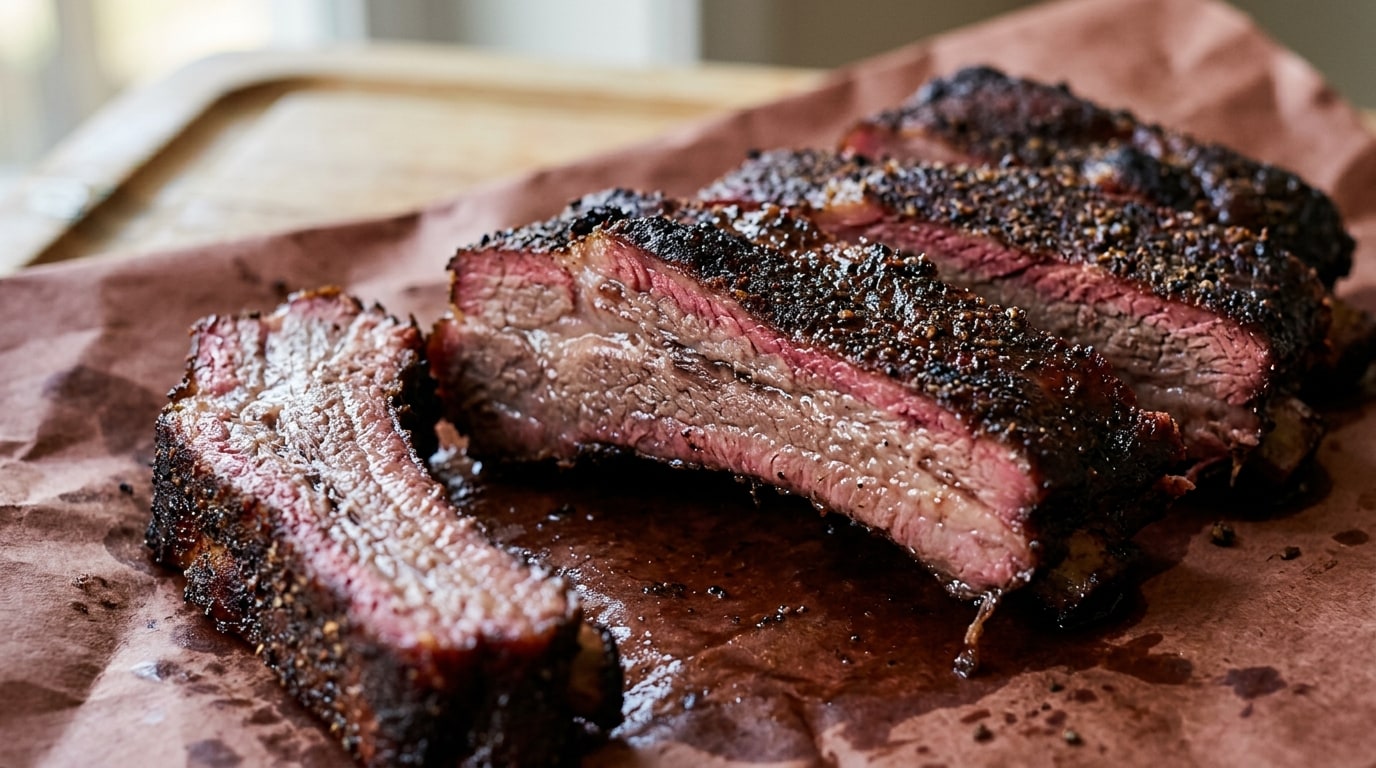
You cut into the rack and the meat under the bark is pink. Maybe it is a ring around the edge, maybe a blush that runs right down to the bone. Your first thought is that the ribs are raw. Sometimes that is true. Often the pink comes from smoke, cure or a reaction between heat and the meat’s own pigment. A thermometer and a bend test settle it; the colour can’t.
The 60-Second Answer
Pink on its own tells you very little. FSIS says colour and appearance are not reliable signs of safety or doneness, and that a food thermometer is the only way to tell. For pork ribs the USDA safe minimum is 145°F, measured before the ribs come off the heat, followed by a rest of at least 3 minutes.
Tenderness is a separate question. At 145°F ribs are safe but still tough. This site’s texture target for eating is 195–203°F, the range where the collagen has broken down.
If the ribs are pink, tough and under 145°F, they are undercooked. Put them back on the heat.
Why smoked and grilled ribs turn pink
Most of the red colour in meat comes from myoglobin, a protein in the muscle. FSIS lists several ways that pigment can stay pink, or turn pink, during a cook:
- The smoke ring. FSIS says poultry grilled or smoked outdoors can show “a pink-colored rim about one-half inch wide around the outside” even when it is well above 165°F. Pork ribs show the same kind of ring under the bark, and FSIS notes that smoked products are usually pink.
- Cooking gases. Gases in a hot oven can react with haemoglobin and leave a pink tinge.
- Nitrites and nitrates. FSIS says these can turn meat pink, whether they come from preservatives or occur naturally in the animal’s feed or water.
- Cure. Curing chemically changes the colour of the muscle. FSIS describes cured cooked pork, such as ham, as light pink. Ribs rubbed or brined with curing salt can stay pink all the way through.
- Heat and myoglobin. FSIS says cooked ground beef can still be pink inside after safe cooking because of a reaction between oven heat and myoglobin.
Ribs spend hours in a smoker held between 225 and 300°F, the range FSIS recommends, so a pink ring is what you should expect.

Safe and tender are two different questions
Safe is a USDA number: 145°F in the thickest part, measured before you take the ribs off the heat, then at least 3 minutes of rest.
Tender is a cook’s number. At 145°F the collagen in ribs hasn’t broken down, so the meat is safe and still chewy. These are this site’s texture targets, separate from any USDA figure:
- Baby back ribs: 195–200°F. They are leaner and turn mushy if you overshoot.
- Spare ribs and St. Louis ribs: 200–203°F.
- Rib tips: 200–205°F.
- Fall-off-the-bone: 205–207°F.
The full chart, beef ribs included, is in what temp ribs are done.
To take a reading, slide the probe between the bones into the thickest meat. FSIS says the tip should not touch bone, fat or gristle. Our rib temperature guide adds that a probe resting on bone reads 10–15°F high.
Then do the bend test. Lift the rack with tongs about a third of the way along. Done ribs bow deeply and the surface cracks. A stiff rack needs more time, and a rack that breaks apart has gone too far. If yours stay chewy past the target, see why ribs turn out tough.
What you see, what it means, what to do
| What you see | What it likely means | What to do |
|---|---|---|
| Pink ring under the bark, rack bends and cracks, 195°F or higher | Smoke ring | Eat them |
| Pink all the way through ribs that were cured or brined with curing salt | Cure colour from nitrite | Check the thickest meat; once it has reached 145°F, the colour comes from the cure |
| Pink, stiff in the bend test, under 145°F | Undercooked | Back on the heat right away |
| Pink or not, 145°F or above but under 195°F, chewy | Safe, collagen not yet broken down | Keep cooking toward the texture target |
| Pink or red right against the bone | Colour near bone, and probe readings there run high | Re-probe the thickest meat between the bones |
| Raw ribs grayish-pink | Normal raw colour for fresh pork | Cook as planned |
| Raw ribs with brownish-red patches | Oxidation from air exposure | Colour alone is no sign of spoilage; check smell, feel and date |
| Sour smell or slimy surface, any colour | Possible spoilage, unrelated to doneness | Run the spoilage checks; when in doubt, throw them out |
Pink near the bone, and other false alarms
The meat right against the bone is where most people spot pink and panic. Colour can’t tell you anything there either, and the reading is the bigger trap: a probe touching bone reads 10–15°F high, so undercooked ribs can look done. Move the tip into the meat between the bones and read again. Other mix-ups:
- Trusting grey meat. Colour misleads in both directions, and grey ribs can still read low. FSIS says only about 15% of people consistently use a thermometer.
- Mistaking raw colour for a problem. FSIS gives grayish-pink as the best raw surface colour for fresh pork.
- Blaming colour for a smell. If the ribs smell off, that is a separate issue from doneness. See why ribs smell and the rib spoilage tests.
- Pulling them now and finishing tomorrow. FSIS says never partially grill meat and finish cooking it later.
The Bottom Line
Pink ribs are often fully cooked, especially smoked or cured ones. Use a thermometer in the thickest meat between the bones. At 145°F with a 3-minute rest they have reached the USDA safe minimum; at 195–203°F with a deep bend they are ready to eat. Pink, stiff and under 145°F means more time on the heat.
Frequently Asked Questions
Can smoked ribs be pink and still done?
Yes. FSIS says smoked products are usually pink and that colour can’t show doneness. Check for 145°F for safety and this site’s 195–203°F texture target for tenderness.
What colour should raw pork ribs be?
FSIS gives grayish-pink as the best raw surface colour for fresh pork. Brownish-red patches from air exposure don’t by themselves mean the ribs have spoiled.
Are ribs that are pink near the bone undercooked?
Not necessarily. Read the temperature in the thickest meat between the bones, away from bone, which reads 10–15°F high.
Can I put undercooked ribs back on the grill?
Yes, right away. FSIS warns against partially cooking meat and finishing it later, so don’t chill a half-cooked rack to finish another day.
Related Guides
- What Temp Are Ribs Done? Safe vs Tender Explained
- Why Are My Ribs Tough? 5 Causes and the Fix
- How to Tell if Ribs Are Bad: 4 Signs and 1 False Alarm
- Easy Smoked BBQ Ribs: A Step-by-Step Guide
Never Throw Out Good Meat Again
Get the one-page BBQ cheat sheet: fridge and freezer times for every cut, safe temperatures, and the spoilage signs that are false alarms. Free, no spam.
No spam, and you can unsubscribe any time.