Method Guide · Inspired By Tuffy Stone
Competition-Style Spare Ribs
Competition-Style Spare Ribs for a Backyard Smoker: St. Louis-trimmed pork spare ribs smoked unwrapped to set the bark, wrapped briefly with butter and a little sugar, then glazed and set on the pit, following the staged approach used on the competition circuit and dialled back for a full plate.
Research Draft — Not Yet Kitchen-Tested
Independent adaptation. This is our own independently developed method, informed by the competition rib technique Tuffy Stone has described in public. It is not his recipe, and this page is not affiliated with, endorsed by, or officially connected to him, the Cool Smoke team or Q Barbeque. See the Tuffy Stone profile for the background this method draws on.
Test status: researched and written from verified technique and food-safety sources, not yet physically cooked and evaluated in our kitchen. Use the thermometer and doneness signs below, and treat every time on this page as an estimate.
What makes this distinctive
Plenty of rib recipes go straight from rub to sauce. This one borrows the staged structure of contest ribs: a clean St. Louis trim so the rack cooks evenly, an unwrapped smoke that builds bark, a short foil wrap that adds tenderness and a buttery-sweet layer, and a thin glaze set on the pit at the end. The target is a bite that comes cleanly off the bone where you bite and leaves the rest of the meat in place.
What we changed
Contest ribs are tuned for a judge who eats one or two bites, so they lean sweet and heavily glazed. For a table of people eating whole racks, we cut the sugar in the wrap, use a thinner glaze, and keep the wrap short so more bark survives. We also cover kettle and pellet cookers. The rub and every quantity below are our own.
Equipment
- Smoker, or a kettle grill set up for indirect heat
- Instant-read thermometer, plus a leave-in probe for the pit if you have one
- Heavy-duty foil
- Spray bottle for the spritz
- Boning knife, paper towel and a pastry brush
Ingredients
For the ribs
- 2 racks pork spare ribs, about 3 to 3½ lb each before trimming
- 2 tbsp yellow mustard or neutral oil, as a binder (optional)
For the rub (our own blend)
- 2 tbsp light brown sugar
- 1 tbsp kosher salt
- 1 tbsp coarse black pepper
- 1 tbsp sweet paprika
- 1 tsp garlic powder
- 1 tsp onion powder
- ½ tsp cayenne, or to taste
For the spritz, wrap and glaze
- 1 cup apple juice mixed with ¼ cup cider vinegar, for spritzing
- 4 tbsp unsalted butter, cut into thin slices
- 2 tbsp light brown sugar
- 2 tbsp honey (optional)
- ¾ cup of your usual BBQ sauce, loosened with 2 tbsp of the spritz
Step by step
1. Trim to a St. Louis cut (15 minutes)
Lay each rack bone side up. Slide a butter knife under the thin membrane on the back, grip it with a paper towel and peel it off. Turn the rack over and cut away the strip of cartilage and rib tips along the bottom edge, then square off the narrow end and any loose flaps of meat. A rectangular rack cooks evenly from end to end.
2. Season and let the rub settle
Mix the rub. Brush a thin coat of binder over both sides if using, then season the bone side lightly and the meat side more generously. Leave the racks on a tray for 30 minutes while the smoker heats, until the rub looks damp. You can also season the night before and keep the racks covered in the fridge.
3. Smoke unwrapped at 250–275°F
Bring the smoker to a steady 250–275°F with thin, clean smoke. Lay the racks meat side up, away from the hottest part of the cooker. Leave them alone for the first hour, then spritz lightly every 30 to 45 minutes wherever the surface looks dry. Plan on about 2 to 2½ hours in this stage.
4. Wrap once the bark has set
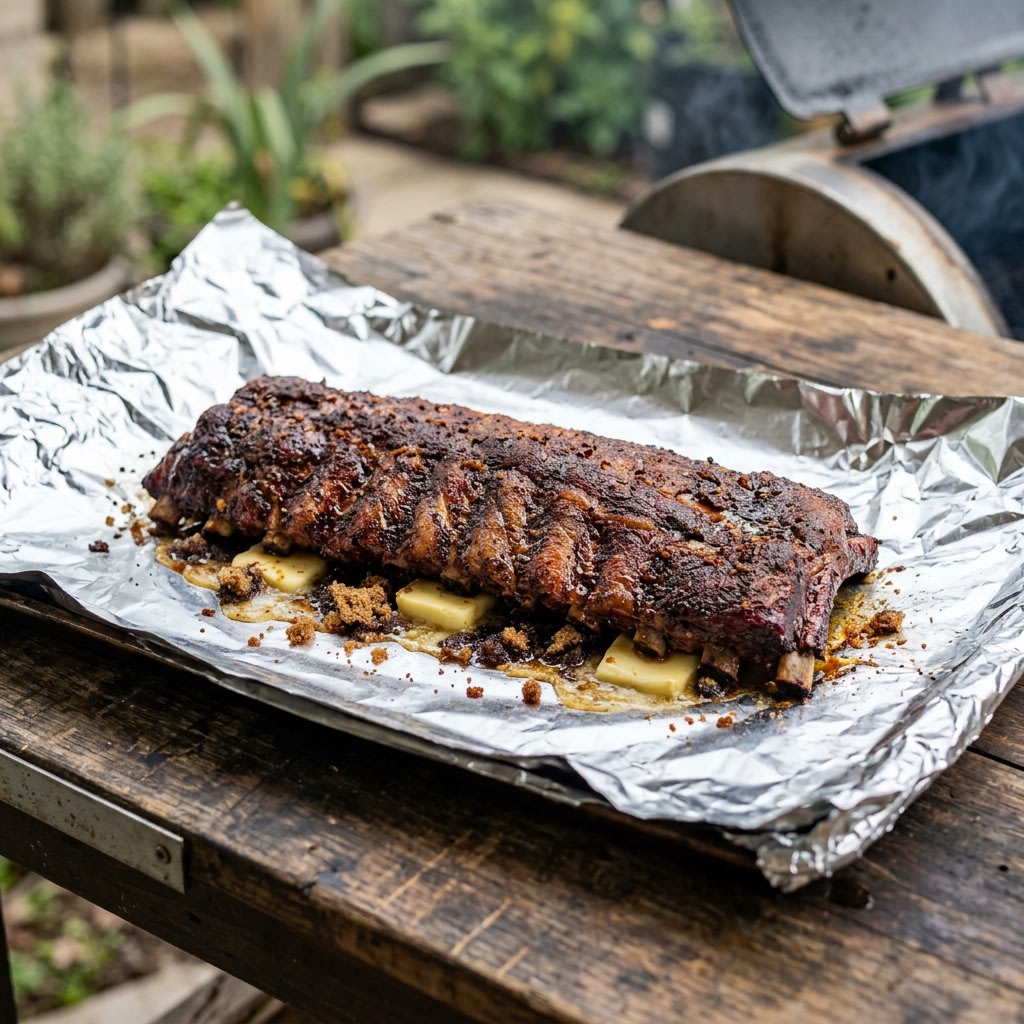
The ribs are ready to wrap when the bark is a deep mahogany and the rub no longer smears when you touch it. Tear off two long sheets of heavy-duty foil. On each, lay half the butter slices, sprinkle with half the sugar and drizzle with half the honey if using. Place each rack meat side down on that layer, fold the foil into a tight package and return the racks to the smoker, meat side down.
5. Cook wrapped until tender (1 to 1½ hours)
Start checking after an hour. Open one package carefully, away from your face, and push a probe between the bones in the thickest part. You want it to slide in with light resistance, usually somewhere around 195–203°F. If it still feels tight, rewrap and check again every 15 minutes. Leaving ribs in foil too long is the quickest route to mushy meat.
6. Glaze and set the sauce (15 minutes)
Unwrap and pour off the liquid. Brush a thin coat of the loosened sauce over the meat side and return the racks to the smoker, unwrapped, for 10 to 15 minutes, until the glaze turns tacky and glossy. A second thin coat is fine. A thick one tends to burn or slide off.
7. Rest briefly and slice
Rest the racks for 10 minutes, then flip them bone side up so you can see where the bones run and slice between them with a long knife.
Temperature targets
| Stage | Target | Type |
|---|---|---|
| Smoker temp | 250–275°F | Process |
| USDA minimum safe temp, whole cuts of pork | 145°F + 3 min rest | Safety minimum |
| Tender between the bones | about 195–203°F | Texture target, separate from safety |
The ribs are safe to eat once they reach 145°F and rest 3 minutes. The higher number is about softening connective tissue for texture.
Timing
Allow about 4½ to 5½ hours from lighting the fire to slicing: roughly 30 minutes to heat the smoker, 2 to 2½ hours unwrapped, 1 to 1½ hours wrapped, and 15 minutes to glaze. Racks vary, so the thermometer and the bend test decide when you move on. Spare ribs rarely stall the way a shoulder or brisket can.
Visual and feel doneness signs
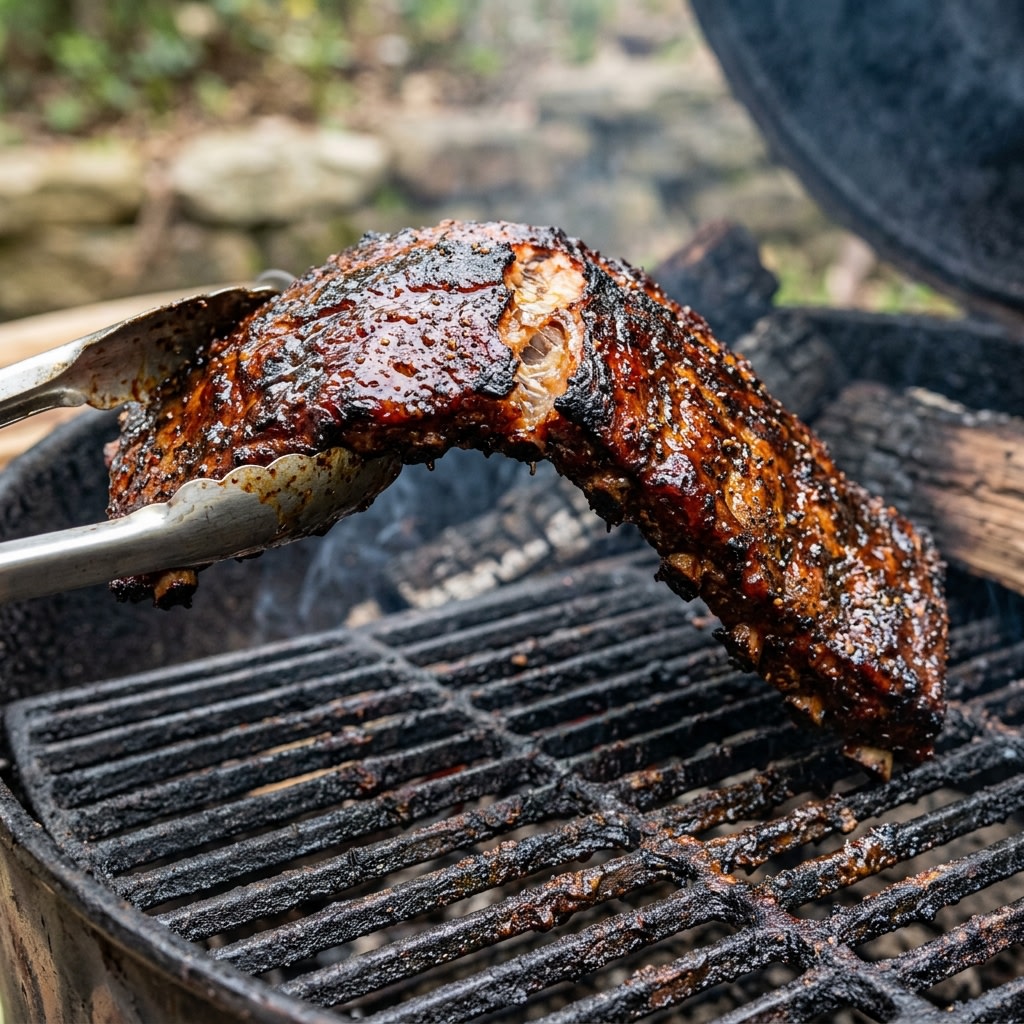
- Lifted from one end with tongs, the rack bends well past 45 degrees and the surface starts to crack
- A probe between the bones slides in with light resistance
- The meat has drawn back from the ends of the bones by roughly a quarter inch
- A test bite comes cleanly off the bone and the rest of the meat stays put
Common mistakes
Wrapping too early
If the rub still smears when you wrap, the bark turns soft and pasty in the foil. Wait for a set, deep-coloured surface.
Leaving the wrap on too long
Foil braises the ribs. Past the tender point the meat goes soft and falls apart when sliced. Check early and often.
Heavy glazing
Thick sauce full of sugar burns quickly and masks the bark. Two thin coats set on the pit look and eat better than one heavy one.
Equipment-specific adaptations
Offset smoker
As written. Keep a small, hot, clean fire and rotate the racks once if one end sits nearer the firebox.
Kettle grill
Bank the coals to one side or use the snake method, with the racks on the far side. A rib rack that stands them on edge fits two racks on a 22-inch kettle.
Pellet smoker
Set 250–275°F. Pellet smoke is mild, so a smoke tube during the unwrapped stage adds more colour and flavour.
Substitutions
- Baby back ribs: they are smaller and leaner, so cut the unwrapped stage to about 1½ to 2 hours and start checking the wrap after 45 minutes
- Less sugar: skip the honey, halve the brown sugar in the wrap, and use an unsweetened or low-sugar sauce for the glaze
- No wrap: smoke unwrapped the whole way, spritzing as needed, and expect firmer meat, more bark and a longer cook
- Spritz options: plain apple juice, water or cider vinegar on its own all work
Storage, reheating & food safety
Do not leave cooked ribs out of the fridge for more than 2 hours, or 1 hour when it is above 90°F. Refrigerate leftovers in shallow containers; they keep 3 to 4 days in the fridge and 2 to 6 months in the freezer for best quality. Reheat wrapped in foil with a splash of the spritz to at least 165°F. Our guide on how long ribs last in the fridge and freezer has more detail. Source: USDA Food Safety and Inspection Service and FoodSafety.gov.
FAQ
Is this the same as the 3-2-1 method?
It follows a similar smoke, wrap, glaze pattern. The wrapped stage here is shorter than two hours, which keeps more bite and bark, and the timing follows the ribs themselves instead of a fixed schedule.
Why spritz at all?
A light spritz keeps the edges from drying out. Spray only dry-looking spots; soaking the ribs washes the rub away.
Can I use butcher paper instead of foil?
Yes. Paper lets more steam escape, so the bark stays firmer and the wrap may take a little longer.