
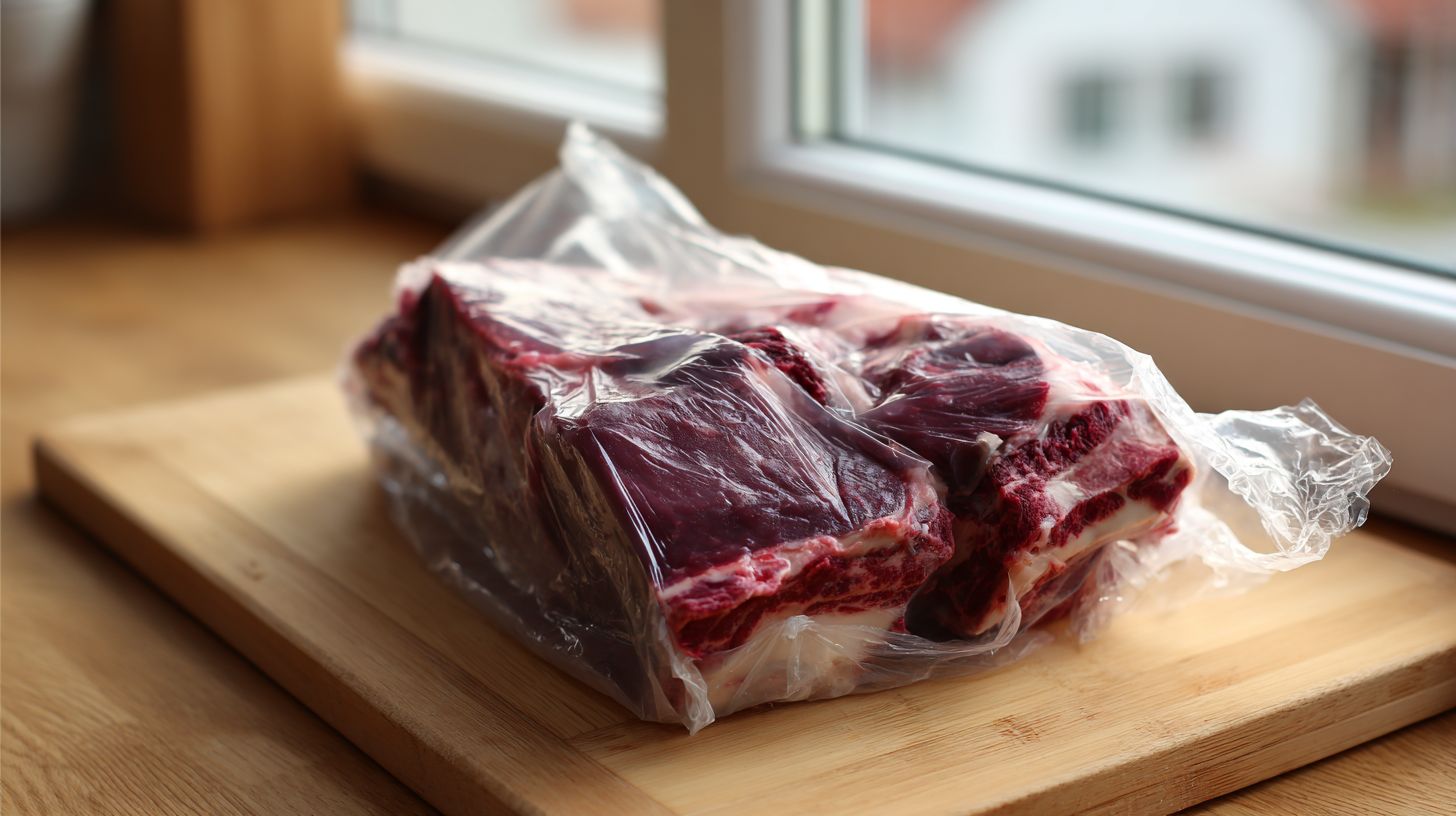
Beef ribs come out of the bag looking darker than you expected, and there’s a smell. Before you write off an expensive rack, here’s what actually matters.
The 60-Second Answer
Beef ribs have gone bad when you find two or more of these: a slimy film that survives rinsing and patting dry, a foul smell still there 15 minutes after the meat has been out of the bag, fuzzy green or black growth, or more than 5 days in the fridge.
What does not mean they’re bad: a deep brownish-red colour, a dark purple surface straight out of the vacuum pack, a sour or sulphurous smell in the first minute after opening, or a sell-by date that passed yesterday. All four are normal, and all four send good beef to the bin every week.
Beef Darkens Far More Than Pork
This is the difference that catches out anyone used to cooking pork ribs.
The red in meat comes from myoglobin, and beef carries substantially more of it than pork. With no oxygen — inside a vacuum bag — it sits at a deep purple-red. Exposed to air it blooms bright cherry-red within twenty minutes or so. After a few days in the fridge it oxidises further to a brownish-red that can look genuinely alarming next to a fresh pack.
The USDA states the point plainly: a change in colour alone does not mean meat is spoiled, and colour changes are normal for fresh product. Beef simply travels further along that scale than pork does, so it looks worse while being perfectly fine.
- Deep purple straight from the bag: normal, and it will brighten in the air.
- Brownish-red after a few days: normal oxidation.
- Grey or brown patches on the surface: normal. Trim them if you want to.
- White dried patches on frozen ribs: freezer burn. Safe, just dry — trim it.
- Green, blue or black fuzz: mould. The rack goes.
- An oily, rainbow shimmer on a cut face: harmless light refraction, not bacteria.
The 15-Minute Smell Test
Beef ribs are usually wet-aged, meaning they sit in a sealed bag for weeks between the packing plant and your trolley. That is deliberate — it’s what makes the meat more tender — but it means opening the bag releases weeks of accumulated smell in one go.
- Take the ribs fully out of the bag.
- Rinse under cold water, pat completely dry with paper towels, then wash your hands and sanitise the sink.
- Leave them uncovered on a tray in the fridge for 15 minutes.
- Smell again, close up.
Faded to a faint, clean, slightly metallic beef smell? Cook them. Still sour, sulphurous or genuinely rotten? Bin them. Packaging odour disperses the moment the meat can breathe. Spoilage does not, and it gets worse as the meat warms.
| What you smell | Likely cause | After 15 minutes of air |
|---|---|---|
| Faint metallic or bloody | Myoglobin — fresh beef | Stays, and that’s correct |
| Sour or tangy | Wet-aging in the bag | Should disappear |
| Sulphur or eggs | Bacteria working without oxygen | Should disappear |
| Nutty, funky, cheesy | Dry-aging, if the ribs were aged that way | Softens; deliberate |
| Ammonia or bleach | Advanced spoilage | Stays — bin them |
| Sweet, rotten, nauseating | Advanced spoilage | Worsens — bin them |
Slime Ends the Argument
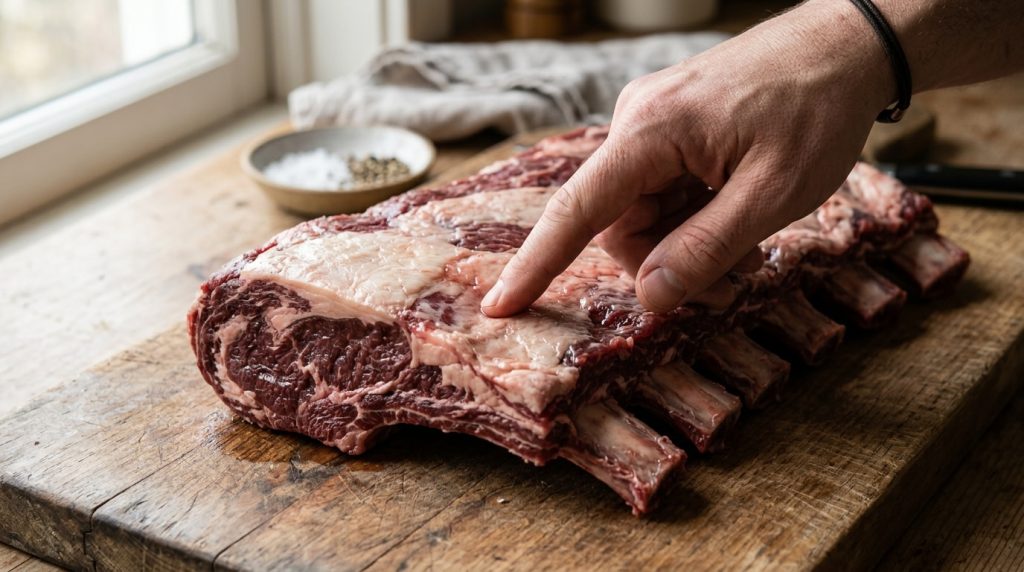
Of the four checks, texture is the one that decides. Fresh beef ribs feel firm and slightly moist, and your fingers come away wet but clean. Spoiled ribs feel slippery and tacky, with a film that clings and won’t rinse off.
That film is a bacterial biofilm — visible, tangible proof that the bacterial load has grown high enough to see. Meat that is slimy is finished, no matter how it looks or smells or how recently you bought it.
Short Ribs, Back Ribs, Plate Ribs
The cut changes how fast they go, mostly because of how much meat and exposed surface each carries.
- Chuck short ribs are thick and heavily marbled. They hold bag odour longest, so give them the full 15 minutes before judging.
- Plate ribs — the enormous three-bone racks — are the most expensive mistake to get wrong, and the same rules apply.
- Back ribs have the least meat between the bones and the most exposed surface. They spoil first. Use them first.
- Flanken-cut short ribs are sliced across the bone, which multiplies the cut surface enormously. Treat them like ground beef and cook within a day or two.
How Long Beef Ribs Actually Keep
| Beef ribs | Fridge at 40°F (4°C) | Freezer at 0°F (-18°C) |
|---|---|---|
| Raw, opened or repackaged | 3 to 5 days | 4 to 12 months for best quality |
| Raw, unopened vacuum pack | To the use-by date if the seal is intact | 4 to 12 months |
| Flanken-cut or thin-sliced | 1 to 2 days | 4 to 12 months |
| Cooked or smoked | 3 to 4 days | 2 to 6 months |
| Thawed in the fridge | 3 to 5 days from thawing | Can be refrozen raw |
Count fridge days from when you got the ribs home, not from the printed date. Freezer times are quality guidelines — meat held continuously at 0°F stays safe indefinitely.
One caution on unopened packs: the use-by date assumes the seal held and the temperature never slipped. A bag that has puffed up, gone loose or leaked has lost its vacuum, and the clock has been running much faster than the label assumes. Judge that rack on its merits.
Left Out Overnight
Bin them. Bacteria multiply fastest between 40°F and 140°F — the Danger Zone — doubling in as little as 20 minutes, and nothing should sit there more than 2 hours, or 1 hour above 90°F.
Cooking won’t rescue them. Some bacteria produce toxins as they multiply that survive cooking temperatures entirely, so a rack that spent the night on the counter can be smoked to a perfect 205°F and still make people ill. This is the one case where “but it smells fine” carries no weight at all.
The Bottom Line
- Feel first. Slimy after rinsing? Bin them, nothing else matters.
- Then smell, after 15 minutes of air. Still foul? Bin them. Faded? Cook them.
- Then look. Fuzz means out. Dark brown-red means nothing.
- Then count. Over 5 days raw or 4 cooked, don’t push it.
- Out overnight? Skip every step above.
In the United States, the USDA Meat and Poultry Hotline is free on 1-888-674-6854.
Frequently Asked Questions
Why are my beef ribs dark brown?
Oxidation, almost certainly. Beef carries more myoglobin than pork, so it darkens further and faster in the fridge. The USDA states that colour change alone does not indicate spoilage. Check whether the ribs are slimy or smell foul after airing out.
My beef ribs smell sour out of the vacuum pack. Are they bad?
Probably not. Wet-aged beef sits sealed for weeks and the smell concentrates. Rinse, pat dry, leave uncovered in the fridge for 15 minutes and smell again. If it’s gone, cook them.
How long do raw beef ribs last in the fridge?
Three to five days once opened, counted from the day you brought them home. Thin flanken-cut ribs get only one to two days because of the extra cut surface.
Can I eat beef ribs past their sell-by date?
Usually. Sell-by dates tell shops when to rotate stock, not when meat becomes unsafe. Ribs refrigerated promptly are generally good for a few days beyond it — judge by smell and texture instead.
What does the red liquid in the package mean?
It’s purge — water and myoglobin released by the muscle, not blood, and completely normal. Cloudy, thick or ropy liquid alongside a strong smell is a different matter.
Are beef ribs safe if they’re still frozen but past the date?
Yes. Meat held continuously at 0°F is safe indefinitely. The date and the freezer times relate to quality — expect freezer burn and a flatter flavour, not a safety problem.
Related Guides
- How to tell if ribs are bad — the pork version, with the same four checks.
- Why does meat smell like eggs? — wet-aged beef does this too.
- How to tell if brisket is bad — same animal, same colour rules.
- What temp are ribs done? — beef ribs go furthest of any cut.
Never Throw Out Good Meat Again
Get the one-page BBQ cheat sheet: fridge and freezer times for every cut, safe temperatures, and the spoilage signs that are false alarms. Free, no spam.
No spam, and you can unsubscribe any time.