
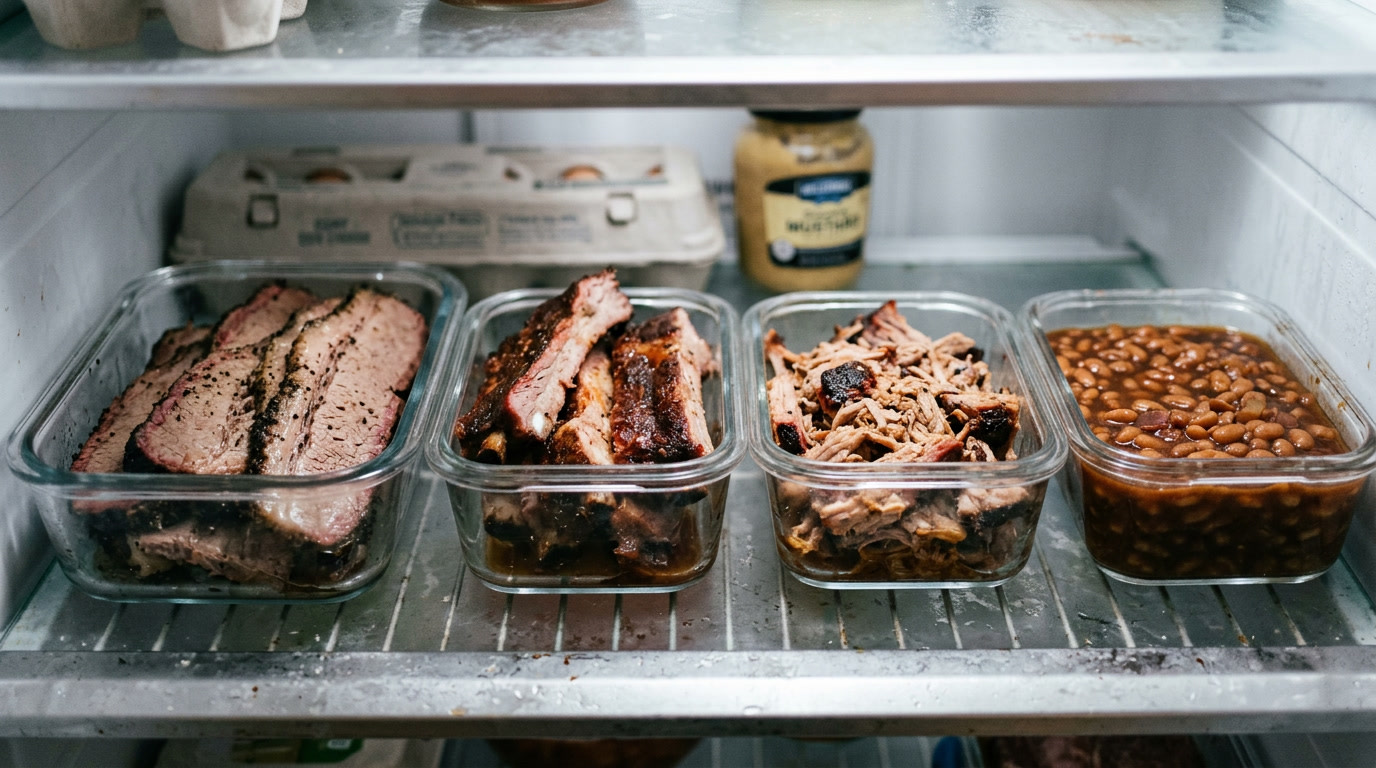
The guests have gone home and the kitchen holds half a pan of pulled pork, a few bones’ worth of ribs, the end of a brisket and a tray of baked beans with burnt ends stirred through. You would like to be eating it all week. How long you can depends less on which meat it is than on what happened to it in the couple of hours after it came off the pit.
The 60-Second Answer
Cooked barbecue meat and poultry keep 3 to 4 days in the fridge at 40°F or below, and 2 to 6 months in the freezer. Chili, stews and beans cooked with meat keep 3 to 4 days in the fridge and 2 to 3 months frozen. Those clocks only apply if the food went into shallow containers and into the fridge within 2 hours of serving (1 hour if it was above 90°F outside). Reheat everything to 165°F.
BBQ Leftovers Chart
These times come from the FoodSafety.gov Cold Food Storage Chart. The fridge column is the safety limit. The freezer column is about quality: food held at a steady 0°F stays safe indefinitely, and the months tell you how long it keeps its best texture and flavour.
| Leftover | Fridge at 40°F | Freezer at 0°F (quality) |
|---|---|---|
| Pulled pork | 3–4 days | 2–6 months |
| Sliced or chopped brisket | 3–4 days | 2–6 months |
| Pork or beef ribs | 3–4 days | 2–6 months |
| Smoked or grilled chicken and turkey | 3–4 days | 2–6 months |
| Burgers and other cooked ground meat | 3–4 days | 2–6 months |
| Chili, stews, beans cooked with meat | 3–4 days | 2–3 months |
| Pizza | 3–4 days | 1–2 months |
Count the days from the cook, not from the day you first opened the container.
The 2-Hour Clock Starts at the Table
Between 40°F and 140°F, bacteria grow fastest, and their numbers can double in as little as 20 minutes. That is why USDA FSIS sets a hard limit: cooked food should not sit out of refrigeration for more than 2 hours, or more than 1 hour when the air is above 90°F.
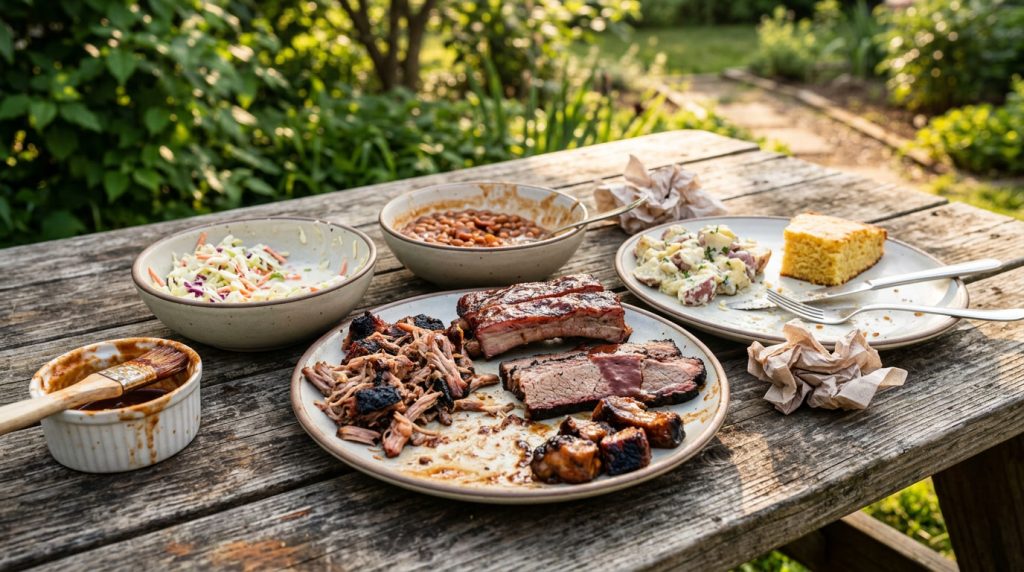
At a backyard cook this is the rule most often broken. The meat comes off the smoker, goes on a platter, and stays on the picnic table through a long afternoon of grazing. By the time someone thinks to wrap it up, the clock ran out a while ago, and those leftovers are not good for 3 to 4 days. They are not good at all.
If you need to hold food for longer, keep it hot, at 140°F or above, or keep it cold in the fridge. Food that did sit out too long should be thrown away, and the reasons reheating cannot rescue it are in meat left out overnight.
Cool It in Shallow Containers
A whole pan of pulled pork or an uncut half-brisket takes a long time to cool in the centre, even in a cold fridge. Divide large amounts into shallow containers so the heat can escape and the middle drops through the danger zone quickly. Portion them the way you will eat them, write the date on the lid, and move anything you will not get to within 3 to 4 days straight into the freezer. Leftovers frozen on the day of the cook taste better than ones frozen at the end of the fridge window.
Meat-by-Meat Notes
The window is the same 3 to 4 days for every meat. How each one keeps is a little different.
Ribs dry out fastest once cold because so much of their surface is exposed. Wrap them tightly; how long ribs last in the fridge and freezer has the rib-specific details.
Pulled pork freezes especially well if you add a little of its juice to each bag. The details are in how long pulled pork lasts.
Brisket holds moisture best stored in a larger piece and sliced when you reheat it, as long as the pieces are small enough to cool fast. More on brisket is in how long brisket lasts in the fridge.
Smoked chicken and turkey follow the same window, and how long cooked chicken lasts covers poultry in more detail.
Reheat to 165°F
Whatever the meat, USDA says to reheat leftovers to 165°F. Check it with a thermometer in the thickest part or the centre of the dish, because a pan of chili or beans can bubble at the edges and still be cool in the middle. A splash of stock or sauce and a covered pan keep smoked meat from drying out on the way there.
What Does and Does Not Mean It Has Gone Bad
Several things that look wrong in a container of cold barbecue are normal. Fat turns white and solid in the fridge. Bark softens. Sauce thickens and darkens. None of that is spoilage, and all of it reverses when the food is reheated.
The reverse catches more people out. Leftovers past day four, or that sat out past the 2-hour limit, can smell and look fine and still make you ill. Colour is not a reliable sign of spoilage on its own, and a sniff test cannot extend the window.
The Bottom Line
Barbecue leftovers keep 3 to 4 days in the fridge and 2 to 6 months in the freezer, with chili and beans at 2 to 3 months frozen. None of that counts if they spent more than 2 hours on the table. Cool in shallow containers, label the date, and reheat to 165°F.
Frequently Asked Questions
Are smoked meat leftovers good for longer than regular cooked meat?
No. Smoke flavours the surface but does not preserve the meat, so smoked leftovers follow the same 3 to 4 day fridge window as any cooked meat.
Can I eat barbecue leftovers after 4 days?
The FoodSafety.gov guidance for cooked meat is 3 to 4 days in the fridge. Past that, discard it, or freeze it earlier next time.
How long do barbecue baked beans last?
Beans cooked with meat follow the soups-and-stews line: 3 to 4 days in the fridge and 2 to 3 months in the freezer for best quality.
Can I reheat leftovers more than once?
Reheat only the portion you plan to eat, and bring it to 165°F each time. Keeping the rest cold in the fridge avoids repeated trips through the danger zone.
Related Guides
- How Long Does Smoked Meat Last?
- How Long Can You Freeze Meat?
- How to Reheat Brisket
- How to Tell if Pulled Pork Is Bad
Never Throw Out Good Meat Again
Get the one-page BBQ cheat sheet: fridge and freezer times for every cut, safe temperatures, and the spoilage signs that are false alarms. Free, no spam.
No spam, and you can unsubscribe any time.