
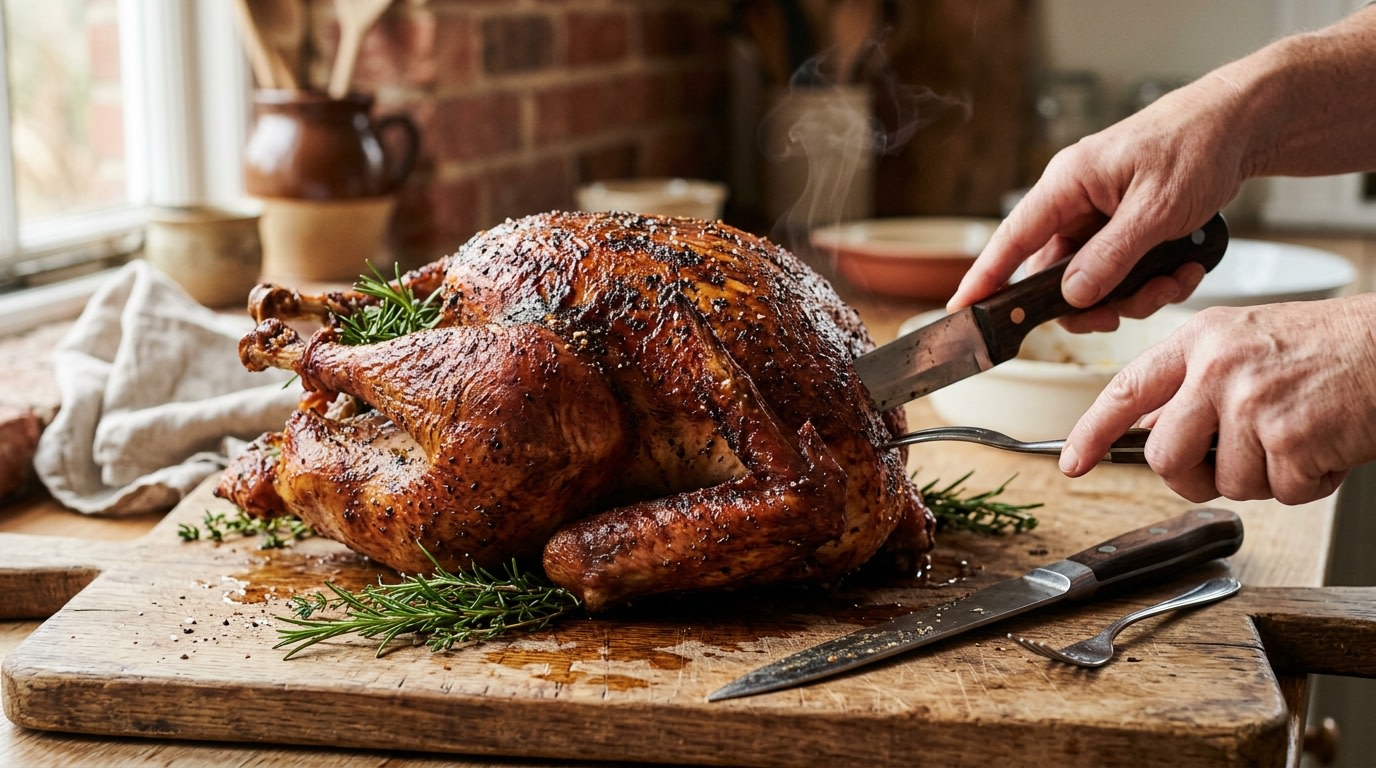
Smoked turkey has one safe number and a pit-temperature trap. Set the smoker to 225°F because that is what you use for brisket, and a twelve-pound bird can spend seven hours creeping through the temperature range where bacteria multiply fastest, with rubbery skin at the end of it.
The 60-Second Answer
A smoked turkey is done at 165°F measured in the innermost part of the thigh and wing and the thickest part of the breast, per USDA. Keep the smoker’s air temperature between 225°F and 300°F, which is the band USDA specifies for smoking, and run it near the top of that range for poultry. Estimate 20 to 30 minutes per pound, and do not stuff a bird you are smoking.
Why 225°F Alone Is the Wrong Setting for Poultry
Low and slow exists to break down collagen in tough cuts over many hours. A turkey has very little of it, so the long cook buys you nothing and costs you two things.
The first is time in the danger zone. USDA identifies 40°F to 140°F as the range where bacteria grow fastest, and a big bird at a low pit temperature crawls through it. The second is skin: poultry skin needs real heat to render and crisp, and at 225°F it turns to leather instead. Running at 275°F to 300°F fixes both and still takes smoke perfectly well.
| Setting | USDA guidance | Practical note |
|---|---|---|
| Smoker air temperature | 225–300°F | Use a thermometer at grate level; dome gauges read high |
| Internal, whole bird | 165°F in thigh, wing and breast | The thigh is the slowest part and decides the cook |
| Estimated time | 20–30 minutes per pound | An estimate, not a doneness test |
| Stuffing | Do not stuff a smoked turkey | The stuffing takes too long to reach 165°F at smoking temperatures |
| Leftovers | Reheat to 165°F | 3–4 days refrigerated |
Where to Put the Thermometer
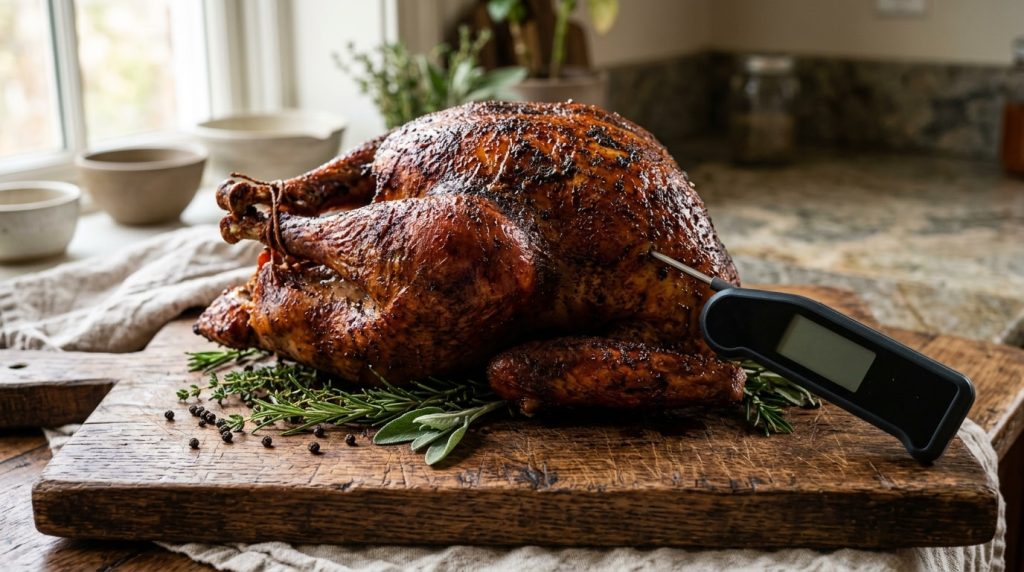
Three places, because a turkey cooks unevenly: the innermost part of the thigh, the innermost part of the wing, and the thickest part of the breast. Angle the probe away from bone every time, since bone reads hotter than the meat around it and will tell you the bird is ready while the thigh is still at 155°F.
The same rules apply to any poultry and are covered in what temp chicken is done.
Breast at 165°F, Thighs Higher
Dark meat has more connective tissue and stays juicy well past the safe minimum, so thighs and drumsticks taste better at 175°F to 180°F. Breast meat dries out quickly above 165°F. That conflict is the reason for two common tricks: putting the legs toward the hotter side of the cooker, and spatchcocking the bird so it lies flat and the thighs are exposed to more heat than the breast.
Thaw It Completely First
USDA is explicit that a turkey must be completely thawed before smoking. A partly frozen bird cooks unevenly and spends far longer in the danger zone. Refrigerator thawing takes roughly 24 hours for every 4 to 5 pounds, so a 12-pound turkey needs about three days. The full thawing rules, including the cold-water method, are in our turkey food safety guide.
Pink Smoked Turkey Is Normal
Smoked poultry often keeps a pink layer under the skin and pink juices, even when the thermometer reads well past 165°F. That colour comes from the smoke reacting with pigments in the meat, not from undercooking. Judge it by temperature, never by colour, and be equally suspicious of the reverse: a bird can look completely cooked and still be under 165°F in the thigh.
Carryover and the Rest
A whole turkey climbs a few degrees after it comes off, so pulling it when the thigh reads 165°F and resting 20 to 30 minutes gives you juicier meat than leaving it on until the breast is well past the mark. Tent it loosely; a tight wrap steams the skin you spent the afternoon crisping.
Leftovers
Refrigerate leftovers within two hours, keep them 3 to 4 days, and reheat to 165°F. Smoked turkey freezes well for 2 to 3 months. Do not leave the carcass on the counter overnight to cool, however traditional that is.
The Bottom Line
165°F in thigh, wing and breast; a smoker held between 225°F and 300°F and preferably near 300°F for crisp skin; 20 to 30 minutes per pound as a planning estimate; thawed completely; never stuffed; rested 20 to 30 minutes before carving.
Frequently Asked Questions
Can I smoke a turkey at 225°F?
It is within the USDA band, so it is not unsafe on its own, but it is the slowest and least forgiving option: more time in the danger zone and soft skin. If you use 225°F, stay on top of the internal temperature and expect to finish the skin under a hotter heat.
What temp is smoked turkey breast done?
165°F in the thickest part, the same as the whole bird. A bone-in breast usually takes 2 to 4 hours depending on size and pit temperature.
Is 180°F better for turkey thighs?
For texture, yes. 165°F is the safety number; thighs held to 175°F or 180°F have softer connective tissue and still stay moist because of the fat in dark meat.
Why is my smoked turkey skin rubbery?
Too low a pit temperature, or a wet skin surface. Dry the bird uncovered in the refrigerator overnight and smoke nearer 300°F.
Related Guides
- What Temp Is Chicken Done? One Number, Three Places
- Turkey Food Safety: Thawing and Storage
- How to Keep Barbecue Warm for a Crowd
- How Long Does Cooked Poultry Last?
Never Throw Out Good Meat Again
Get the one-page BBQ cheat sheet: fridge and freezer times for every cut, safe temperatures, and the spoilage signs that are false alarms. Free, no spam.
No spam, and you can unsubscribe any time.