Pitmaster Profile · South Carolina Whole-Hog
Rodney Scott
The pitmaster most associated with whole-hog barbecue cooked over live wood coals — an entire pig, not just the shoulder, tended by hand through the night and finished with a thin, sharp vinegar-pepper sauce.
- Speciality
- Whole-hog barbecue
- Region
- South Carolina
- Fire
- Live wood coals, hand-shoveled
- Sauce
- Thin vinegar & pepper
Live-fire coal management
Vinegar-pepper sauce
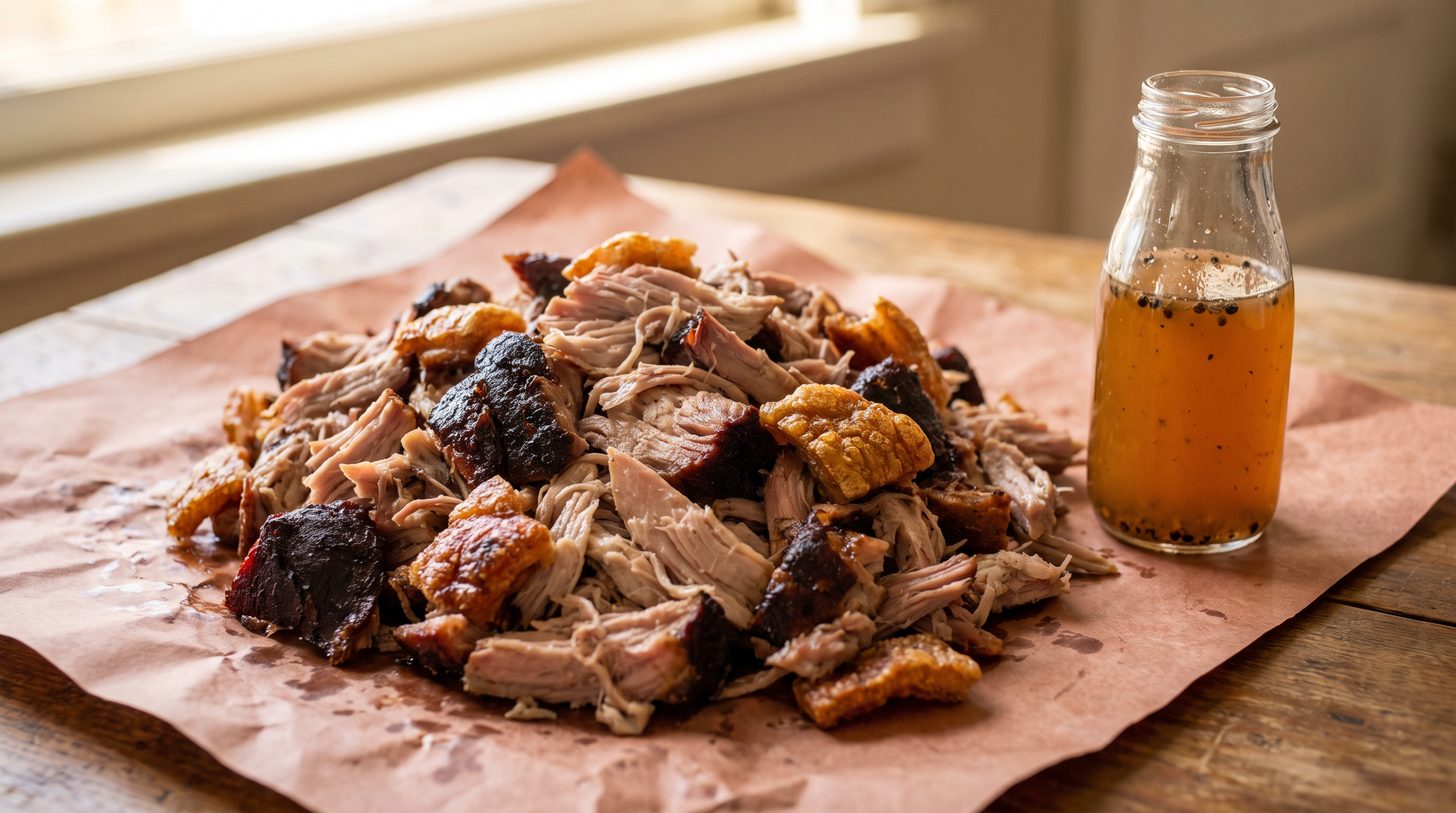
Hand-pulled, skin chopped in
All-night cook
Independent editorial resource. This page is an independently written profile and is not affiliated with, endorsed by, or officially connected to Rodney Scott or his representatives. The pork shoulder adaptation described further down is our own independently developed method, informed by his publicly documented whole-hog technique scaled to a cut a home cook can actually source and fit on a backyard smoker — not his recipe, and not an “official” version of it.
Who he is
Rodney Scott is a pitmaster from Hemingway, South Carolina, whose family ran a whole-hog barbecue operation for decades before he became widely known nationally — including a James Beard Award and his own published cookbook on whole-hog technique. Where Central Texas barbecue is built around one large cut of beef, his tradition is built around cooking an entire pig, low and slow, over coals shoveled by hand from a wood fire burning alongside the pit.
The technique is physically demanding in a way few other barbecue styles are — tending a whole hog through an overnight cook means constantly managing coal placement across a much larger, less even cooking surface than a single brisket or shoulder.
Recognised style & region
South Carolina barbecue is regionally distinct from both Texas and North Carolina traditions:
Whole animal
The entire hog is cooked, not a single primal cut — different parts finish at different rates, which is part of the skill.
Vinegar-pepper, not tomato
A thin, sharp sauce built on vinegar and pepper, closer to Eastern North Carolina’s style than to the thick tomato-based sauces of Kansas City or Memphis.
Skin chopped in
Crisp pork skin is often chopped into the meat itself rather than discarded, adding texture most other regional styles don’t have.
Note this is a different South Carolina tradition from the state’s own mustard-based “Dutch Fork” barbecue belt — the two coexist in the same state but are not the same style, and our mustard BBQ sauce guide covers that other tradition specifically.
Signature techniques
Live-fire coal management
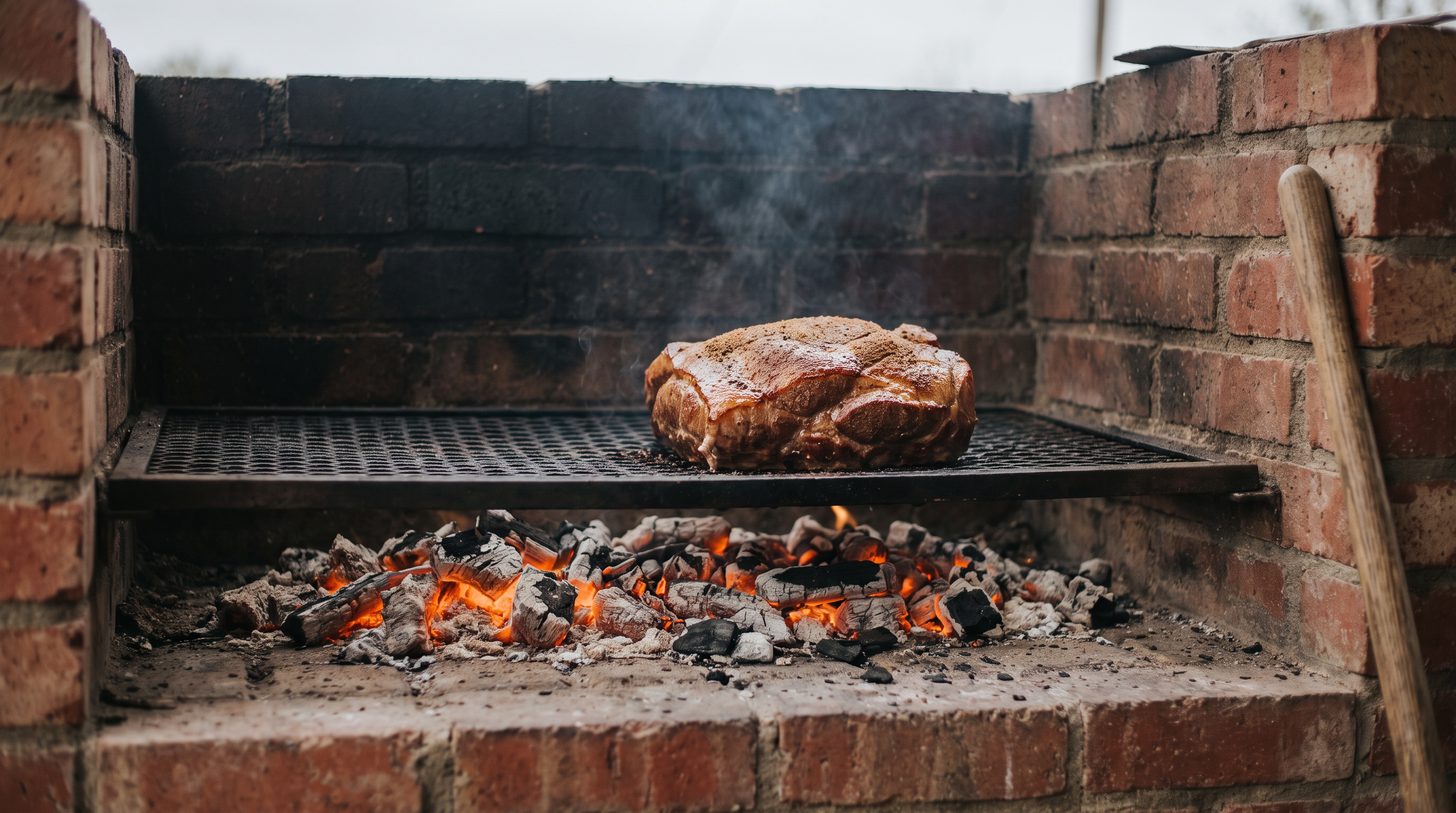
Wood burns down to coals in a separate fire, which are then shoveled directly under the hog by hand throughout the cook — closer to true live-fire cooking than an offset smoker’s enclosed firebox. This gives more direct control over hot spots but demands constant attention overnight.
Whole-hog, uneven by nature
A whole hog cooks unevenly on purpose — the ham and shoulder are thick and take longer, the loin and belly are thinner and finish faster. Managing coal placement to compensate, rather than expecting one uniform temperature across the whole animal, is the actual skill.
Vinegar-pepper sauce
A thin sauce — cider vinegar, black and red pepper, salt, little to no sugar or tomato — applied throughout the cook and again at serving. It cuts through pork fat rather than coating it the way a thick sauce does.
Hand-pulled with skin worked in
The meat is pulled by hand rather than chopped with a cleaver, and crisp skin is often worked back into the pulled meat for texture contrast.
Equipment, wood & flavour profile
Typical equipment
A long, low brick or cinder-block pit sized for a whole hog, with a separate fire for producing coals. At home: a large offset smoker or a kettle grill, since almost nobody has whole-hog capacity.
Typical wood
Local hardwoods, commonly oak and hickory, burned to coals rather than used as whole logs on the cooking fire itself.
Flavour profile
Smoky and porky first, cut with sharp vinegar acidity — closer to Eastern Carolina’s tang than Texas’s straightforward beef-and-pepper simplicity.
Food safety: two different numbers
- 145°F, rested 3 minutes is the USDA minimum safe internal temperature for whole cuts of pork, including shoulder.
- ~195–204°F is where pork shoulder actually becomes easy to pull apart — well past the safety minimum, cooked that far for texture, not because 145°F is unsafe.
Source: USDA Food Safety and Inspection Service minimum internal temperature guidance.
Our independent adaptations
Almost nobody cooking at home has the space, the pit, or the whole hog itself — so the practical version of this style scales the technique down to a bone-in pork shoulder on an ordinary offset or kettle, keeping the two things that actually define the style: the thin vinegar-pepper sauce and skin worked back into the pulled meat where possible.
Related BBQ guides
FAQ
Can I actually cook a whole hog at home?
Only with real space and equipment most backyards don’t have — a whole hog needs a pit built for one. Our adapted method uses a bone-in pork shoulder instead, which captures the sauce and technique without needing a dedicated whole-hog rig.
What’s the difference between this vinegar sauce and Eastern North Carolina sauce?
They’re close cousins — both thin, vinegar-based, low or no sugar. Regional versions vary in pepper level and exact ratio more than in fundamental approach.
Why is South Carolina sauce sometimes mustard and sometimes vinegar?
South Carolina has more than one regional barbecue tradition inside the state. The mustard-based “Dutch Fork” style and vinegar-pepper whole-hog style both exist there, historically in different parts of the state, and aren’t the same thing despite sharing a state border.
Sources & further reading
- USDA Food Safety and Inspection Service — minimum internal temperature chart for whole cuts of pork
- Published interviews and a cookbook describing whole-hog technique and South Carolina barbecue regional history
- Cross-referenced against multiple independent barbecue publications covering South Carolina’s distinct regional styles