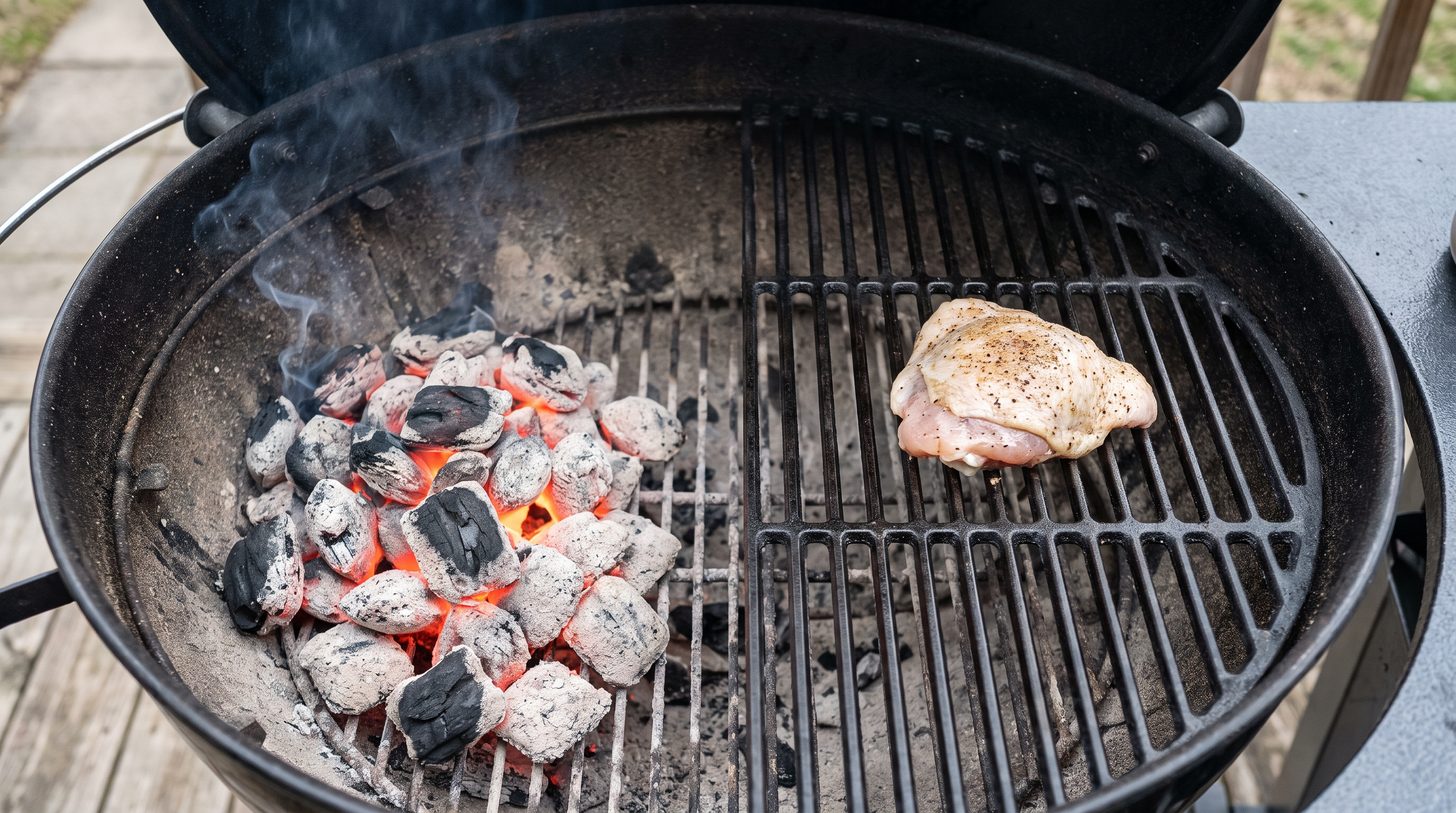
Pitmaster Profile · Global Grilling
Steven Raichlen
The grilling authority most associated with treating fire as a technique to master, not a regional style to copy — direct vs. indirect heat, rotisserie, and marinades borrowed from grilling traditions worldwide.
- Speciality
- Global grilling technique
- Focus
- Fire management, not one region
- Signature setup
- Two-zone fire
- Core tool
- Any grill, charcoal or gas
Two-zone fire
Rotisserie
Global marinades
Plank grilling
Independent editorial resource. This page is an independently written profile and is not affiliated with, endorsed by, or officially connected to Steven Raichlen or his representatives. The grilling method described further down is our own independently developed adaptation, informed by his publicly documented technique — not his recipe, and not an “official” version of it.
Who he is
Steven Raichlen is a grilling author and television host best known for a long-running public television series on outdoor cooking and a widely referenced series of grilling books. Where a pitmaster like Aaron Franklin is defined by one regional style taken deep, Raichlen’s reputation is built the opposite way — surveying grilling and barbecue traditions from dozens of countries and distilling the technique each one relies on, rather than promoting any single cuisine as “the” way to grill.
That makes him a useful reference point for a different reason than a regional pitmaster: the technique fundamentals — how to build and read a fire, when to grill direct and when to grill indirect, how a rotisserie changes what’s possible on an ordinary grill — apply to every other hub on this site. We break those down below, then adapt the core one — a two-zone fire — into a setup guide for any charcoal or gas grill.
Recognised approach
Rather than one regional style, his throughline is treating heat itself as the variable to control:
Direct heat
Food sits directly over the flame or coals — for anything that cooks quickly: burgers, steaks, vegetables, shrimp.
Indirect heat
Food sits beside the heat source, not over it, so it cooks through by convection like a slow oven — for whole birds, roasts, ribs.
Global technique
Argentine asado, Southeast Asian satay, Caribbean jerk, Korean grilling — read for the underlying method, not copied as a single “authentic” recipe.
Signature techniques
The two-zone fire
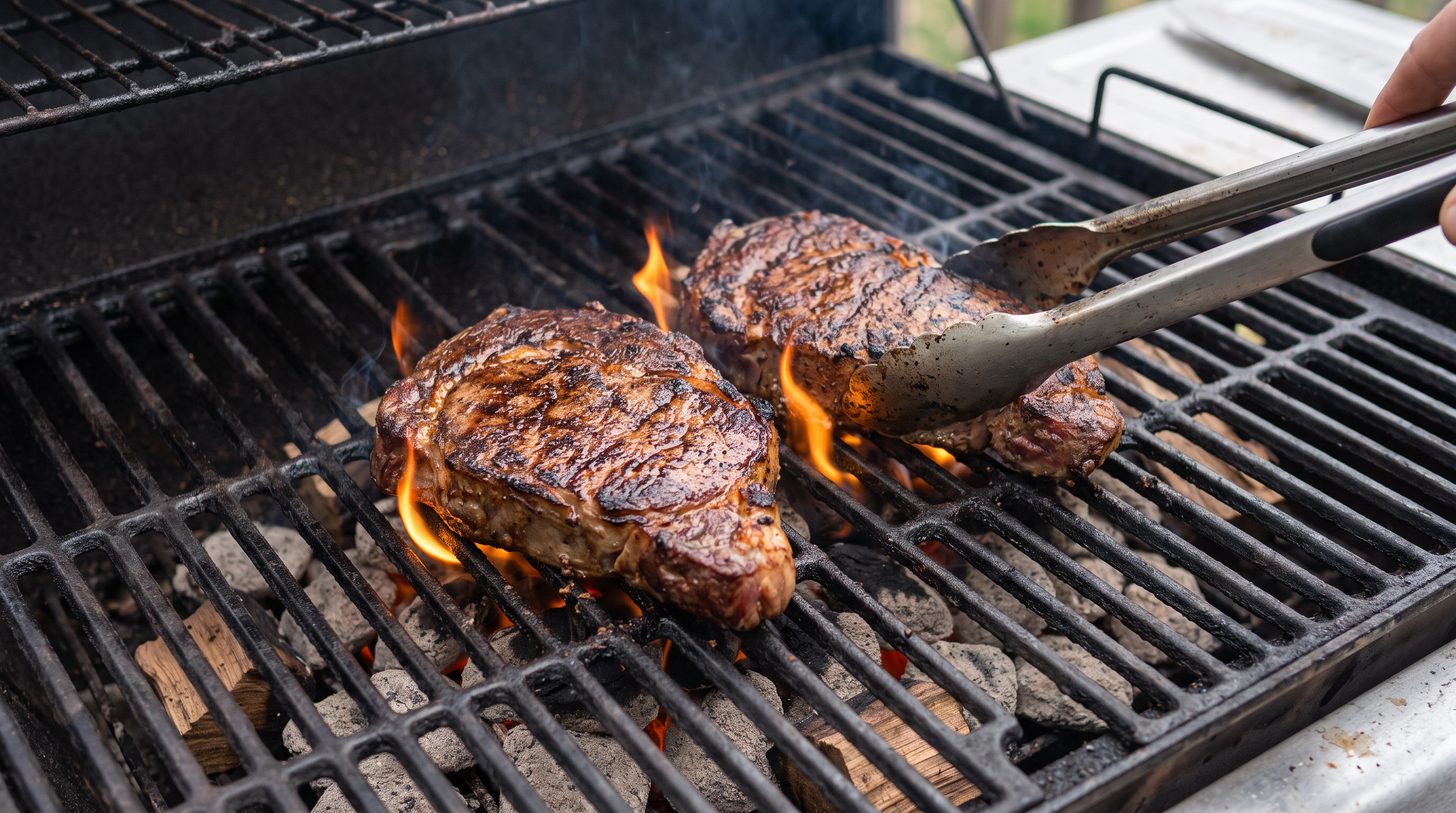
A single grill set up with heat on one side and no heat on the other — coals banked to one half of a charcoal grill, or only some of a gas grill’s burners lit. This turns one grill into two: sear on the hot side, then finish cooking through gently on the cool side without burning the outside. It’s the single most-referenced technique associated with his teaching, because it fixes the most common beginner mistake — cooking everything hot and direct regardless of size or fat content.
Rotisserie
Slow, even rotation over indirect heat, self-basting as rendered fat drips down and the surface continually re-exposes to the fire. Associated with whole chickens and roasts more than with barbecue cuts specifically — a technique borrowed from spit-roasting traditions worldwide rather than one region.
Reading the fire, not the clock
Grill and charcoal temperature drift constantly as coals burn down, lids open and close, and wind changes — so technique is taught around recognising what a fire is doing (flare-ups, dying embers, uneven heat across the grate) rather than following a fixed time regardless of conditions.
Marinades and bastes as a toolkit
Marinades pulled from grilling cultures worldwide — citrus and herb, soy and ginger, chile and vinegar — used as interchangeable building blocks (an acid, an oil, an aromatic, a salt) rather than a single fixed formula.
Equipment & flavour profile
Typical equipment
Any grill — charcoal kettle, gas, or a rotisserie attachment. The technique is built to be equipment-agnostic rather than tied to one type of pit.
Typical fuel
Charcoal or gas, with wood chips or chunks added for smoke flavour rather than relying on one signature wood.
Flavour profile
Broad and eclectic by design — the point is variety across marinades and rubs pulled from many traditions, not one house flavour.
Our independent adaptations
The two-zone fire is the one technique here that changes everything else you cook, on any grill you already own, so it’s the method we adapted first. It doesn’t need special equipment or an offset smoker — the guide below covers charcoal kettles and gas grills side by side.
Related BBQ guides
FAQ
What’s the difference between direct and indirect grilling?
Direct means the food sits right over the heat source — fast, high heat, for things that cook in minutes. Indirect means the food sits beside the heat, cooking more slowly through convection, like a small outdoor oven — for anything larger or fattier that would burn outside before cooking through.
Do I need a gas grill or charcoal for a two-zone setup?
Either works. Charcoal is banked to one side of the grate; a multi-burner gas grill has some burners left off. The physics are the same either way.
Is this the same as low-and-slow smoking?
Related but not identical — indirect grilling is usually a shorter cook at a higher temperature than dedicated smoking, and doesn’t necessarily add heavy smoke flavour. It’s the technique that makes smoking possible on an ordinary grill, though.
Sources & further reading
- Public television grilling series and published grilling books describing direct/indirect technique and global grilling traditions
- Cross-referenced against multiple independent grilling publications to avoid relying on a single source’s framing