
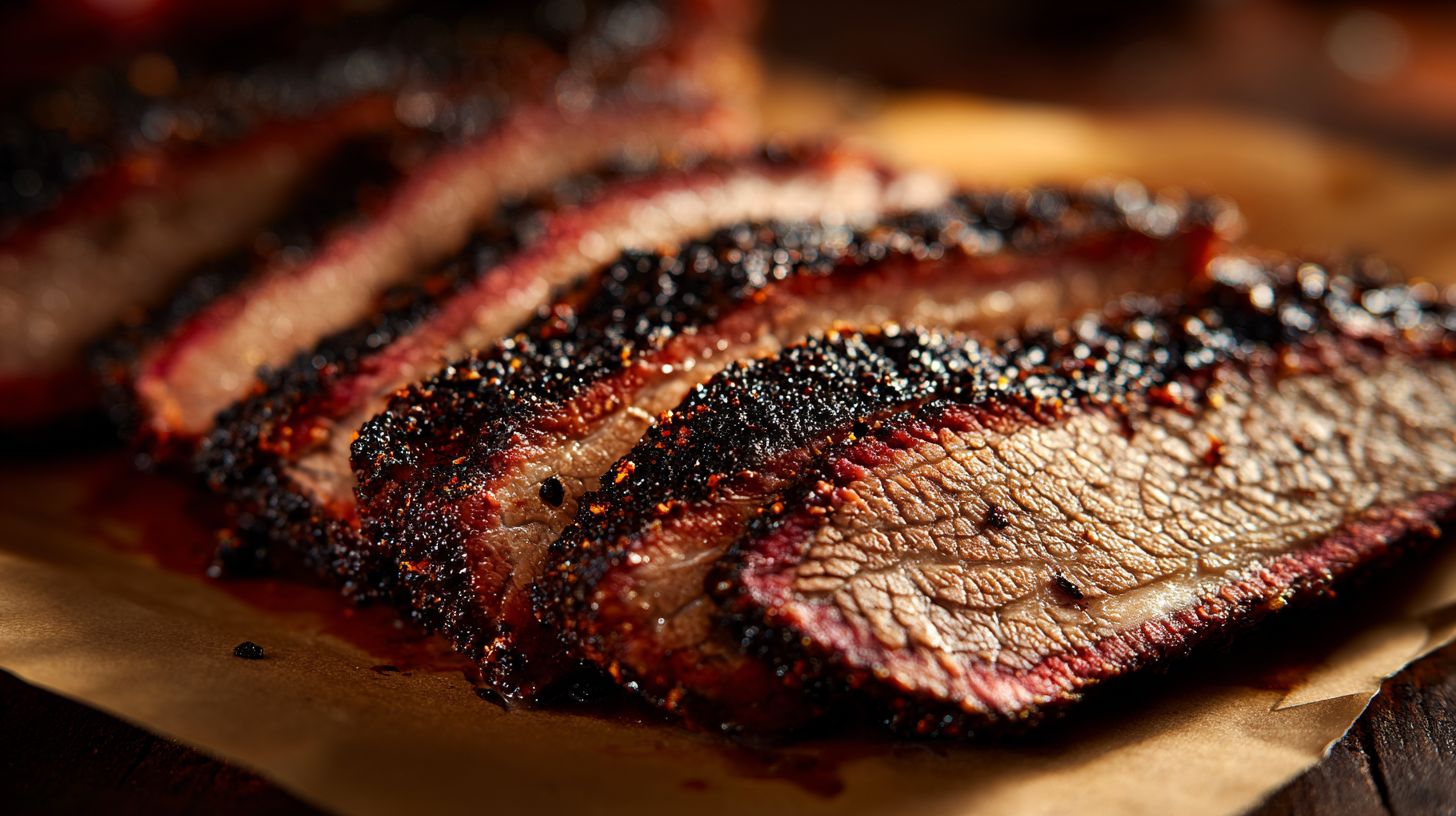
There’s a belief that runs through backyard barbecue: smoke preserves meat, so smoked brisket must keep longer than roast beef. It’s an old idea with real history behind it, and applied to a modern smoker it’s wrong in a way that gets people ill.
The Short Answer
Hot-smoked meat is cooked meat. Your smoked brisket, ribs, pulled pork and chicken are leftovers, and they get 3 to 4 days in the fridge and 2 to 6 months in the freezer — exactly the same as anything you roasted in the oven.
Smoking adds flavour. It does not add shelf life.
Why the Myth Exists
Because it used to be true, under conditions nobody replicates in a backyard.
Traditional preservation combined three things: a heavy salt cure that pulled water out of the meat, days or weeks of cold smoking at temperatures too low to cook, and drying until the meat lost a large share of its weight. Bacteria need water. Take enough of it away and add salt, and the meat becomes hostile ground.
A modern smoker does none of that. It runs at 225–275°F for a few hours, which cooks the meat and leaves the moisture where it is. The smoke deposits some antimicrobial compounds on the surface, but only on the surface, and nowhere near enough to preserve anything.
Country ham, biltong and traditional salami keep for months. A brisket does not, and the difference is the cure and the drying, not the smoke.
Storage Times
| Item | Fridge at 40°F (4°C) | Freezer at 0°F (-18°C) |
|---|---|---|
| Hot-smoked brisket, ribs, pork butt | 3 to 4 days | 2 to 6 months |
| Smoked chicken or turkey | 3 to 4 days | 2 to 6 months |
| Smoked sausage, fully cooked | 1 week opened, 2 weeks unopened | 1 to 2 months |
| Bacon (cured, then smoked) | 1 week opened | 1 month |
| Country ham (cured and dried) | 1 week cooked; months uncooked | 1 month |
| Cold-smoked salmon, opened | Use by the label date | 2 to 3 months |
| Smoked meat in sauce | 3 to 4 days | 2 to 3 months |
The pattern in that table is the whole point. Anything cured before it was smoked keeps longer. Anything you simply cooked with smoke gets the standard leftovers window.
Fridge figures are safety limits. Freezer figures are quality guidelines — food held continuously at 0°F stays safe indefinitely, it just degrades in flavour and texture.
The Real Risk Is the Cooling, Not the Storing
Smoked meat comes off the cooker in large, hot pieces, usually late, usually in quantity, and usually when everyone is tired. That combination is where things actually go wrong.
- Refrigerate within 2 hours of coming off the heat — 1 hour if it’s above 90°F, which a summer patio easily is.
- Break it down first. A whole packer brisket or an intact pork butt in a deep pan holds Danger Zone temperatures in the centre for hours. Separate the point from the flat, or portion the butt.
- Shallow containers. Depth is the enemy of fast cooling.
- Don’t leave it on the counter to cool overnight. This is the classic end to a long cook and it ruins the meat from a safety standpoint entirely.
If you’re holding meat hot for a long serve instead, that’s a different job with its own rule: stay above 140°F the whole time.
The Smoke Ring Tells You Nothing About Freshness
That pink band under the bark is a chemical reaction between nitrogen dioxide in the smoke and myoglobin in the meat. It is a sign of how the meat was cooked, not of how safe it is, and it stays pink long after the meat has gone off.
Similarly, smoked poultry stays pink well above 165°F, and commercially smoked turkey is pink by design. Neither tells you anything about spoilage.
Is It Still Good?
Smoke and bark make this harder than it is with plain roast meat, because both mask early smells.
- Over 4 days? Bin it, however it looks.
- Slimy on the meat itself, not just tacky from bark or sauce? Bin it. Find a low-sauce piece and check there.
- Sour or yeasty under the smoke? Bin it. Smell into the middle of the container.
- Any fuzz? The whole container goes, not just the visible patch.
- Dried edges, firm bark, faded colour? Quality, not safety.
Reheat leftovers to 165°F, wrapped with a splash of liquid so they steam rather than dry.
Freeze on Day One
This is the habit that changes everything about smoking large cuts. A whole brisket or pork butt makes far more than most households eat in four days, so the four-day limit turns into a race you lose.
Portion into meal-sized packs the day you cook, add a little of the rendered juice, press the air out, label the date, and freeze whatever you know you won’t finish by Tuesday. You end up eating good barbecue for months instead of throwing away the last third.
The Bottom Line
- Smoking is cooking, not curing. Hot-smoked meat is leftovers.
- 3 to 4 days in the fridge, 2 to 6 months frozen.
- Cured-then-smoked products — bacon, country ham, dry sausage — are the exception, and it’s the cure doing the work.
- 2 hours to get it cold, 1 hour above 90°F, portioned into shallow containers.
- Freeze on day one, not day three.
- The smoke ring is not a freshness indicator.
In the United States, the USDA Meat and Poultry Hotline is free on 1-888-674-6854.
Frequently Asked Questions
Does smoking meat preserve it?
Not in a modern smoker. Hot smoking at 225–275°F cooks the meat and leaves its moisture in place. Traditional preservation relied on heavy salt curing plus days of cold smoking and drying — the cure and the water loss did the preserving, not the smoke.
How long does smoked brisket last in the fridge?
Three to four days, the same as any cooked meat. Freeze what you won’t eat in that window, ideally on the day you cook it.
Why does smoked sausage last longer than smoked brisket?
Because most smoked sausage is cured with salt and nitrites before smoking, and often sold in a sealed pack. That’s a different preservation method, and it’s the cure buying the extra time.
Can I leave smoked meat out overnight to cool?
No. It must be refrigerated within 2 hours of coming off the heat, or 1 hour above 90°F. Some bacteria produce heat-stable toxins overnight that survive reheating, so it can’t be rescued the next day.
Does the smoke ring mean the meat is still good?
No. It’s a chemical reaction between smoke gases and myoglobin, formed during cooking, and it persists long after the meat spoils. Use the calendar, smell and texture instead.
How long does smoked meat last vacuum-sealed?
Home vacuum sealing slows quality loss and reduces freezer burn, but it doesn’t make cooked meat shelf-stable — keep to 3 to 4 days in the fridge. Commercially sealed and pasteurised products carry their own longer dates because of how they were processed.
Related Guides
- How long do ribs last? — the same numbers, cut by cut.
- How to keep ribs warm — holding above 140°F instead of chilling.
- Is my pulled pork still good? — the hardest smoked meat to judge.
- The BBQ cheat sheet — storage times on one page.
Never Throw Out Good Meat Again
Get the one-page BBQ cheat sheet: fridge and freezer times for every cut, safe temperatures, and the spoilage signs that are false alarms. Free, no spam.
No spam, and you can unsubscribe any time.