
Raw chicken is the cut people are most nervous about, and the one where the folk wisdom is least reliable. Here’s what the signs actually mean, raw and cooked.
The 60-Second Answer
Raw chicken has gone bad if it’s slimy after rinsing and patting dry, smells sour or sulphurous fifteen minutes after coming out of the packaging, has any fuzzy growth, or has been in the fridge more than 2 days.
It has not gone bad because the skin looks bluish-white or yellow, the flesh has darkened slightly, there’s a faint smell straight out of a sealed pack, or the sell-by date passed yesterday.
The number to remember is the harsh one: raw chicken gets 1 to 2 days in the fridge, far less than beef or pork. Most people apply their red-meat instincts to poultry and get caught out.
Raw Chicken: The Four Checks
1. Feel It
Fresh raw chicken is moist and slightly slippery — that’s normal, and it’s where people go wrong in both directions. The test is whether it rinses clean.
Rinse it under cold water, pat it completely dry, then touch it again. Fresh chicken feels firm and merely damp. Spoiled chicken keeps a tacky, slippery film that clings to your fingers and won’t wash off. That’s a bacterial biofilm, and it’s the clearest single sign there is.
Wash your hands and sanitise the sink afterwards. Rinsing raw poultry splashes bacteria around, which is why the USDA advises against washing chicken at all in normal use — do it here only as a deliberate test, and clean up after.
2. Smell It, After Airing Out
Take the chicken fully out of its packaging, pat it dry, and leave it uncovered on a plate in the fridge for 15 minutes before judging. Sealed packs trap odour that disperses the moment the meat can breathe.
Fresh raw chicken smells of almost nothing — faintly of clean meat. If you have to lean right in to smell anything at all, it’s fresh. A sour, sulphurous or ammonia smell that survives fifteen minutes in open air means it’s spoiled, and that smell strengthens rather than fades as the meat warms.
3. Look At It
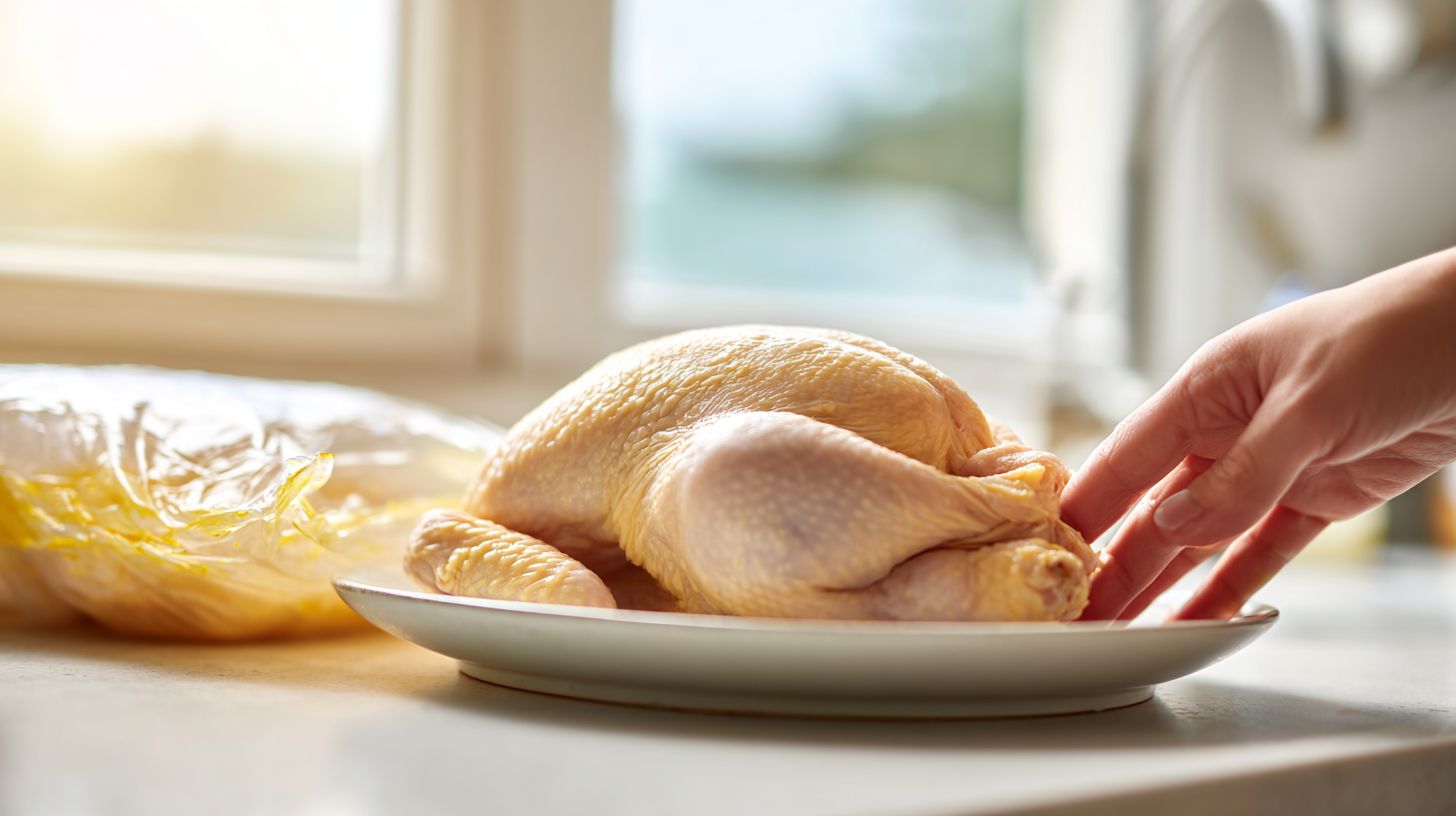
Colour is the least useful check on poultry, and the one that causes the most needless waste. The USDA describes normal raw poultry as ranging from bluish-white to yellow, depending entirely on breed, age, diet and how much fat sits under the skin. Younger birds have less fat and can look bluish; a yellow tint often just means marigold in the feed.
- Bluish-white or yellow skin: normal, both of them.
- Flesh darkened slightly after a day: normal oxidation.
- Dull grey flesh with an off smell: that combination is spoilage.
- Green or grey iridescent shimmer on a cut surface: harmless light refraction.
- Fuzzy growth of any colour: bin it.
- Dark bones or dark meat around them: normal in young birds, and a freezing artefact.
4. Count the Days
This is the check that protects you, because it catches spoilage before your senses can. Raw chicken gets 1 to 2 days in the fridge — whole birds and pieces alike — counted from the day you brought it home.
Cooked Chicken Is a Different Problem
Once it’s cooked, seasoning, sauce and browning mask every early warning sign, so the checks shift.
- The calendar comes first: 3 to 4 days, then it goes regardless of appearance.
- Smell into the middle of the container, where sauce hasn’t penetrated. Sour or yeasty means spoiled; the tang of a vinegar-based sauce does not.
- Feel a low-sauce piece. Sauce is sticky and rinses off. A biofilm is slippery and clings.
- Dull or greyish cooked chicken is normal — poultry fades in the fridge.
- Pink near the bone or a pink ring on smoked chicken is normal at any safe temperature. Smoke and oven gases do that.
A useful signal: cooked chicken that has turned often tastes wrong before it smells wrong. A sour or metallic first bite means stop and bin the rest.
Storage Times
| Chicken | Fridge at 40°F (4°C) | Freezer at 0°F (-18°C) |
|---|---|---|
| Raw whole bird | 1 to 2 days | 1 year |
| Raw pieces | 1 to 2 days | 9 months |
| Raw ground chicken | 1 to 2 days | 3 to 4 months |
| Cooked chicken | 3 to 4 days | 2 to 6 months |
| Chicken nuggets or patties | 3 to 4 days | 1 to 3 months |
| Thawed in the fridge | 1 to 2 days from thawing | Can be refrozen raw |
Notice how much shorter raw poultry is than red meat. A pork roast gets 3 to 5 days; a raw chicken gets 1 to 2. Fridge figures are safety limits; freezer figures are quality only, since poultry held at 0°F stays safe indefinitely.
Left Out Overnight, or Thawed on the Counter
Bin it, raw or cooked. Bacteria multiply fastest between 40°F and 140°F — the Danger Zone — doubling in as little as 20 minutes. The limit is 2 hours out of refrigeration, 1 hour above 90°F.
Cooking it thoroughly doesn’t help. Some bacteria leave behind toxins that survive cooking, so you can bring the chicken to a perfect 165°F, kill every living organism in it, and still serve something that makes people ill.
The same applies to a bird thawed on the counter: its surface sat above 40°F for hours while the middle was still frozen, and the surface is exactly where contamination lives. Thaw in the fridge, in cold water changed every 30 minutes, or in the microwave with immediate cooking.
Cook It to 165°F, in Three Places
All poultry, every part: 165°F. Check the innermost thigh, the innermost wing and the thickest part of the breast, keeping the probe off the bone, which reads 10–15°F hotter than the meat around it.
Pink is not the test. Safely cooked poultry ranges from white through pink to tan, and smoked or grilled chicken often keeps a pink ring well above a safe temperature. The thermometer decides.
The Bottom Line
- Raw chicken: 1 to 2 days, and that limit is the real protection.
- Cooked chicken: 3 to 4 days.
- Slimy after rinsing? Bin it, whatever else is true.
- Still foul after 15 minutes of air? Bin it.
- Bluish, yellow or slightly darkened? Normal.
- Out overnight, raw or cooked? Bin it — no smell test applies.
In the United States, the USDA Meat and Poultry Hotline is free on 1-888-674-6854.
Frequently Asked Questions
Why does my raw chicken look bluish?
Because it’s young. Birds with less fat under the skin take on a bluish-white cast, and the USDA lists that as a normal colour for raw poultry, along with yellow. Judge by smell and feel instead.
How long does raw chicken last in the fridge?
One to two days, whole or in pieces, counted from the day you got it home. Freeze it if you won’t cook it in that window — far shorter than the 3 to 5 days red meat gets.
My chicken smells slightly odd out of the packet. Is it bad?
Take it out, pat it dry, and leave it uncovered in the fridge for 15 minutes. Packaging odour disperses. A sour, sulphurous or ammonia smell that’s still there afterwards means spoiled.
Is chicken safe if it’s still pink at 165°F?
Yes. Chemical reactions with oven gases, smoke, and naturally occurring nitrites leave poultry pink well above a safe temperature. If all three checkpoints read 165°F, it’s done.
Can I cook chicken that’s a day past its sell-by date?
Often yes, but poultry has less margin than red meat. Sell-by is a stock-rotation date, not a safety deadline — but with only 1 to 2 days of fridge life, check smell and texture carefully rather than assuming.
What are the dark bones in cooked chicken?
Pigment seeping from the marrow of young birds whose bones haven’t fully calcified, and freezing makes it more pronounced. It’s cosmetic, not a safety issue.
Related Guides
- How long does cooked chicken last? — once it is cooked the rules change.
- Turkey food safety — poultry timings for the big bird.
- Left out overnight? — why cooking it will not help.
- How to tell if ribs are bad — the same method on red meat.
Never Throw Out Good Meat Again
Get the one-page BBQ cheat sheet: fridge and freezer times for every cut, safe temperatures, and the spoilage signs that are false alarms. Free, no spam.
No spam, and you can unsubscribe any time.