
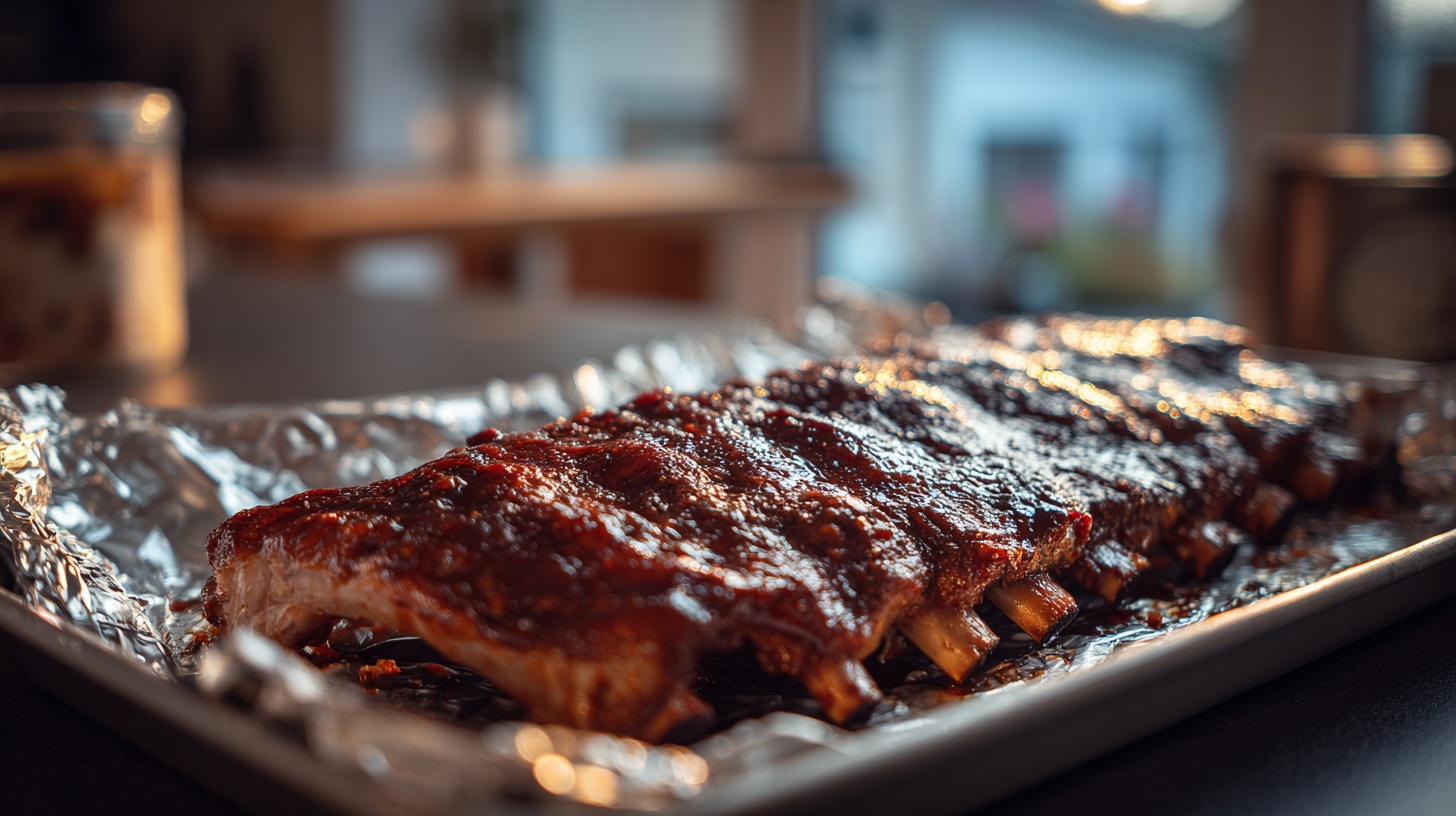
You pulled a beautiful rack off the smoker, ate half of it, and went to bed with the rest still sitting on the counter. Now it’s morning and you’re hoping there’s a version of this story where the ribs are fine.
The Short Answer: No
Ribs left out overnight are not safe to eat, and you should throw them away. This holds whether they were raw or cooked, sauced or dry, covered with foil or left open.
It also holds if they smell perfectly fine, look perfectly fine, and you feel certain they’re fine. This is the one food safety question where your senses genuinely can’t help you, and understanding why is worth two minutes of your time — because it changes how you’ll handle the next batch too.
The Rule Behind the Answer
Bacteria multiply fastest between 40°F and 140°F — a range the USDA calls the Danger Zone. In it, bacterial populations can double in as little as 20 minutes.
The limits that follow are short and specific:
- Never leave ribs out of refrigeration for more than 2 hours.
- If the room is above 90°F, the limit drops to 1 hour. A summer kitchen after a long cook, a patio, a closed car — all count.
- Get leftovers into the fridge within 2 hours of coming off the heat, in shallow containers so they cool fast.
Overnight is typically 8 to 10 hours. That’s four to five times the limit, spent in the exact temperature window bacteria like best.
Why You Can’t Just Cook Them Again
This is the part that surprises people, and it’s the reason “I’ll throw them back on the smoker” doesn’t work.
Heat kills bacteria. It does not reliably destroy the toxins some bacteria leave behind. Staphylococcus aureus is the classic example: it grows on food held at room temperature and produces a heat-stable toxin. You can reheat those ribs to 165°F, or smoke them for another three hours, and kill every living organism in the meat — the toxin comes through intact.
Staph toxin causes fast, violent illness: nausea, vomiting, and cramps typically within 30 minutes to 8 hours. It’s rarely dangerous for a healthy adult, but it is genuinely miserable, and it’s entirely avoidable.
The related trap is that spoilage bacteria and pathogenic bacteria are different organisms. Spoilage bacteria make food smell and taste bad. Pathogens make you sick. They grow independently, which is why “it smells fine” tells you nothing about whether it’s safe. Food can be dangerous long before it smells like anything at all.
The Situations People Ask About
| What happened | Verdict |
|---|---|
| Cooked ribs left on the counter overnight | Throw them out |
| Cooked ribs left in a turned-off oven overnight | Throw them out — a closed oven holds room temperature, and often warmer |
| Cooked ribs covered in foil overnight | Throw them out — foil slows cooling, it doesn’t refrigerate |
| Raw ribs left out overnight to thaw | Throw them out |
| Raw ribs still frozen solid in the morning | Cook or refrigerate now; the surface was in the Danger Zone, so don’t refreeze raw |
| Ribs out 2 to 4 hours in a cool room | Judgment call, and the safe answer is still discard |
| Ribs out under 2 hours | Refrigerate immediately — they’re fine |
| Ribs held in a cooler above 140°F the whole time | Safe; that’s hot holding, not the Danger Zone |
| Ribs left in a car overnight in summer | Throw them out, without hesitation |
What About the Reddit Argument?
Search this question and you’ll find plenty of people saying they’ve eaten counter-ribs for years and never gotten sick, and that food safety guidance is overcautious. That deserves a straight answer rather than a lecture.
They’re not lying. Most of the time, nothing happens. Contamination isn’t guaranteed, bacterial load varies enormously, and healthy adults fight off small doses without noticing. Plenty of people have won this bet repeatedly.
But it is a bet, the odds are unknowable in any specific case, and the stake is a rack of ribs. It’s also not your risk alone if you’re feeding others — young children, pregnant women, adults over 65, and anyone with a weakened immune system face substantially worse outcomes from the same meal. That’s the actual reason the guidance is written the way it is.
What to Do Instead, Next Time
- Refrigerate leftovers within 2 hours of pulling the meat — set a timer when you serve, not when you finish eating.
- Cut the rack into portions before storing. Shallow, smaller pieces cool through the Danger Zone much faster than a whole rack in a deep pan.
- Don’t wait for hot food to cool down first. Modern refrigerators handle warm food fine; the two-hour clock matters more than the appliance.
- Thaw in the fridge, not on the counter. Frozen ribs need about 24 hours per 5 pounds. In a hurry, use a sealed bag in cold water, changing the water every 30 minutes, and cook immediately after.
- Holding for a long serve? Keep it above 140°F in a warm oven or an insulated cooler with the meat wrapped and hot — not at room temperature.
If You Already Ate Them
Most people are fine. Symptoms, if they come, usually start within 30 minutes to 48 hours: nausea, vomiting, stomach cramps, diarrhea, sometimes fever. Rest and drink plenty of fluids.
Seek medical attention for a fever above 102°F, blood in the stool, vomiting persistent enough that you can’t keep liquids down, signs of dehydration, or diarrhea lasting more than three days. Don’t wait it out if the person affected is very young, pregnant, over 65, or immunocompromised.
In the United States, the USDA Meat and Poultry Hotline takes food safety questions for free at 1-888-674-6854.
Frequently Asked Questions
Can I eat ribs left out overnight if they still smell fine?
No. The bacteria that cause illness are different from the ones that cause odor, so meat can be unsafe well before it smells wrong. Smell is a useful test for spoilage, and useless for this question.
How long can cooked ribs sit out?
Two hours at normal room temperature, or one hour if it’s above 90°F. After that they should be refrigerated or discarded.
Does reheating ribs to a high temperature make them safe?
No. Reheating kills bacteria but not the heat-stable toxins that some bacteria produce while the food sits at room temperature. Those toxins survive cooking and still cause illness.
What if the ribs were left in the oven overnight with the door closed?
Still discard them. A switched-off oven sits at room temperature, and it often stays warmer than the kitchen for hours — which puts the meat deeper into the Danger Zone, not out of it.
Are raw ribs left out overnight safe if I cook them thoroughly?
No, for the same toxin reason. Raw meat that spent the night above 40°F should be discarded rather than cooked.
My ribs were only out for three hours. Is that different?
It’s better than overnight, but it’s past the two-hour limit, and the official guidance is to discard. If the room was warm, treat that as settled. If it was genuinely cool and the meat is going to be eaten by healthy adults, that’s your call to make with the actual risk in front of you.
Can I refreeze ribs that thawed on the counter overnight?
No. Refreezing preserves whatever bacteria and toxins developed while the meat was warm — it doesn’t undo them. Ribs that thawed overnight at room temperature should be thrown out.
Never Throw Out Good Meat Again
Get the one-page BBQ cheat sheet: fridge and freezer times for every cut, safe temperatures, and the spoilage signs that are false alarms. Free, no spam.
No spam, and you can unsubscribe any time.
Related Guides
- How to tell if ribs are bad — the smell, look and feel checks, and the false alarms.
- How long do ribs last in the fridge and freezer? — so this does not happen again.
- How to tell if brisket is bad — including briskets left in a stalled overnight cook.
- How to keep ribs warm after cooking — the safe way to bridge a long gap.
- Turkey food safety — thawing, timing and Thanksgiving leftovers.