
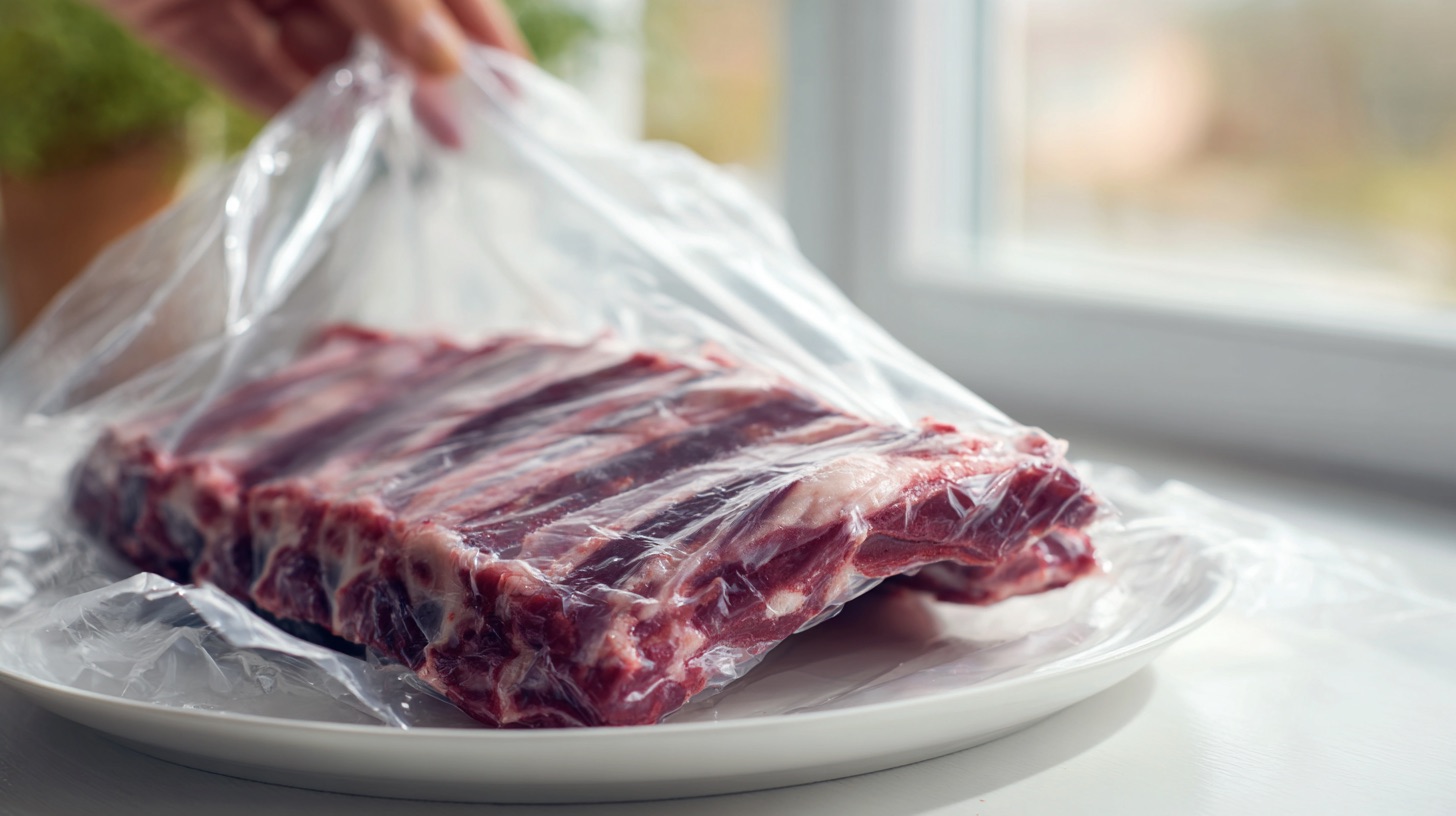
You cut open the package and something hits you. Eggs. Fish. Sulphur. Something faintly like a fart, which is a strange thing to write and a stranger thing to smell coming off dinner.
Before you bin a good rack: most of these smells are normal, and they go away. Here’s how to read each one.
The 15-Minute Test, First
Whatever you’re smelling, do this before deciding anything:
- Take the ribs completely out of the packaging.
- Rinse under cold running water, pat dry with paper towels, then wash your hands and sanitize the sink.
- Leave them uncovered on a plate in the fridge for 15 minutes.
- Smell again, up close.
Gone or faded to a faint metallic meat smell? Cook them. Still there, or worse? Bin them.
That single test resolves the large majority of these questions, because packaging smells dissipate the moment meat can breathe and spoilage smells do not.
Why Vacuum-Sealed Ribs Smell at All
Nearly every rack in an American supermarket arrives vacuum-sealed in heavy plastic, the packaging usually called Cryovac. The meat can sit in that bag for weeks between the plant and your cart.
With no oxygen in there, a different set of harmless bacteria takes over from the ones that need air. They’re lactic acid bacteria for the most part, the same broad family behind yoghurt and sauerkraut, and they produce sour and sulphurous compounds as they work. In an open fridge those compounds would drift off. Sealed in plastic, they build up and concentrate for weeks.
Open the bag and you get all of it at once, in a single lungful. Pitmasters call it confinement odour or bag funk. It’s the most common false alarm in home barbecue, and it costs people a lot of perfectly good meat.
What Each Smell Means
Rotten Eggs, Sulphur, or “Like a Fart”
Usually normal. This is the classic vacuum-pack smell, and it’s the one people describe most vividly. Bacteria working without oxygen produce hydrogen sulphide and related sulphur compounds — the same chemistry that makes rotten eggs smell like rotten eggs, at a far lower concentration.
Air the ribs out for 15 minutes. Sulphur compounds are volatile and they leave fast. If the smell is gone, cook with confidence.
Worry if: it’s still strong after airing out, or it’s paired with slime.
Fishy
Usually fat oxidation, and usually fine. Pork fat picks up a distinctly fishy note as it ages, and diet plays a part too — pigs fed certain fish-based or high-fat feeds produce fat that leans that way from the start.
A faint fishy smell that fades means the ribs are past their freshest but perfectly safe. Cook them soon rather than storing them longer, and know that the flavour may carry a trace of it.
Worry if: it’s strong and persists after airing, or the smell intensifies as the meat warms up.
Sour or Tangy
Depends entirely on whether it fades. Mild sourness straight out of a vacuum bag is the lactic acid bacteria doing their thing, and it airs out. Sourness that clings after 15 minutes, especially with any tackiness on the surface, means spoilage bacteria have taken hold.
Metallic or Bloody
Normal, and a good sign. That’s iron in the myoglobin. Fresh red meat is supposed to smell faintly metallic. This is what you’re hoping to be left with after airing out a funky bag.
Ammonia or Bleach
Throw them out. An ammonia sting is protein breaking down and it marks advanced spoilage. This one doesn’t air out and shouldn’t be second-guessed.
Sweet, Rotten, or Genuinely Nauseating
Throw them out. There’s a difference between a smell you find unpleasant and one that makes you recoil before you’ve decided to. Spoiled meat triggers the second reaction, and that reflex exists for a reason.
Quick Reference
| Smell | Most likely cause | After 15 minutes of air | Verdict |
|---|---|---|---|
| Rotten eggs / sulphur / farts | Vacuum-pack confinement odour | Should disappear | Cook if it fades |
| Fishy, faint | Fat oxidation or feed | Fades or softens | Cook soon |
| Fishy, strong and persistent | Spoilage | Stays or worsens | Discard |
| Sour, mild | Lactic acid bacteria in the bag | Should disappear | Cook if it fades |
| Sour, sharp and clinging | Spoilage | Stays | Discard |
| Metallic, faint | Myoglobin — fresh meat | Stays, and that’s fine | Cook |
| Ammonia or bleach | Advanced protein breakdown | Stays | Discard |
| Sweet or rotten | Advanced spoilage | Worsens as it warms | Discard |
Should Raw Ribs Smell of Anything?
Yes, a little. Completely odourless meat is unusual, and people who expect zero smell tend to over-diagnose.
Fresh raw pork ribs, aired out and dry, smell faintly of iron and clean meat. Nothing sharp, nothing that carries across the room. If you have to put your nose right against the rack to smell anything at all, you have very fresh ribs.
What About the Smell While They’re Cooking?
A fishy or off smell that only appears during cooking is almost always fat oxidation becoming more obvious with heat, not spoilage. Rancid-tasting fat is a quality problem rather than a safety one — the meat won’t make you ill, it just won’t be very good.
Ribs that smelled fine raw and smell genuinely rotten cooking is a different matter, and rare. Trust it and stop.
Smell Isn’t the Whole Story
Two things beat it.
Slime. If the meat stays slippery and tacky after rinsing and patting dry, it’s finished, whatever it smells like. That film is a bacterial biofilm and it’s the most reliable single indicator there is.
The calendar. Raw ribs get 3 to 5 days in the fridge, cooked ribs 3 to 4. Anything that spent a night on the counter goes in the bin no matter how clean it smells, because the bacteria that make you ill are not the ones that make food smell.
Colour, on the other hand, tells you very little. The USDA is explicit that a change in colour alone does not indicate spoilage, and normal fresh pork is officially described as greyish-pink.
Frequently Asked Questions
Why do my ribs smell like rotten eggs?
Almost always because they were vacuum-sealed. Bacteria that grow without oxygen produce sulphur compounds that concentrate inside the bag over weeks. Rinse the ribs, pat dry, and leave them uncovered in the fridge for 15 minutes. If the smell goes, they’re fine.
Why do my ribs smell like fish?
Usually oxidised fat, sometimes the pig’s diet. A faint fishy note that fades after airing out is safe — cook them soon rather than storing them longer. A strong fishy smell that persists means spoilage.
Is it normal for pork ribs to smell when you open the package?
Yes, very. Vacuum-packed pork routinely smells sour or sulphurous for the first few minutes after opening. The test is whether it fades within 15 minutes of the meat being out in the air.
My ribs smell like sulphur but look completely fine. Can I cook them?
Air them out first and check again. Sulphur that disappears is packaging. Sulphur that stays, especially alongside slime or a slippery surface, means they’re spoiled.
Does rinsing ribs get rid of the smell?
Rinsing helps a little, but airing out does most of the work. Rinse, pat completely dry, then let them sit uncovered in the fridge — and sanitize the sink afterwards, since rinsing raw meat splashes bacteria around.
Will cooking kill whatever is making my ribs smell?
Cooking kills bacteria, but it doesn’t destroy the toxins some of them leave behind, and it won’t fix rancid fat. If the smell is spoilage, cooking is not a solution.
Related Guides
- How to tell if ribs are bad — the other three checks that matter.
- How long do ribs last? — when the calendar overrules your nose.
- How to tell if brisket is bad — wet-aged brisket smells even stronger.
- How to tell if pulled pork is bad — sauce hides the smell entirely.
Never Throw Out Good Meat Again
Get the one-page BBQ cheat sheet: fridge and freezer times for every cut, safe temperatures, and the spoilage signs that are false alarms. Free, no spam.
No spam, and you can unsubscribe any time.